Congress can reduce the number of Justices. However, I don't know if they can remove a justice or if they have to wait until a justice dies or retires.

Congress can reduce the number of Justices. However, I don't know if they can remove a justice or if they have to wait until a justice dies or retires.
Not exactly, they can't reduce the number of justices while a justice is in place because that is unconstitutional under Article III.
However, plausibly, Congress could lower the number of justices via statute and attrition.
They'd have to enact legislation that vacancies would not be filled until that new number (and odd number) is reached.
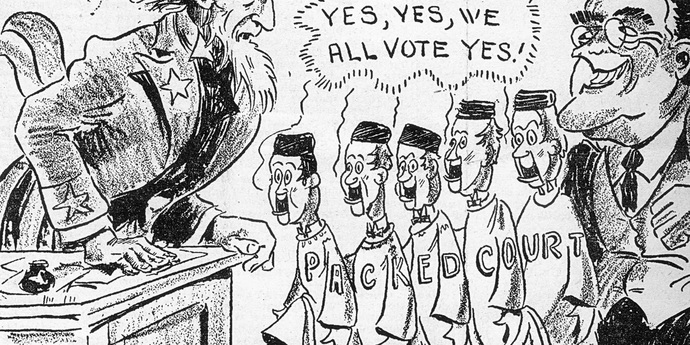
The legislation won't be as trivial as it sounds. Furthermore, despite it being a reduction in justices, likely such a bill would not get sufficient support and rejected in a bipartisan fashion just like what was done with FDR.
The reason is that, like "court packing" which would have enabled the President from having too much influence over the shaping of the court, letting the court thin out by attrition denies the sitting President the ability to make court picks. This is equally bad, in principle.
If I was to change the SCOTUS, the one change I would consider is the AUTOMATIC yearly rotation of the Chief Justice position. The Chief Justice position would go to the seniormost justice and then go downward.
This could not go into effect without a constitutional amendment and only once the Chief Justice position becomes vacant.
So, let's assume that amendment has passed and Chief Justice Roberts retires at the end of OT2028 (the term that begins in October 2028).
Right now, the SCOTUS is (in order of seniority):
Chief Justice John G. Roberts, Jr.
Associate Justice Clarence Thomas
Associate Justice Samuel A. Alito, Jr.
Associate Justice Sonia Sotomayor
Associate Justice Elena Kagan
Associate Justice Neil M. Gorsuch
Associate Justice Brett M. Kavanaugh
Associate Justice Amy Coney Barrett
Associate Justice Ketanji Brown Jackson
So, this would then be the make-up of the court for OT2029:
Chief Justice Clarence Thomas
Associate Justice Samuel A. Alito, Jr.
Associate Justice Sonia Sotomayor
Associate Justice Elena Kagan
Associate Justice Neil M. Gorsuch
Associate Justice Brett M. Kavanaugh
Associate Justice Amy Coney Barrett
Associate Justice Ketanji Brown Jackson
Associate Justice appointed by the President. (Let's call her Mary Smith.)
Assuming no more vacancies... the make-up of the court for OT2030:
Associate Justice Samuel A. Alito, Jr.
Associate Justice Clarence Thomas (*)
Associate Justice Sonia Sotomayor
Associate Justice Elena Kagan
Associate Justice Neil M. Gorsuch
Associate Justice Brett M. Kavanaugh
Associate Justice Amy Coney Barrett
Associate Justice Ketanji Brown Jackson
Associate Justice appointed by the President. (Let's call her Mary Smith.)
(*) Thomas would still be the senior-most AJ, but he would not be next-in-line for CJ since he just had it.
Sotomayor would be CJ in OT2031.
Kagan would be CJ in OT2032.
etc.
Any new appointee is the least senior.
The details would have to be worked out, but this would require a Constitutional amendment because Article III Section 1 implies that appointed judges serve for life. The Chief Justice position is a separate appointment.
Excerpt of Article III, Section 1:
The judges, both of the supreme and inferior courts, shall hold their offices during good behaviour, and shall, at stated times, receive for their services, a compensation, which shall not be diminished during their continuance in office.
So, a justice CAN be impeached and removed from office but, otherwise, they serve in their position as long as they wish.
Basically, the U. S. Constitution grants Congress the power to determine how many justices sit on SCOTUS. This number has ranged between 5 and 10, but since 1869 the number has been set at 9. That is a long time, so it will probably not change. FDR didn't pack the court but he got the ruling he wanted anyway.
Well, I just want to be clear: Congress cannot just lower the number of SCOTUS justices because justices "shall hold their offices during good behaviour" (Article III). So, the act of lowering the number of justices has to be done by attrition via legislation before a vacancy occurs. Again, that is likely realistically not possible. I think the only way this could be enacted is in the last 2 years of a 2-term President who likely already had made at least 1 SCOTUS pick.
Another change I would make which likely would require a constitutional amendment is that "All Presidential appointments must be confirmed or rejected in by a Senate vote as a whole within 30 days of the appointment or before the end of the President's term, whichever is earlier. If the vote is not held within that period, then the Vice President and President Pro Tem of the Senate shall have 1 day to confirm or reject the appointment. If they disagree, then the Speaker of the House will have 1 day to render the deciding vote. If the Speaker shall have failed to render the deciding vote, the appointment is automatically confirmed."
The point of this amendment is to remove the bullshit of having an appointment held up in a Senate committee. So, for SCOTUS or other court appointments, that's the Senate Judiciary Committee. When DEM President Obama appointed Merrick Garland to the SCOTUS in 2016 before the election, Senate Majority Leader Mitch McConnell held up the appointment saying the winner of the election should be the one to make the next appointment. That was Trump of course so Garland didn't get the job, but Neil Gorsuch did. I was very upset with this because that was a shitty tactic that should be unconstitutional; the Senate isn't doing their job and it wasn't public.
(more)
Well, I just want to be clear: Congress cannot just lower the number of SCOTUS justices because justices "shall hold their offices during good behaviour" (Article III). So, the act of lowering the number of justices has to be done by attrition via legislation before a vacancy occurs. Again, that is likely realistically not possible. I think the only way this could be enacted is in the last 2 years of a 2-term President who likely already had made at least 1 SCOTUS pick.
Another change I would make which likely would require a constitutional amendment is that "All Presidential appointments must be confirmed or rejected in by a Senate vote as a whole within 30 days of the appointment or before the end of the President's term, whichever is earlier. If the vote is not held within that period, then the Vice President and President Pro Tem of the Senate shall have 1 day to confirm or reject the appointment. If they disagree, then the Speaker of the House will have 1 day to render the deciding vote. If the Speaker shall have failed to render the deciding vote, the appointment is automatically confirmed."
(more)
The point of this amendment is to remove the bullshit of having an appointment held up in a Senate committee. So, for SCOTUS or other court appointments, that's the Senate Judiciary Committee. When DEM President Obama appointed Merrick Garland to the SCOTUS in 2016 before the election, Senate Majority Leader Mitch McConnell held up the appointment saying the winner of the election should be the one to make the next appointment. That was Trump of course so Garland didn't get the job, but Neil Gorsuch did. I was very upset with this because that was a shitty tactic that should be unconstitutional; the Senate isn't doing their job and it wasn't public.
Now, the Constitution lets each house of Congress run its own internal affairs, so what McConnell did was, technically, constitutional. I don't think that's right. Not so much because Obama was denied a pick because, given the GOP being the majority in the Senate, Garland might have lost the vote anyway, but at least this would have been public and the voting public would have seen how shitty the GOP is.
(more)
If I had been Obama, who is a nice guy, I might have pressed the issue immediately by filing a case with District Court in DC that what McConnell did was unconstitutional because Article II Section 2 Clause 2:
"[The President] shall have power, by and with the advice and consent of the Senate, to make treaties, provided two thirds of the Senators present concur; and he shall nominate, and by and with the advice and consent of the Senate, shall appoint ambassadors, other public ministers and consuls, judges of the Supreme Court, and all other officers of the United States, whose appointments are not herein otherwise provided for, and which shall be established by law: but the Congress may by law vest the appointment of such inferior officers, as they think proper, in the President alone, in the courts of law, or in the heads of departments."
It says "Senate", not "Senate subcommittee". That would be the basis of a Presidential argument.
The Senate's rebuff is Article I, Section 5, Clause 2:
"Each House may determine the rules of its proceedings, punish its members for disorderly behavior, and, with the concurrence of two thirds, expel a member."
They might now.
First, this sort of situation in which a lame duck president appoints a SCOTUS justice is rare. In my memory, I can only remember the Obama appointment of Garland.
In the past, such hostility in the appointment process was never so. Generally, appointments were bipartisan and, if not approved unanimously, they were often approved with very few disapprovals. The mentality was that the Senate generally deferred to the President's wishes. This was part of the bipartisan congeniality of the Senate - more so than the House.
A major event in history was the rejection of Robert Bork. (His rejection entered the lexicon as a verb: to be borked.) Robert Bork was appointed by Reagan in 1987 but he was a very controversial pick with some unorthodox and unpopular legal ideas. For instance, he supported the ability of southern states to invoke a poll tax - something that was prohibited by the 24th Amendment in 1964.
(more)
Bork's Senate confirmation hearings were rather public and contentious. Bork eventually was rejected by the Senate by a vote of 42 voting to confirm and 58 voting to reject. Something to note: The Senate in 1987 was 55 Democrats and 45 Republicans. (So, there were Republican Senators who rejected Bork as well and some Democrats supported his nomination.) The previous Senate was 53 Republican and 47 Democrat. The GOP lost the 1986 mid-terms partly because of the Iran-Contra Affair earlier that year; this echoed Watergate and the voting public responded.
Anyway, Bork was EVENTUALLY replaced by Anthony Kennedy who was confirmed unanimously, 97-0. Kennedy would become an important swing vote in many cases. For instance, Bork likely would not have reversed the Sixth Circuit Court of Appeals upholding of bans on same-sex marriage in Obergefell v. Hodges, but Kennedy wrote the opinion reversing the Sixth Circuit in June 2015 giving the right to same-sex marriage.
Anyway, Bork's nomination was a significant event in SCOTUS history. The GOP was rather upset by what happened. Clarence Thomas's nomination and confirmation was another spectacle. But, the political divisiveness truly began during the Clinton Administration. The GOP was upset with Bill making President George Bush as 1-termer and they didn't care for Hillary Clinton who was assertive as a First Lady. This is when much of the divisive shit we have today really began, but the seed was likely the Bork hearings. Ironically, both Clintons were law students of Bork's when they were all at Yale.
Watch this; it is important in illustrating the aftermath of SCOTUS appointments since Bork.
ninepbs.pbslearningmedia.org/.../
they're all biased anyway... so it doesn't make a difference
Opinion
2Opinion
You can also add your opinion below!
Most Helpful Opinions