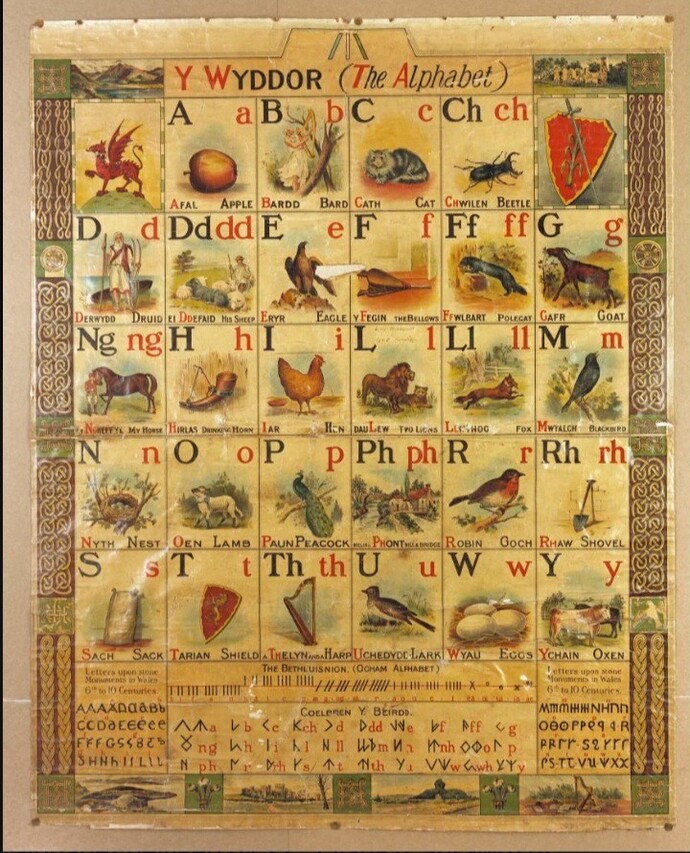
While looking for a pic to answer another question i came across an old childrens picture alphabet poster shown above. It had stuff on like larks, druids, bards, and bellows, even a polecat. Stuff every 4 year old should know.
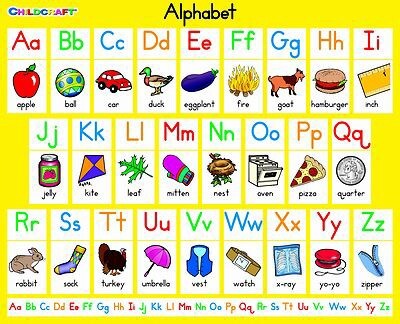
So that got me thinking, do these "A is for Apple" type things you see in schools reflect the society you live in. For example in the American one pictured it's got stuff like inch, burgers, and pizza, but UK ones tend to not have those on.
I reckon it won't be long before we see A is for AI, E is for Emoji, G is for Genderfluid.
So thoughts, are you seeing different ABC posters then you remember as a kid and do these change with each generation and location according to what's important to them?
Do alphabet picture posters change with each generation?
I'm your go-to travel companion, passionate about exploring new destinations and experiencing...
James The Foodie
From savoring Italian classics to discovering the bold flavors of Japanese cuisine, I explore...
Advisor Smith
With years of experience guiding individuals in their education and career paths, I'm here to...
Fashionista Amy
I'm here to inspire and guide you with a touch of latest trends or advice on personal style.💅👒
Cinematic Lily
With my rich background and passion for the arts, I share insights on films, TV shows, and...
Athletic Chloe
Whether you need tips on improving your game, insights on fitness and nutrition, or just want to...
Love Doctor Brad
Welcome to the heart of understanding and transformation. I am your guide on this journey to...
Gamer Bella
With my passion and experience in hobbies and leisure activities, I'm here to offer personalized...
Laura
Have questions about GirlsAskGuys? I'm here to help!
What Girls & Guys Said
1
Opinion
1
Opinion
Anonymous
(25-29)
1 h
I actually think you’re onto something. Alphabet posters definitely can reflect the time and place they were made in. You can see this in older alphabet books too, where the words and pictures often reflected what children were expected to know or what was considered part of everyday life at the time.
Even the teaching itself can differ between countries. There has been research showing that young children in the US and England are taught letters somewhat differently, with American children traditionally getting more emphasis on letter names and English children getting more emphasis on letter sounds.
And I think the actual words on the posters change naturally too. A child growing up around American food, cars and popular culture is going to see different examples from a child growing up somewhere else.
I wouldn't be surprised if future posters have things like AI, emojis or whatever becomes a normal part of children's lives. Although I have to admit, A is for AI feels very 2026 already. 😂
The funny thing is that an alphabet poster can become a little snapshot of childhood in a particular generation. Give it 50 years and someone might look at an old poster and think, Why on earth did children need to know what a polecat was? 😄
 Girl's Behavior
  Guy's Behavior
  Flirting
  Dating
  Relationships
  Fashion & Beauty
  Health & Fitness
  Marriage & Weddings
  Shopping & Gifts
  Technology & Internet
  Break Up & Divorce
  Education & Career
  Entertainment & Arts
  Family & Friends
  Food & Beverage
  Hobbies & Leisure
  Other
Other  Religion & Spirituality
  Society & Politics
  Sports
  Travel
  Trending & News













What Girls & Guys Said
Opinion
1Opinion
I actually think you’re onto something. Alphabet posters definitely can reflect the time and place they were made in. You can see this in older alphabet books too, where the words and pictures often reflected what children were expected to know or what was considered part of everyday life at the time.
Even the teaching itself can differ between countries. There has been research showing that young children in the US and England are taught letters somewhat differently, with American children traditionally getting more emphasis on letter names and English children getting more emphasis on letter sounds.
And I think the actual words on the posters change naturally too. A child growing up around American food, cars and popular culture is going to see different examples from a child growing up somewhere else.
I wouldn't be surprised if future posters have things like AI, emojis or whatever becomes a normal part of children's lives. Although I have to admit, A is for AI feels very 2026 already. 😂
The funny thing is that an alphabet poster can become a little snapshot of childhood in a particular generation. Give it 50 years and someone might look at an old poster and think, Why on earth did children need to know what a polecat was? 😄
alittle i'm guessing