
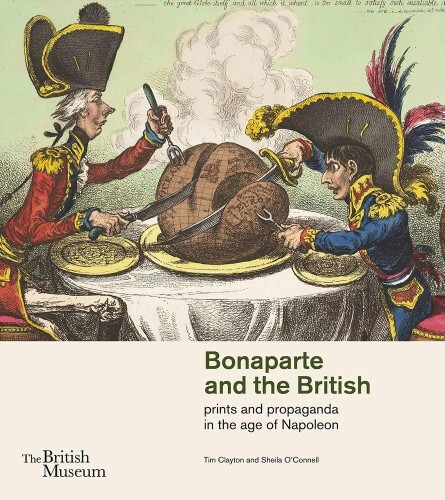
Did Britain really 'liberate Europe' from Napoleon - or just protect its own naval and commercial supremacy?

Girl's Behavior
Guy's Behavior
Flirting
Dating
Relationships
Fashion & Beauty
Health & Fitness
Marriage & Weddings
Shopping & Gifts
Technology & Internet
Break Up & Divorce
Education & Career
Entertainment & Arts
Family & Friends
Food & Beverage
Hobbies & Leisure
Other
Religion & Spirituality
Society & Politics
Sports
Travel
Trending & News 
Britain helped free Europe from Napoleon’s domination, but its central aims were its own security, a European balance of power, and protection of its maritime and commercial interests. “Liberating Europe” captures part of the outcome; it is a poor description of the whole purpose.
Britain’s interests were closely connected. A France that controlled the continent could command ports, resources, and markets against Britain. Preventing that dominance protected both British independence and British trade. Historians therefore describe British war aims in terms of security and balance of power alongside imperial and commercial ambition. Britain emerged in 1815 with unrivaled maritime influence.
There was nevertheless a real liberation involved. Napoleon’s defeat ended French imperial control over much of Europe. The allies explicitly committed themselves in the 1814 Treaty of Chaumont to restoring a “just balance of Power.” That objective served Britain, but it also served states struggling against French domination. Self-interest and a beneficial result can coexist.
Liberation from French rule did not necessarily mean political freedom. The settlement at Vienna largely protected dynasties and redistributed territory among great powers. Austria gained control in northern Italy; Russia gained much of the former Duchy of Warsaw. National independence, liberal government, and popular consent were secondary to stability and the interests of the victors.
Nor did Britain accomplish this alone. Waterloo was won by Wellington’s multinational army together with Blücher’s Prussians. Describing it as Britain saving Europe obscures the coalition character of the victory.
My assessment is that the patriotic “Britain liberated Europe” account is selective, while “Britain merely protected its commerce” is too narrow. Britain fought a genuine threat to its security, helped destroy an expansionist empire, and secured a settlement exceptionally advantageous to itself. Those were overlapping achievements, rather than mutually exclusive explanations.
Yes. Also Britain could not have a power like the napoleon empire in control of all of Europe from spain all the way to the boarders of Russia that encompassed all their industries, all their manpower and all their foreign colonies or theyd be overwhelmed when he consolidated it.
Britain had always tried to stop its rivial European nations with colonial empires from uniting against it. Though the unification of German states under prussia was never foreseen until it was too late.
https://youtu.be/37iHSwA1SwE?is=XSzd5n4C59NzTgb-Personally, I think saying Britain simply liberated Europe from Napoleon is a little too simplistic. Britain absolutely played a major role in defeating him, especially through the Royal Navy, financial support for coalitions, Wellington’s campaign in the Iberian Peninsula, and finally Waterloo.
But Britain also had very clear national interests. Napoleon’s Continental System threatened British trade, and British leaders were deeply concerned about French control of Europe and the possibility that it could undermine British naval and commercial power. Britain even seized the Danish fleet in 1807 because it feared it could fall into French hands.
So I’d see it as both things. Britain was fighting Napoleon because his expansion threatened the European balance of power, but Britain was also protecting its own security, trade and position as a major naval power.
And Britain certainly didn't defeat Napoleon alone. The Spanish and Portuguese resistance, Russia, Prussia, Austria, Sweden and other coalition forces were all important. Waterloo itself was a combined Anglo Allied and Prussian victory.
So the word liberate depends on whose perspective you're looking from. For some Europeans, British intervention genuinely helped free territory from French control. From the British government's perspective, protecting Britain was obviously a major part of the calculation too.
Opinion
8Opinion
Both.
It's a similar game being played by the USA today.
Back then, the British Empire didn't want a French rival equaling it. But it needed the French and rest of Europe to not be completely destroyed either.
No, UK was the bad guy in that time and wanted to keep the people in slavery in order to protect their own monarchy sistem! Later on in 1848 the revolutions in demand of liberty, equality and fraternity PROVE, Napoleon was right!
did this platform block you a couple of time and you make a 9 account?
not brits! in germany, Russia, Prussia, Austria, and Sweden overwhelmed the French army. Some of Napoleon's own German allies changed sides.
Two empires out for themselves. They say France sold the US what is known as the Louisiana Purchase just to screw over GB by creating a powerhouse country.
both things can happen and be at the same time...
I guess that depends on whether you consider Napoleon better or worse than the rulers before and after him.
Napoleon fought in 7 wars and didn't start a single obe of them. Each war was legitimately self defense
Protect their own interests because the monarchs wanted to maintain their power.
We liberated you. You should thank us.
How about... both at the same time?
You can also add your opinion below!