It is fairly hard to pin it down, certain things like the treaty of Paris that ended the Seven Years wars pretty much handed Great Britain its empire, that coupled with Clive, Wellesley brothers efforts in India led to the recently acquired French possessions there becoming a ‘United’ Indian subcontinent. The loss of the American colonies, meant that there was no place to deport criminals to, luckily they took advantage of this very large very remote ‘island’ called Australia and started a long effort of shipping off convicts there. There are 3 main elements to the rise of the empire, commerce, conquest and colonisation.
I fully agree with the war of Spanish Succession (there is a However).
stealing a wiki quote
Great Britain British foreign policy was based on three general principles, which remained largely consistent from the 16th through the 20th centuries. The first, overriding all others, was to preserve a balance of power in Europe, an objective threatened by French expansion under Louis XIV. The second was to prevent the Low Countries being controlled by a hostile power or one stronger than Britain; this included both the Spanish Netherlands and the Dutch Republic, whose deep harbours and prevailing winds made her a natural embarkation point for an attack on England, as demonstrated in 1688. The third was to maintain a navy strong enough to protect British trade, control her waters and launch attacks on her enemies' commercial routes and coastal areas.
While the War of Spanish succession gave GB a good uplift if territory, France still needed to be contained and the Seven Years war did just that by elevating Prussia to a fully fledged European power. This allowed Great Britain to concentrate globally with its rather small military.
to quote John Robert Seeley (1868) “We seem, as it were, to have conquered and peopled half the world in a fit of absence of mind”. He was referring to the outcome of the War of Spanish Succession.
What is interesting to note is that France under Louis XIV until Napoleon, threatened the balance of power, Belgium and Holland.
Historians refer to this period (Louis XIV to Napoleon) as a second Hundred Years' War. But unlike the first, what was at stake here was world domination.
Yeah for some reason it’s always been a policy, trade or military about the Low Countries. That period of time pretty much shaped the world, we could now all be speaking French or Spanish, most likely French as Spain had nose dived dramatically. Those 13 colonies nor Canada would never have been, India would have became a part of the French Empire. The Treaty of Paris is where the American War of Independence started. The treaties of Utrecht and Paris were major to how everything played out going forward.
Yes exactly, I completely agree with you. But the Spanish empire after the battle of Rocroi seriously declined. Moreover, during the War of the Spanish Succession, it was France that carried the Spanish monarchy at arm's length.
As the English historian Robert Tombs said about the Second Hundred Years War between France and the United Kingdom, we shaped the world. Forgive me, I'm not a fan of the end result of this war 🤣
to quote John Robert Seeley (1868) “We seem, as it were, to have conquered and peopled half the world in a fit of absence of mind” If Spain had of been the dominant power we would have not have progressed as well as we have, they are not exactly into personal freedoms nor inventions. If Spain had become dominant I would put money on the restarting of ‘the Crusades’
Haha maybe. Surprisingly, France, which was very religious, also learned a different path with Richelieu, who based relations between states not on religion but on national interests, see also our alliance with the Ottoman Empire.
It's a shame that France had reached a kind of apogee under Louis XIV in 1690, and even had the most powerful navy, which forced the Anglo-Dutch to ally themselves even on the sea.
It was the only time that France had such power at sea.
Where the English played it smart was that you always maintained a network of alliances on the continent. France, on the other hand, always worried its neighbors, which had the unfortunate habit of uniting Europe against us. France couldn't fight on land and sea in the same time.
We had a really clever minister under Louis XVI, called Vergennes, who secured a network of alliances in Europe, enabling France to devote its resources to its navy and colonial territory during the American War of Independence.
But on the whole, the English were more skilful with their network of alliances.
Yes it’s always been a thing going back to almost Roman times on persuading others to assist with the fighting. The population has never been large and our military small, however events such as the Battle of Plassey where Clive with 3000 defeated an army with 50,000 point to how well those small numbers and erm money can be used.
But the English developed an excellent economy, which enabled them to finance their allies in Europe.
Interestingly, I've read several English historians on this long period of rivalry. And English historians are less harsh in their analysis of France at the time than the French.
England becoming a (mostly) united single country with more coastline than most European countries meant that aside from the British Civil War between the Cavaliers and the Roundheads there hasn't been a major war in Britain for over 500 years - the Jacobite Rebellion, while bloody, never truly threatened the power of the Crown.
That unity basically meant the British could strike out and dominate on the oceans, which then allowed the Empire to grow by utilising fleets to carry what was arguably the best trained and equipped army of the day. Less socially developed and cohesive countries with larger populations such as India didn't have a cohesive single army, so the British tended to annihilate the most powerful and make deals with weaker ones, providing arms and training in return for capitulation to the Crown.
Other countries like Australia and New Zealand placed the British against indigenous populations armed with clubs and maybe slings against a modern army with gunpowder. No contest - Rourke's Drift not withstanding.
What stopped Britain from still being the main global power was the American Revolution and resulting independence in 1776. If the 13 American colonies had been represented in the British parliament then the War of Independence wouldn't have happened. King George III was insane and his son was a moron.
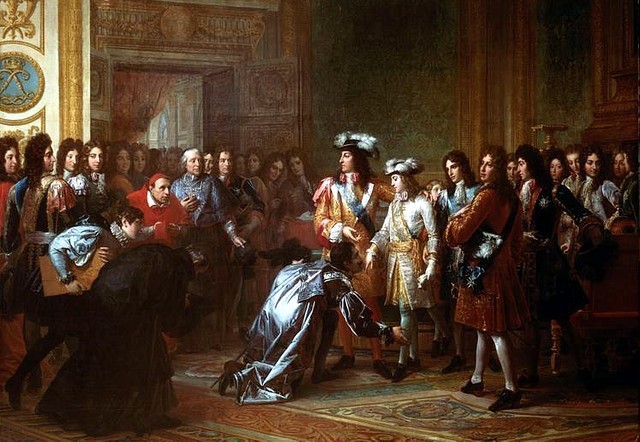
The War of Spanish Succession was concurrent with the formation of Great Britain, but I don't think there's a good argument against it as becoming a major power at that time. Britain's actual dominance came much later though, after the Napoleonic wars and solidifying itself in Africa and Asia.
I'd have to say the Seven Years' War, which in lasted nine years, between 1754 and 1763. British involvement in the conflict began in 1754 in what became known as the French and Indian War. However the warfare in the European theatre involving countries other than Britain and France commenced in 1756 (hence the name "Seven Years' War"). Britain emerged from the war as the world's leading colonial power,
I would agree totally in terms of war but I think the Glorious Revolution should not be overlooked as a precursor. That is probably not a surprise since I bang on about it.
Great choice!!! I think that and the English civil war / glorious revolution solidified it via MASSIVE subsidies too the British East India company and legit piracy. Very impressive choice!!!
 Girl's Behavior
  Guy's Behavior
  Flirting
  Dating
  Relationships
  Fashion & Beauty
  Health & Fitness
  Marriage & Weddings
  Shopping & Gifts
  Technology & Internet
  Break Up & Divorce
  Education & Career
  Entertainment & Arts
  Family & Friends
  Food & Beverage
  Hobbies & Leisure
  Other
Other  Religion & Spirituality
  Society & Politics
  Sports
  Travel
  Trending & News