 Girl's Behavior
 Guy's Behavior
 Flirting
 Dating
 Relationships
 Fashion & Beauty
 Health & Fitness
 Marriage & Weddings
 Shopping & Gifts
 Technology & Internet
 Break Up & Divorce
 Education & Career
 Entertainment & Arts
 Family & Friends
 Food & Beverage
 Hobbies & Leisure
 Other
 Religion & Spirituality
 Society & Politics
 Sports
 Travel
 Trending & News


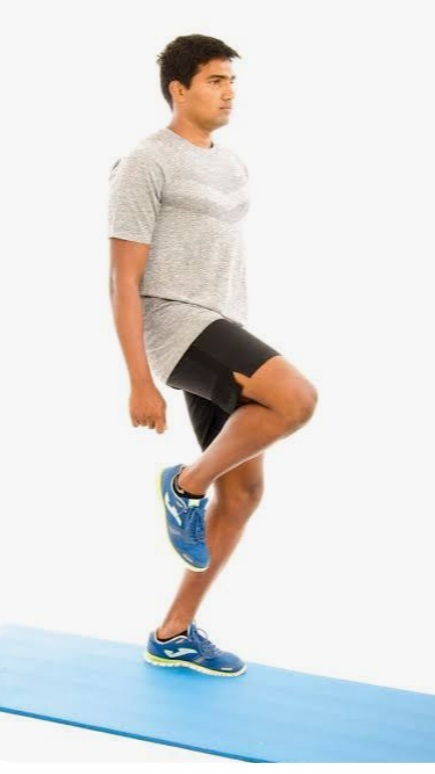
Research shows that one leg balance declines faster with age than muscle strength or walking speed.
Balancing 30 seconds or more indicates strong balance and healthy neuromuscular aging.
Balancing 20 seconds is a solid target for daily functional stability.
Balancing 5 seconds or less signals a high risk of falls and a strong need for balance training.
Balancing 2 seconds or under is associated with a significantly higher multi-year mortality risk in older adults, though training can reverse these declines.
There are benefits for standing on one leg:
Brain health because it activates the pre-frontal cortex and improves neuroplasticity, spatial awareness, and working memory.
Muscle and joint strength because it engages ankle stabilizers, calves, quads, hamstrings, glutes, and deep core muscles.
Fall prevention because it sharpens reaction times so you can catch yourself if you trip or stumble.
You can practice while you are doing chores, or doing activities usually stood still on two legs.
But I thought the question might interest our older members.