 Girl's Behavior
  Guy's Behavior
  Flirting
  Dating
  Relationships
  Fashion & Beauty
  Health & Fitness
  Marriage & Weddings
  Shopping & Gifts
  Technology & Internet
  Break Up & Divorce
  Education & Career
  Entertainment & Arts
  Family & Friends
  Food & Beverage
  Hobbies & Leisure
  Other
Other  Religion & Spirituality
  Society & Politics
  Sports
  Travel
  Trending & News

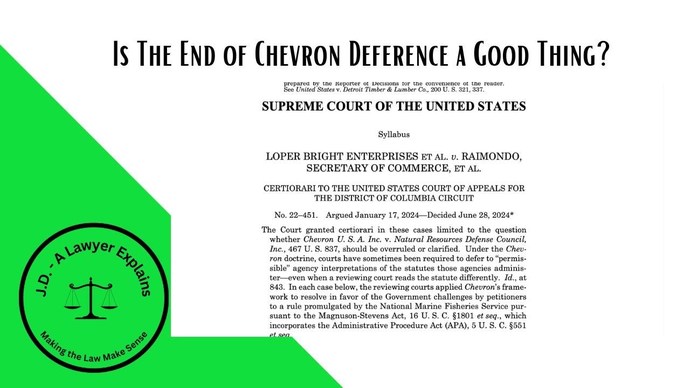
Having watched the power of Congress reduced to nothing, its own in question, and the enormous power now concentrated in the executive branch, the Supreme Court has made an effort to restore a balance of power between the three branches of government. This is an important development. Possibly it will save us from tyranny.
In overturning the Chevron ruling, the Supreme Court ruled that judges must interpret the statutory intent of Congress in passing a statute and not simply defer to regulatory agencies’ interpretations of the statute.
The independence of executive branch regulatory agencies had gone so far that the Securities and Exchange Commission (SEC) was making in-house decisions on civil penalties. The Supreme Court ruled that penalties require jury trials, and that the SEC is not prosecutor, judge, and jury.
Justice Gorsuch said that the Supreme Court’s decision takes law out of the hands of the federal branch and places it again where it belongs in the courts’ reading of the legislature’s intent.




















Most Helpful Opinions