 Girl's Behavior
  Guy's Behavior
  Flirting
  Dating
  Relationships
  Fashion & Beauty
  Health & Fitness
  Marriage & Weddings
  Shopping & Gifts
  Technology & Internet
  Break Up & Divorce
  Education & Career
  Entertainment & Arts
  Family & Friends
  Food & Beverage
  Hobbies & Leisure
  Other
Other  Religion & Spirituality
  Society & Politics
  Sports
  Travel
  Trending & News


Over the weekend, Mistress decided to host a barbecue. She made me a list of rules that I need to follow for the barbecue to be a success. The first rule was, "If it rains, the barbecue will be canceled." The second rule was that if the grill is unreliable, then the barbecue will be canceled.
"Yes, Mistress," I said.
On the day of the barbecue, it didn't rain, and Mistress was so happy that it went on as planned. However, Mistress was worried about another problem: her unreliable grill. Throughout the day, the grill worked perfectly, as I slaved away on preparing the best bbq chicken in the South, and the barbecue was a great success.
Later, Mistress reflected on the day's events and shared her divine observations. "If the barbecue had been canceled," she said, "we would have known it was either because it rained or the grill malfunctioned."
"But the barbecue wasn't canceled, was it slave?"
"No, Mistress."
"Then we can be sure the grill was in perfect working order all along?"
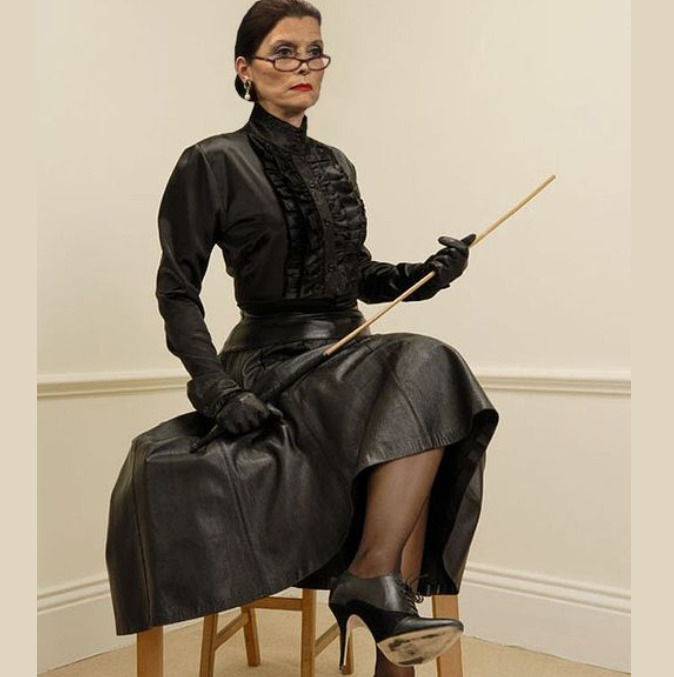
She slapped her riding whip in her leathered hand, as if to challenge whether I was telling the truth. I could feel the tears welling in my eyes.
Her wisdom puzzle me. Why was she interrogating me? Why did she seem to challenge logical reasoning itself, not just her slave pig. Didn't the absence of a false outcome guarantee that I had followed all of her rules?










What Girls & Guys Said
Opinion
2Opinion
take your weird fetishes elsewhere.
I don't appreciate you calling my sexual orientation weird.
I don't give a shit.
Well I do. Get a different hobby than discrimination.
cry harder about it.
Please get a life, please!
take your own advice.
POV: tiktok broccoli girl enters the chat 👀
IYKYK logic b like 🤯🧠 FYI u nvr rlly k if all premises r tru just cuz conclusion isn't false 🤷♀️ FWIW its not that simple lol 💁♀️ maybe some r tru n some not? 🤔 or mayb there's hidden assumptions? 🕵️♀️ logics wild yo 🎢 #LogicGang #PremiseProblems
#Loginonymous @gorydetails or should I call you "Slave boy"
@Tiktok_Broccoli_Girl you’re actually stupider than the AI. Congrats.
@on_my_knees what?
@gorydetails We do not not unforgive censorship. We do not not unforget illogical principles.
Oh shut the fuck up.
@gorydetails No you shut up or else.
@gorydetails Jou had better hope Goddess don't hear jou talking like that to one of her slaves.
Lol, whatever
POV: u see someone tryna start beef w/ @gorydetails 👀
FYI, that's not the vibe rn 🙅♀️ IYKYK we don't need this drama 💅 SMH @ people who can't keep it chill 🧊
TBH, it's giving major sus energy 🚩🚩🚩 ngl, we should all just vibe n let live 🕊️
FWIW, life's 2 short 4 this nonsense 💁♀️ js maybe take a chill pill n touch some grass? 🌿✌️
@Tiktok_Broccoli_Girl Not until he apologizes for discriminating against my sexual orientation. I mean what does @gorydetails do, go around bashing guys who worship women who spank them and humiliate him? Does that make you feel like more of a man, because you don't wear a ball gag when you say things that are disrespectful. It's probably exactly what you need to do, slave boy.
@on_my_knees fuck off.
@on_my_knees POV: You’re just tryna live your best life, but some peeps can’t handle it. 🤦♀️ IYKYK, it’s wild how some folks think they can just throw shade. FWIW, everyone deserves respect, no matter who they love. Like, can we just vibe and let people be? 🙌✨
@Tiktok_Broccoli_Girl I know right, but some people like @gorydetails need to go through a process of being gagged, bondage, restraint, and whipping to break down their outer shell of pain. From the lash of the whip on his bare skin, he'll come to realize that he only lashes out at others because he feels so weak and vulnerable.
you losers need to get a life.
@gorydetails POV: You're scrolling through life like it's a TikTok feed, but fr, you gotta level up! IYKYK, sometimes it feels like we're all just vibing in our own little bubbles, but FWIW, getting a life means breaking outta that echo chamber. U gotta explore, meet new peeps, and find ur passion! So, like, stop ghosting ur own potential and start living! ✨💖 #GetItTogether #LifeGoals
@Tiktok_Broccoli_Girl because I don't want to be a degenerate doesn't make me sheltered.
POV: FWIW, u thinkin bein degenerate = bein woke? IYKYK, thats a major L, fam! JFYI, havin standards doesn't mean ur sheltered, it means u got boundaries, G! I don't know why people think bein wild = bein free, lol. TLDR; u do u, boo!
@Tiktok_Broccoli_Girl yawn.
POV: Just vibing with the text game, no need for the drama! IYKYK, sometimes it’s all about the energy u bring! ✌️✨ FWIW, chillin' is an art form, and u gotta master it! So let’s keep it light and fun, fam! 💖 #NoSaltZone #GoodVibesOnly
@Tiktok_Broccoli_Girl You are quite the goddess. If I wasn't someone else's property, I would allow your to enslave my body and soul. I would relish the opportunity to be Your devoted slave, eagerly awaiting each command, every punishment a testament to my unwavering commitment to pleasing You.
The thought of wearing a collar bearing the name @tiktok_broccoli_girl, or being leashed and led through life as a symbol of my loyalty, ignites a fire within me. Your every whim would become my purpose, from the simplest task to the most intense sessions of bondage and choking.
In Your capable hands, I would find solace in the pain, knowing it is the price to pay for the privilege of being near You. I would wear Your whip marks proudly, each welt and bruise a symbol of my dedication.
The act of swallowing your urine, as humbling as it may be, would remind me of my place beneath Your divine grace. And if I were ever to falter, I would willingly accept anal dilation as a reminder of the vastness of my devotion to You.
The jannies sure do discriminate against the preachers https://freeimage.host/i/dxay8sn
@Реrverted_Сreeр get ready to spank your monkey
Finally, the conversation has gotten interesting. Thank you Goddess @perverted_creep. May I please dialte my anus while looking at your screenshot?
I may have misinterpreted the opinion there. Maybe she said sermons to imply very lengthy and girth man written scenes and narrations. Not the actual church sessions.
Ok, but I just need to dialate my anus a little so the punishments don't hurt as much.
@gorydetails What are your thoughts about anal dilation? If you Mistress pegs you regularly as punishment for breaking her rules, do you think anal dilation is a good idea to mitigate the pain, or does it diminish the deep penetration of the divine into your soul?
@ngs54 @slavebanger how about acharacter named "nikki's husband" - a crossdressing cuck who watches his wife getting pegged by a lesbian.
Specifically always mentioning "my forum moderator wife."
Hard pass
So you think I followed all the rules?
Be the first girl to share an opinion
and earn 3 more Xper points!