Voted No. As the 17th century British statesman and political philosopher wrote, . . . The extreme of liberty (which is its abstract perfection, but its real fault) obtains nowhere, nor ought to obtain anywhere. Because extremes, as we all know, in every point which relates either to our duties or satisfactions in life are destructive both to virtue and enjoyment. Liberty, too, must be limited in order to be possessed... For liberty is a good to be improved, and not an evil to be lessened."
The point of democracy being that it is freedom in the pursuit of virtue and not liberty as an end in itself. Thus making its' outer limits the point at which democracy questions and abolishes itself, thereby abolishing the pursuit of virtue which is its' end.
This point is lost in a populist era where "the people" themselves are judged virtuous just by the very fact of their being "the people." Lost sight of in this intellectual hall of mirrors that, as Burke again put it, “Men are qualified for civil liberty in exact proportion to their disposition to put moral chains upon their own appetites. ... Society cannot exist unless a controlling power upon will and appetite be placed somewhere, and the less of it there is within, the more there must be without. It is ordained in the eternal constitution of things that men of intemperate minds cannot be free. Their passions forge their fetters.”
Yet democracies are prone to this error more than not. As the people are the source of authority, they are apt to judge their own actions - and thus their own motivations - benignly. It is why Burke called a pure democracy "the most shameless thing," and why the Founding Fathers inserted so many anti-democratic mechanisms into the Constitution. (See also the Electoral College, the Senate, etc.)
Thus the limits on democracy are those limits necessary to preserve the ultimate end for which it is founded. The purpose, again to repeat, being the pursuit of virtue. Virtue here defined as that conducing to human excellence and, as much history demonstrates, dictatorship is not conducive to that end. Either in the collective or even in the individual. Coerced virtue not being virtuous at all.
Thus democracy is a balancing act. Burke one last time: "To make a government requires no great prudence. Settle the seat of power; teach obedience; and the work is done. To give freedom is still more easy. It is not necessary to guide; it only requires to let go the rein. But to form a free government; that is, to temper together these opposite elements of liberty and restraint in one consistent work, requires much thought, deep reflection, a sagacious, powerful, and combining mind."
Interesting, this is where I agree with the founders on protecting the minority. Their anti- majority rules in some cases was pretty forward thinking. I just read how Weimar and practically every French democracy voted to destroy itself. But they didn’t have the Constitutions protections.
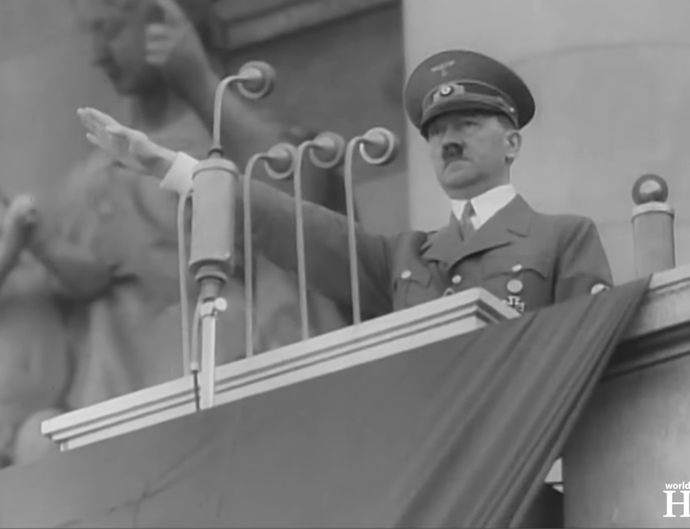
Although if this were to play out, like passing an “Enabling Act” say, it would come down to how SCOTUS views the constitution and I don’t have much faith in their unbiased rulings. If a majority of the party wanting the Act is in the scotus, I fear the enabling act would be passed.
Of course. If democracy voted for killing to be legal then it should be or whatever else they vote for. Otherwise that's not a democracy, that's a republic which sadly every country is. Because not a single country would let you just vote to change the laws they have hardest into their governments so you have to rely on leaders to change them minorly over time. Rather than the public get one big vote.
I get the argument, that if its the will of the people why not allow it? Thats what democracy is about. But a democracy shouldn't be able to destroy themselves and take away power from the people. Reason for this is, that most of the time in history when a democracy destroyed themselve someone else was de facto allready in power and they use this as a way to consolidate their power. If an authoritarian is really suported well enough to be given absolute power why not let him make laws that all people just agree with inside the democracy? And if he is worse than people think, (which 99% of the time is the case with authoritarians) he isn't really in power but just to that moment supported enough to let it seem that way.
I know german history. Rise and fall of the Nazi tyranny was a subject I had close to every year in school. Thats why it was important for me to say, that it should be impossible to abolish democracy even when you have the power inside the democracy to do it.
The question makes no sense, you can either have the U. S. Constitution or you can have democracy and/or authoritarianism. You cannot have both.
The U. S. Constitution places strict limits upon what kind of power each goverment can have and no vote can change that. As such the U. S. A. is not a democracy and has no office or vote capable of authoritarianism.
Our congress isn't capable of passing an "enabling act" and regardless doesn't even have the means to enforce it even if they wanted to. In our system that power along with the practical means is deliberately divided among the States who operate under independently operating and elected governments.
You would need a large majority of them to be on board to wild that kind of power.
You realise that changing your constitution is as easy as changing our constitution yours as a republic and ours as a democracy. In both cases it requires two thirds of all votes. In fact:. Germany was required to copy that part from you after WW2 (which is a good thing). Yes its hard to achieve a 2/3 of all votes but not impossible.
She’s right. 30 (red) states already voted for a constitutional convention. Need 35ish I think for 3/4s. And at the convention, the founders didn’t bother to write out any rules or processes to rewrite the constitution.
she is absolutely correct, and if they were to get the 36ish states they need it becomes a bit vague in some ways that aggressive folks such as we are dealing with could go "rogue" and simply re-write the entire document to their liking... force a judgement on whether something that radical is permissable. It's what they do. They attack anything that appears to be a tiny loophole.
If they vote for it, yes. If you denie people the right to vote, soon you end up with the type of tyranny where the leader can ban Winnie the Pooh just because someone said Pooh looked like him.
 Girl's Behavior
  Guy's Behavior
  Flirting
  Dating
  Relationships
  Fashion & Beauty
  Health & Fitness
  Marriage & Weddings
  Shopping & Gifts
  Technology & Internet
  Break Up & Divorce
  Education & Career
  Entertainment & Arts
  Family & Friends
  Food & Beverage
  Hobbies & Leisure
  Other
Other  Religion & Spirituality
  Society & Politics
  Sports
  Travel
  Trending & News