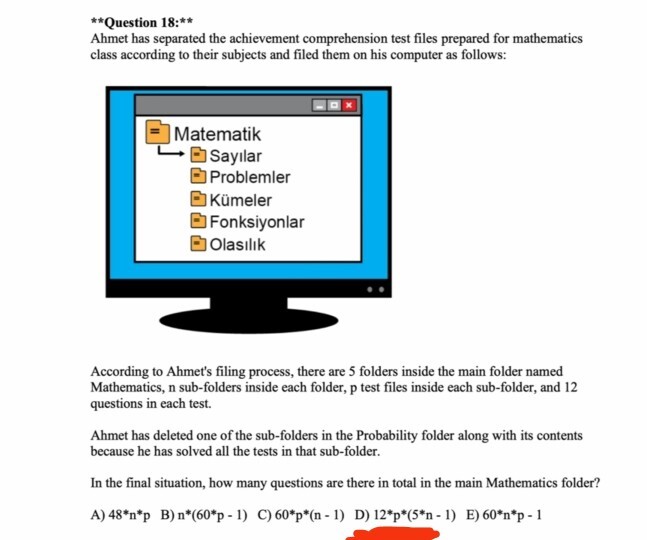
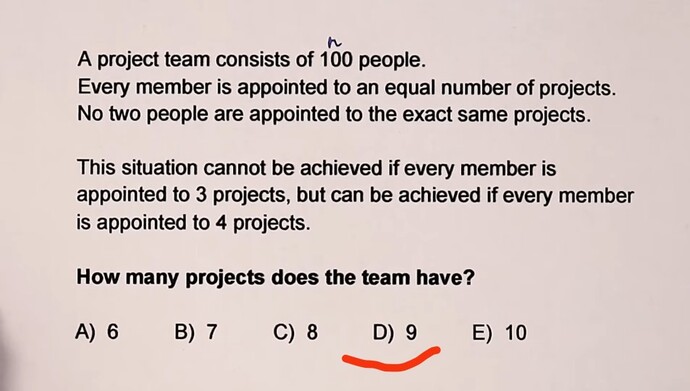
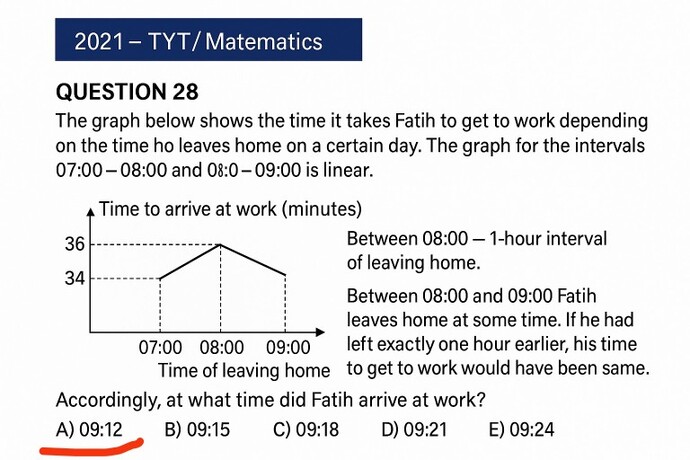
In Turkey, it is based on a written exam. The year I took it, 3,250,000 people sat for the exam, which includes questions on mathematics (problem-solving skills), Turkish (reading comprehension), and subjects like physics and history. Since so many people take it, they make the math section especially difficult. In 2021, out of 3,250,000 candidates, only 9 people managed to answer all the math questions correctly. I don’t think this system is an effective method of selecting students. Here are a few example questions from the exam:
Updates
1 y
By the way, the exam is timed you have to complete 135 questions in 165 minutes. Getting into a university is not difficult, but getting into a good one is. For that, you need to rank at least in the top 50,000.
How difficult is it to get into university in your country, and what is the admission based on?
Sweden, at least when I was still in academia, operated on a three quota system. Highschool results, University Aptitude test, Foreign grades and real life and work experience.
As for my university we had a maximum and minimum accepted rate of 20/20 graduating score and 2.5 / 2.5 merit points to get in for highschool. Meaning you needed an A in every subject, plus merit points. So it is just a complete random chance.
For aptitude test we asked for, I believe a 1.8/2. Which equated to about the top 1% of people taking it. It is basically an academic version of an IQ test. Simple but demands good fundamentals.
For the Foreign/Real life quota I believe each case was tested uniquely. But it is basically similar. Top grades possible or real life experience that already makes you a professional in the field.
All in all I do not think it is that difficult to get in. While top 1% sounds fairly demanding all that means in reality is that you had to study a few hours a week or be lucky and have the right type of mind to do well on the aptitude test.
As for just getting into any university? I think that is very easy. As long as you graduate highschool there will be options available.
Ah. While I am blanking on what class this was we, not my uni but Sweden, had a hiccup in the system once where the bottom qualified rather than the top qualified people got accepted. It was solved by opening another class.
The reason I mention it is that very interestingly this 'bottom of the qualified' students did not end up performing particularly different than the norm. While we can argue being grateful and other things, it remains one of my favourite anecdotes about how grades are really just grades and not true indications of ability.
Getting into a university in Australia depends on the institution and the specific course you're applying for. While some courses at top universities are highly competitive, others have more accessible entry requirements.
In many countries, university admission is increasingly competitive. Looking at Turkey as an example, the reliance on a single, high-stakes exam can be daunting and may not fully capture a student's potential. Personally, I advocate for a more holistic approach, incorporating interviews, extracurricular activities, and personal statements alongside standardized tests. This provides a broader perspective on a candidate's capabilities and potential. By diversifying assessment methods, students are evaluated more comprehensively, which can lead to a more well-rounded educational experience and benefit institutions in selecting candidates who bring diverse strengths.
I assume you’re in America. It’s said that there are many universities in the U. S. but does going to any university there mean receiving a good education? And is it easy to find a job related to one’s field?
Opinion Owner
1 y
I'm in South-East Europe.
The only opinion from girls was selected the Most Helpful Opinion, but you can still contribute by sharing an opinion!
 Girl's Behavior
  Guy's Behavior
  Flirting
  Dating
  Relationships
  Fashion & Beauty
  Health & Fitness
  Marriage & Weddings
  Shopping & Gifts
  Technology & Internet
  Break Up & Divorce
  Education & Career
  Entertainment & Arts
  Family & Friends
  Food & Beverage
  Hobbies & Leisure
  Other
Other  Religion & Spirituality
  Society & Politics
  Sports
  Travel
  Trending & News


















Most Helpful Opinions