 Girl's Behavior
  Guy's Behavior
  Flirting
  Dating
  Relationships
  Fashion & Beauty
  Health & Fitness
  Marriage & Weddings
  Shopping & Gifts
  Technology & Internet
  Break Up & Divorce
  Education & Career
  Entertainment & Arts
  Family & Friends
  Food & Beverage
  Hobbies & Leisure
  Other
Other  Religion & Spirituality
  Society & Politics
  Sports
  Travel
  Trending & News


1. Workout abs everyday
Your abs take time to recover after a workout like your back muscles ( lats, traps, erector spinae) would. It takes on average 48 hours for the abs to recover.
Exercise breaks down bone as well as muscle. In response your body builds it back up stronger if there is adequate rest and nutrition intake between workouts. If there isn't adequate rest and nutrition intake then your bone and muscle don't build back up stronger, instead they get smaller and weaker because they are broken down more than they can build back up.
If you were doing crunches, bending , or twisting of the back , you are breaking down bone in your spinal column(your vertebrae make each individual part) when you do them. The bones in your spinal column don't recover as fast as most of your other bones. In response, you need a longer rest period between workouts than you do with a chest workout or lower body workout.
2. Crunches , Sit-ups, spine twisting and bending exercises should be high reps
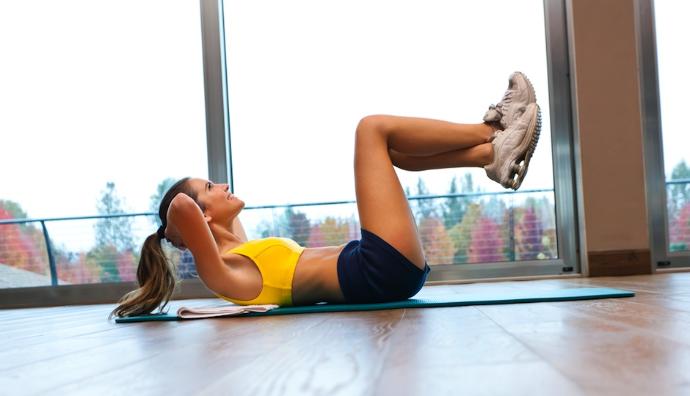
Sit ups, crunches, Russian ball twists, any exercise that requires frequent twisting, bending , and especially twisting while bending is damaging to the spine in certain amounts with certain resistance. How much exactly depends on the person, their individual bone structure, how well adapted their bones are to handle those motions with resistance, how much damage is done already, and what they can safely control.
Doing sets of 50-100 sit-ups and crunches isn't healthy for your spine. Limit them to 1-4 sets of 6-12 depending on your goals and progression rate. There's other ways to work your abs.
3. Everybody should be doing crunches , sit-ups, and twisting exercises to work out their abs
Some people shouldn't have them in their program for a few reasons. They have previous spine injuries, they were power-lifting for a while, they were frequently bending and twisting thier spone before the workout or will do that frequently after the workout, as well as their individual bone structure.
I say power-lifting because doing barbell squats and dead-lifts stresses your spinal column, then your spine rebuilds the bone to better accommodate compressive force on it. Compressive force is when two opposite forces push into a object in between them. This is how the spine gets better suited to stabilize under high forces without breaking.
In the process of getting better at taking compressive forces, it becomes more vulnerable to shear forces when twisting and bending. The opposite happens when someone does activities that require frequent twisting and bending, they get more adapted to take those kinds of forces but in the process get more vulnerable to handle compression forces.
A power lifter experienced enough to have their spine adapt better to compressive forces are now more vulnerable to injuries to bending and twisting motions of the spine. Doing those kinds of exercises will make them more vulnerable to injury when they power-lift because the spine will start adapting to taking forces from bending and twisting, but less capable of taking compression forces from power-lifting.
Someone who has frequently bent and twisted their spine before the workout doesn't need to add more stress to their spine. They should be working their abs a different way. Same if they are going to be bending and twisting their spine a lot after.
4. #3 (cont) + Everybody should be able to do the same workout with the same technique and range of motion
Everyone's bone structure is different, there's people who's spines are built better to take compressive forces, or bending , or twisting forces, while being more injury prone to the other forces.
The range of motion they can safely do is dependent on the bone structure and joint structure. This sets the most they can do regardless of how much flexibility or corrective exercise training they do. These safe movements and ranges of motion vary from person to person.
How likely they will get injured depends on the individual, how they progress, and what they actually do, how long they do it, the range of motion they use.This applies to every bone and joint, shoulders, knees, ankles, hips, elbows, wrists, etc. along with every other exercise, ab workout or not.
5. Balancing is mainly an ab workout
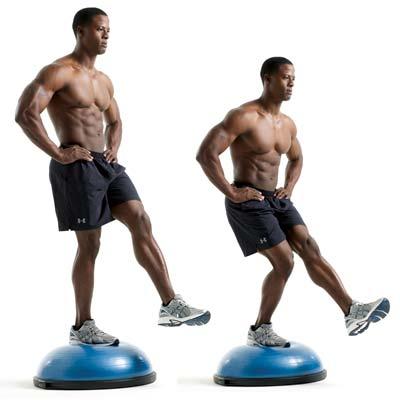
Your abs aren't the main part of the workout when balancing on a board or bosu ball. The muscles that keep adjusting your feet to stay balanced throughout the exercise are primarily worked and support that exercise. You work your core to a point to stabilize your body enough to stay over your base of support so you don't fall. The base of the building supports the higher stories, not the other way around.
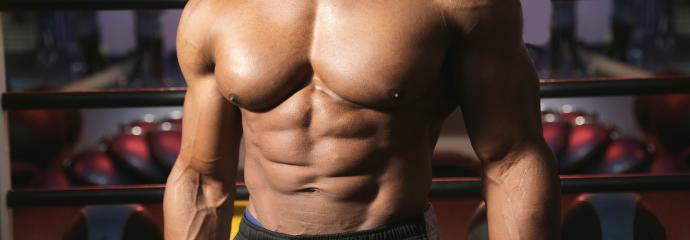
6. Working out abs is all that's needed to give a visible 6 pack
To see a 6 pack you need a low amount of body fat covering your abs. You have to exercise and have proper eating habits to lose fat. Working out your abs won't specifically help you lose fat in the abdominal area. That's a myth, when you lose fat you will tend to lose more where you have a higher percent of it. No matter how much fat you lose you will store it proportionally in a genetically determined body shape. Imagine the proportions of fat you have on different parts of your body, that's the same proportion you'll have when you lose fat, you'll just have less of it.
If you have any questions or want to know more ask me.




















Most Helpful Opinions