 Girl's Behavior
  Guy's Behavior
  Flirting
  Dating
  Relationships
  Fashion & Beauty
  Health & Fitness
  Marriage & Weddings
  Shopping & Gifts
  Technology & Internet
  Break Up & Divorce
  Education & Career
  Entertainment & Arts
  Family & Friends
  Food & Beverage
  Hobbies & Leisure
  Other
Other  Religion & Spirituality
  Society & Politics
  Sports
  Travel
  Trending & News


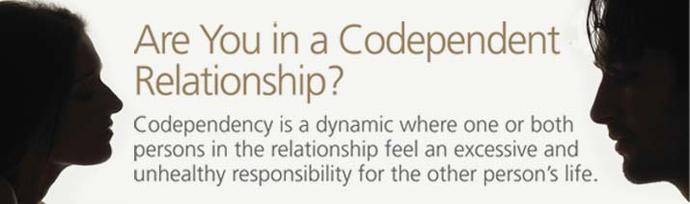
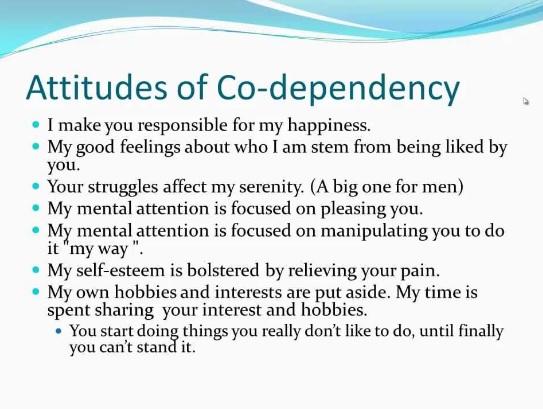
Whether you are in a relationship with someone who is affected by substance abuse or someone who engages in behaviour that is otherwise destructive to your relationship, co-dependency it what you become when you think it’s up to you to drive the relationship where you want to go based on enabling bad behaviour from your partner. Should it fail, you believe it’s your responsibility of why your partner is destructive, or you believe your partner will improve because of things you say or do.

According to Oxford, co-dependency is defined as:
Excessive emotional or psychological reliance on a partner, typically one with an illness or addiction who requires support
However, there is a lot more to it than a one-sentence definition. A state of being controlled by this person prevents them from seeking help.
I’m not a therapist, but I have been in co-dependent relationships with two different men who were alcoholics. My first relationship had me believing he could change as long as I could provide him the right tools of love to get him on the right track. When we ended, I realized his healing had nothing to do with me or my efforts at all. The second man nearly brought the co-dependency out in me again, however I recognized the pattern and the relationship ended much sooner than the first.
Two things happen in these toxic relationships. One is that the person who is sick will put the pressure on their partner to hang in there until they are well. They often cite things they need them to do in order to get better. The other is that the person who believe this, will do anything to help. The problem is, when things don’t go the way as they had promised, feelings of guilt set in, and blame is placed on the other for not following their script.
Relationships like this can involve co-dependency even if alcohol is not involved. Often times other forms of self-destructive behaviour such as a dependency on many other things will control one partner out of a healthy relationship. The co-dependent is not technically taking in the substance, but rather feels the effects of the substance on a different level. Hence why they are called “co”-dependents. They take in the damage indirectly.
To the co-dependent, just like theirpartner, their willingness to allow the behaviour to continue without professional help, just to “see how things go” or to love them more out of their problems is not realistic. It only brings about more pain on them until they realize that they are not stronger than their addiction or problem. It’s their partner that needs professional help, and they, themselves need help to curb their co-dependent tendencies.
A reader-friendly book on the subject can be found in Co-dependent No More by Melody Beattie.
Recognizing that you are in control over what you do as opposed to your partner is the first step for both of you to get the help you need. Support for co-dependency is a Google-search away, and once you recognize whether or not you identify with co-dependency, a fireside chat with your doctor to be referred to a counsellor or therapist is the start of strengthening and healing the relationship you have with yourself and your partner.
















Most Helpful Opinions