 Girl's Behavior
  Guy's Behavior
  Flirting
  Dating
  Relationships
  Fashion & Beauty
  Health & Fitness
  Marriage & Weddings
  Shopping & Gifts
  Technology & Internet
  Break Up & Divorce
  Education & Career
  Entertainment & Arts
  Family & Friends
  Food & Beverage
  Hobbies & Leisure
  Other
Other  Religion & Spirituality
  Society & Politics
  Sports
  Travel
  Trending & News

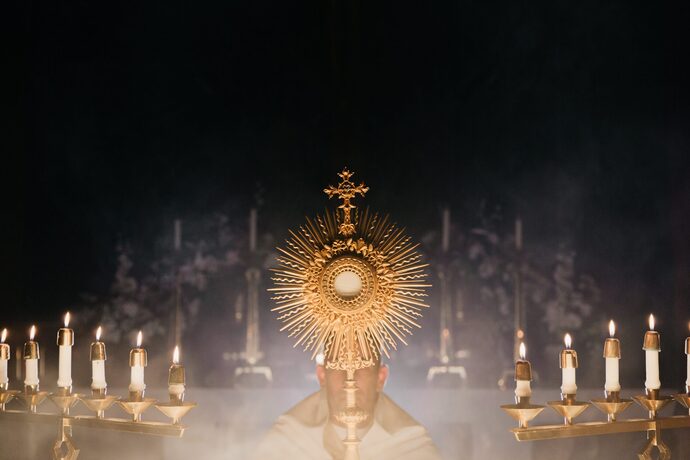
I am a gay man and a devoted Catholic, a duality that has shaped my life in profound ways. For years, I navigated the tension between my sexual orientation and my faith, facing rejection from those I trusted while clinging to the unchanging love of God. My story is one of struggle, forgiveness, and ultimate renewal, a testament to the fact that God’s mercy is boundless and that the Church, in its true essence, welcomes all who seek Him. As I reflect on this journey, I am inspired by the words of Scripture, such as Lamentations 3:22-23, which reminds us, “The steadfast love of the Lord never ceases; his mercies never come to an end; they are new every morning; great is your faithfulness.” This promise has carried me through darkness and back into the light.
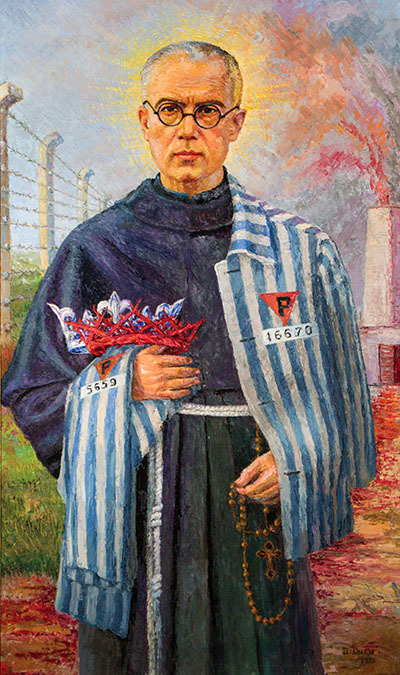
In 2013, I joined the Catholic Church, drawn by its rich traditions, sacraments, and the profound sense of community it offered. During my confirmation, I chose Saint Maximilian Kolbe as my patron saint, inspired by his unwavering faith and heroic sacrifice. Father Kolbe, a Polish Franciscan friar, founded the Militia of the Immaculata and used media to spread devotion to Mary, but it was his martyrdom at Auschwitz that profoundly moved me. Until the very end, he unapologetically refused to bend the knee to the Nazis, volunteering to die in place of a fellow prisoner selected for starvation as punishment for an escape. He led the condemned men in prayer and song, enduring until he was killed by a lethal injection of carbolic acid on August 14, 1941. His example of supreme love echoes John 15:13: “Greater love has no one than this, that he lay down his life for his friends.” It felt like coming home, a place where I could deepen my relationship with God. But in 2014, everything changed when I came out as gay to my friends within the parish. Instead of support, I was met with harsh judgment. They told me I was destined for hell, their words echoing like a condemnation that pierced my soul. Devastated, I left the Church, not out of anger toward its teachings, but because the pain from those who claimed to represent it was too much to bear.

Yet, even in my departure, I knew their words contradicted the true doctrine of the Church. The Catechism of the Catholic Church teaches that hell is not a place God sends us, but a “state of definitive self-exclusion from communion with God and the blessed,” which occurs when a person dies in mortal sin without repenting. It emphasizes that “God predestines no one to go to hell,” as damnation requires a willful turning away from God and persistence in mortal sin until the end. The Church affirms the existence of hell and its eternity for those who die unrepentant in mortal sin, but it is notoriously reticent about declaring who, if anyone, is actually there. Rather than using hell as a weapon to judge others, the teachings serve as a call to responsibility, urging us to use our freedom wisely for our eternal destiny. The Church implores God’s mercy, praying that no one should be lost, and even Pope Francis has expressed hope that hell might be empty, though this is not dogma. These truths gave me solace, reminding me that judgment belongs to God alone, not to fallible humans.
Over the years, I wrestled with these two sides of myself. Friends and advisors encouraged me to explore other dogmas and spiritual paths, and I did, seeking answers beyond Catholicism. I kept trying to return to the Church, drawn by its beauty and truth, but the echoes of those hurtful words gnawed at me. I never blamed the Church itself, nor did I harbor hatred or animosity toward her. I continued to love the Church deeply, its sacraments, its history, its call to holiness. What I could not stand were the people who misrepresented her, those who wielded faith like a sword rather than a shepherd’s staff. During this time, I found comfort in the Bible’s assurances of God’s unwavering love, like in 1 John 1:9: “If we confess our sins, he is faithful and just, and will forgive our sins and cleanse us from all unrighteousness.” This verse became a beacon, affirming that forgiveness is always available to those who turn back to Him.
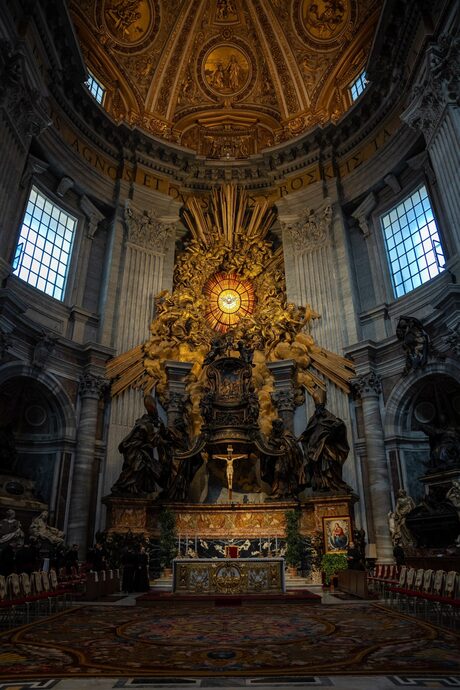
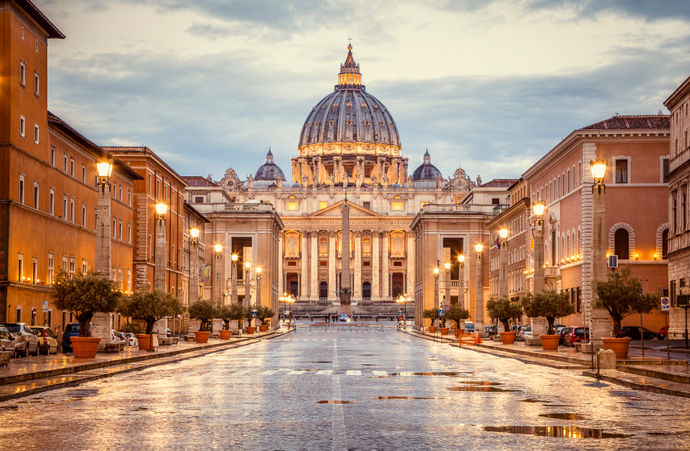
In 2018, I committed to a same-sex union, finding companionship and love in my husband. Life moved forward, but my faith lingered in the background, a quiet flame that never fully extinguished. Then, in 2023, my husband surprised me with a trip to Rome for Christmas. We visited the Vatican, that eternal heart of the Church, and amid the grandeur of St. Peter’s Basilica, he turned to me and said, “You’ve spent years holding a grudge. It’s time you put that aside, and now that I got you here, it’s time that you go to confession and take part in Mass.” His words struck me like a revelation. He was right. I had allowed the actions of a few to keep me from the fullness of God’s grace. That day, I went to confession, received absolution, and participated in Mass, feeling a weight lift from my shoulders. It was a homecoming, guided by the one I loved, reminding me of Ephesians 4:32: “Be kind to one another, compassionate, forgiving one another as God has forgiven you in Christ.”
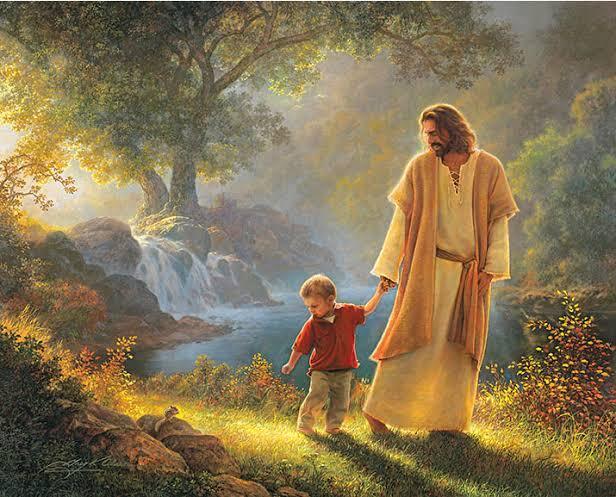
Earlier this year, the assassination of Charlie Kirk became a pivotal turning point. It shook me from complacency, prompting me to embrace my faith without apology. Reflecting on my confirmation saint, Saint Maximilian Kolbe, I drew strength from his martyrdom, which the Catechism describes as “the supreme witness given to the truth of the faith: it means bearing witness even unto death.” His refusal to compromise his beliefs, even in the face of Nazi brutality, inspired me to live my Catholicism boldly. Before, I had skirted around religious topics to avoid offending others, but now, I proclaim my faith openly. All my friends know it, and it has deepened my relationships rather than fracturing them. This boldness stems from a clearer understanding of the Church’s stance: it does not condemn homosexuals as persons, but rather the acts. The Catechism states that homosexual persons “must be accepted with respect, compassion, and sensitivity. Every sign of unjust discrimination in their regard should be avoided.” They are called to chastity, just as all are called to live virtuously, and their condition is often a trial, not a choice. While tradition declares homosexual acts as intrinsically disordered, the attraction itself is not sinful. This distinction has helped me reconcile my identity with my faith, knowing I am loved as I am.
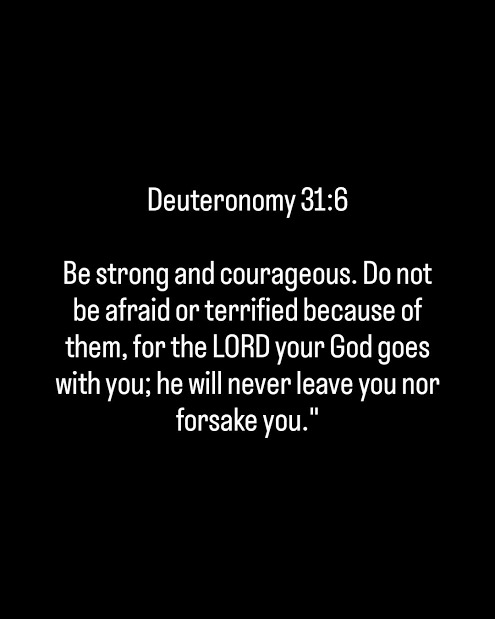
I often think of the lyrics from the song “Does Anybody Hear Her” by Casting Crowns: “If judgment looms under every steeple / With lofty glances from lofty people / Who can’t see past her scarlet letter / And we’ve never even met her.” These words capture the hypocrisy I encountered, the judgment from those who failed to embody Christ’s compassion. But my story is not one of preaching or condemnation. It is a message of hope: the Church loves everyone, embracing us in our brokenness. Even when I fall short of God’s expectations, He never turns away. As Proverbs 28:13 teaches, “No one who conceals transgressions will prosper, but one who confesses and forsakes them will obtain mercy.” If darkness is all you seek, that is all you will find. But if you seek God’s light, His mercy will illuminate your path, just as it has mine. In the end, faith is about returning, again and again, to the God who waits with open arms.




















Most Helpful Opinions