 Girl's Behavior
  Guy's Behavior
  Flirting
  Dating
  Relationships
  Fashion & Beauty
  Health & Fitness
  Marriage & Weddings
  Shopping & Gifts
  Technology & Internet
  Break Up & Divorce
  Education & Career
  Entertainment & Arts
  Family & Friends
  Food & Beverage
  Hobbies & Leisure
  Other
Other  Religion & Spirituality
  Society & Politics
  Sports
  Travel
  Trending & News

Does knowledge that law, in first century b. c.=before christ, in roman empire, that forbade polygamy- help interpreted the new testament using "singular" about wife for example
Ephesians 5: 33 "each one of you also must love his wife as he loves himself, and the wife" in singular. Also Corinth in picture
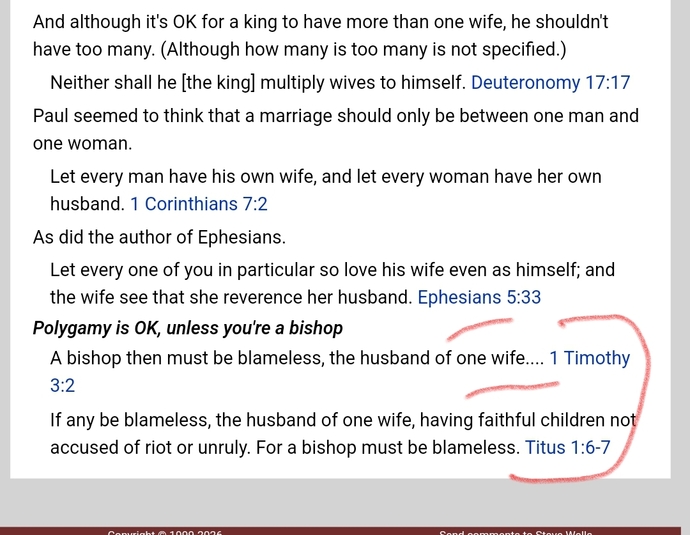
Only knowing bible, verses might seem a contradiction, but maybe knowing historical background helps comprehend?
Maybe "having his own" means not adultery?













Most Helpful Opinions