 Girl's Behavior
  Guy's Behavior
  Flirting
  Dating
  Relationships
  Fashion & Beauty
  Health & Fitness
  Marriage & Weddings
  Shopping & Gifts
  Technology & Internet
  Break Up & Divorce
  Education & Career
  Entertainment & Arts
  Family & Friends
  Food & Beverage
  Hobbies & Leisure
  Other
Other  Religion & Spirituality
  Society & Politics
  Sports
  Travel
  Trending & News


I'm going to put this out there first. Rape is horrible, one of the worst things you can do to another person, if you are a victim seek help, go to the authorities, and DON'T stay silent. There is no excuse for rape, and there is no room in our society for it!
But there's the dark side of this as well. People who accuse others falsely for this horrible crime. I want to explore some of the myths and misconceptions involving this horrible practice. Oh and just know that we're going to be talking about some pretty gritty details so consider this a TRIGGER WARNING!
First there are three places that we'll explore, the initial report to the police, the trial itself and post conviction exoneration. We'll also look at known statistics, and perhaps a few case studies. We'll be leaning heavily upon multiple scholarly documents reports, and other statistical information. We'll also look at the common belief that it's extremely rare, and should not be considered.
Here is the usual information that is given:
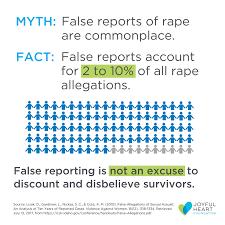
The standard thought is that between 2% and 10% of all allegations are false, though I was unable to find any real study that backs this figure, one of the things that I did find used this information.
So lets start with the first report these are broken up into four categories:
- Reports deemed accurate and truthful
- Reports deemed "Unsubstantiated"
- Reports deemed "Baseless"
- Reports deemed "False"
Lets go through these, for truthful reports we can assume that the majority of these are true, unsubstantiated are reports without any evidence to back the crime as we simply do not know if they are true or not we cannot assign a percentage to them because we simply do not know, baseless are reports that did not have a criminal element to them, they may be true or not, they just weren't actual crimes, and lastly reports that were deemed to be false or that the accuser was found to be untruthful.
This last factor represents roughly 2.1% to 7.1% depending on the study. it does not include:
- Insufficient evidence to proceed to prosecution
- Delayed reporting
- Victims deciding not to cooperate with
investigators - Inconsistencies in victim statements
and only includes, “The determination that a report of sexual assault is false can be made only if the evidence establishes that no crime was committed or attempted” (IACP National Law Enforcement Policy Center, 2005, pp. 12-13) source

Most crimes never go to trial, this includes rape the reason is plea bargain: "97 percent of federal cases and 94 percent of state cases end in plea bargains, with defendants pleading guilty in exchange for a lesser sentence." source even innocent people plea, when looking at a sentence of probation rather then many years in prison most people just take it and move on with their lives. I am not going to guess as to how many people who are innocent plea, but we do know it happens. If you want an interesting study on whether or not it is fair check this study out. But a person who wishes to prove their innocence at this point must go to jury trial. This study concluded that rape trials end in conviction around 35% of the time. Even when evidence exists forensically or through witness testimony, the right circumstances make a difference, as do solid work by police, rape crisis advocates, medical professionals and prosecutors. source but there is also the possibility that the jury just finds the accused innocent because they are you can't expect that 65% of innocent verdicts and hung juries are because the jury made an error, can you? Here are the duties of a jury, to find the truth is the key one and they do get it wrong, studies show about 1 in 8 do Source so we can assume that 52% of people who have been accused and have reached trial are also innocent. that's about 1% to 2% of people charged.

Now post conviction: There are two parts to this
- victim recantation
- DNA exoneration
"Recantation is most often used by victims to disengage the criminal justice, or other systems,
because they no longer wish to participate. Victims may not realize the toll that a criminal
investigation and trial will take on them mentally, emotionally, physically, and financially. As a
result they may want their involvement in the process to end. Moreover, since most cases of sexual assault are committed by someone known to the victim, pressure from the offender or concern for the offender’s well being may also be a factor." source but "The overwhelming majority of adult rape exonerations are based on DNA evidence (80%) or
other persuasive evidence of the defendant’s innocence. Eighty-two percent of non-recantation rape cases include DNA evidence (173/210), compared to 33% of rape cases in which a witness recants; in most of the non-DNA recantation cases, no rape actually occurred. And of course, we only know about cases that did end in exoneration. There are no doubt cases in which alleged rape victims recanted but were not believed, and in which – in the absence of DNA or other physical evidence of innocence – the defendants’ convictions remain intact. We have no idea how often that happens." source
So why have I taken up the majority of my Sunday morning to write this? Why is it important?
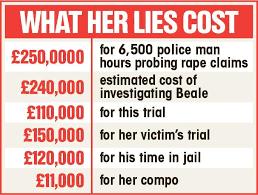
There's a cost to the lie, the average innocent person spends 10 years in prison fighting for their freedom, there's emotional, social and political damage from the lies. Lastly whenever it's brought up, you will find someone saying that it's rare as if that makes a difference. But here's the truth as a rape victim, I find it absolutely unconscionable that someone would use what I have gone through to:
- avoid a speeding ticket
- get out of paying a bill
- explain a pregnancy
- attack someone
- explain why they were out late
- or just to be cruel
Rape SUCKS it's damaging it hurts and it is not a game to be played with. And in conclusion, I think I have shown that the statistic of 2% to 10% is based on assumptions and conjecture, we simply do not know how common it is, it could be rare, and I hope it is. Or it could be something that is much more common then we expect.
Some final thoughts:
Less than 1% of rapes lead to felony convictions.
there are at least 46,000 innocent people incarcerated in the nation’s prison system.
and of course always The Innocence Project
Thank you for reading:
Anpu












What Girls & Guys Said
Opinion
0Opinion
Share the first opinion in your gender
and earn 1 more Xper point!