 Girl's Behavior
  Guy's Behavior
  Flirting
  Dating
  Relationships
  Fashion & Beauty
  Health & Fitness
  Marriage & Weddings
  Shopping & Gifts
  Technology & Internet
  Break Up & Divorce
  Education & Career
  Entertainment & Arts
  Family & Friends
  Food & Beverage
  Hobbies & Leisure
  Other
Other  Religion & Spirituality
  Society & Politics
  Sports
  Travel
  Trending & News

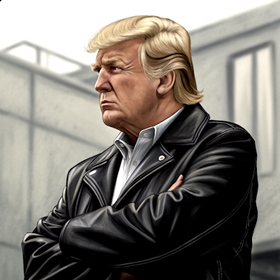
Love him or hate him, President Trump is taking concrete action on behalf of the American people by using tariffs to pressure companies to reshore manufacturing and jobs to the United States.
It is inconsistent to decry a weak economy, limited employment opportunities, and stagnant wages while supporting politicians who have spent decades facilitating the offshoring of American industry, expanding the national deficit, and offering little beyond their own taxpayer-funded salaries. Short-term economic friction is real, yet recovery from long-standing structural decline has never been instantaneous.
1. Why do so many people who loudly complain about lost jobs, stagnant wages, and a hollowed-out middle class continue to defend the exact policies that offshored those jobs for the last forty years?
2. If bringing production back to the United States is supposedly catastrophic, why have other major nations used tariffs and industrial policy for generations while America was told it must never do the same?
3. Putting every media narrative and carefully curated talking point aside, what actual interests are served by keeping capital, manufacturing, and critical supply chains flowing out of the country?
4. Why does the opposition to one particular American leader appear so coordinated across foreign governments, international institutions, corporate media, and domestic bureaucracies? A scale rarely seen against any other figure?
5. Is short-term economic friction a legitimate reason to abandon long-term industrial recovery, or is that simply the language of those who benefit from the status quo remaining broken?
6. When someone finally attempts to reverse decades of decline, why is the first instinct of so many serious people to protect the decline rather than test whether the reversal might actually work?
It is inconsistent to decry a weak economy, limited employment opportunities, and stagnant wages while supporting politicians who have spent decades facilitating the offshoring of American industry, expanding the national deficit, and offering little beyond their own taxpayer-funded salaries. Short-term economic friction is real, yet recovery from long-standing structural decline has never been instantaneous.
1. Why do so many people who loudly complain about lost jobs, stagnant wages, and a hollowed-out middle class continue to defend the exact policies that offshored those jobs for the last forty years?
2. If bringing production back to the United States is supposedly catastrophic, why have other major nations used tariffs and industrial policy for generations while America was told it must never do the same?
3. Putting every media narrative and carefully curated talking point aside, what actual interests are served by keeping capital, manufacturing, and critical supply chains flowing out of the country?
4. Why does the opposition to one particular American leader appear so coordinated across foreign governments, international institutions, corporate media, and domestic bureaucracies? A scale rarely seen against any other figure?
5. Is short-term economic friction a legitimate reason to abandon long-term industrial recovery, or is that simply the language of those who benefit from the status quo remaining broken?
6. When someone finally attempts to reverse decades of decline, why is the first instinct of so many serious people to protect the decline rather than test whether the reversal might actually work?
























Most Helpful Opinions