 Girl's Behavior
  Guy's Behavior
  Flirting
  Dating
  Relationships
  Fashion & Beauty
  Health & Fitness
  Marriage & Weddings
  Shopping & Gifts
  Technology & Internet
  Break Up & Divorce
  Education & Career
  Entertainment & Arts
  Family & Friends
  Food & Beverage
  Hobbies & Leisure
  Other
Other  Religion & Spirituality
  Society & Politics
  Sports
  Travel
  Trending & News

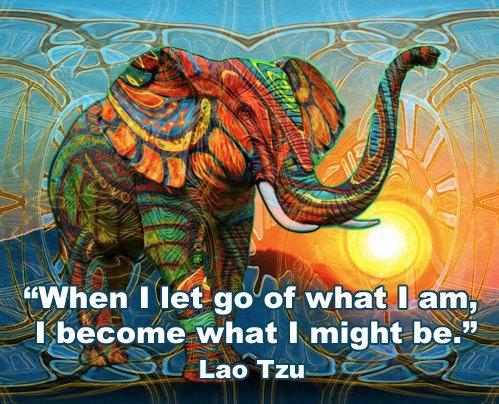
Asmita can be defined as “the feeling of individuality which limits a person and distinguishes him from a group and which may be physical, mental, intellectual, or emotional” (1). It is one of the causes of suffering (klesas). Two words that stand out in the above definition are ‘limits’ and ‘distinguishes.’ When you place limits on people you reduce their freedom and this creates suffering. In distinguishing people you set them apart, isolate them, and displace them from the interconnectedness of life, which can create loneliness and suffering. In yoga there is an emphasis on non-attachment. So how about non-attachment to asmita, to your identity?
People become attached to their identities. But when you identify something, when you define something, you place limits and boundaries on that something. You say that you are this, this, this, and this. As a corollary, you are not that, that, that, and that. You encapsulate who you are. You do one thing and people say, ‘yes, that sounds like him/her.’ You do something outside your norm and people say, ‘what is the matter with him/her?’ A relevant quote is: “attachment means fixation and you cannot accept anything new in it, only the past. You don’t allow the present; you don’t allow the future to change anything” (2). Thus, there is a ripple effect from identity to attachment to fixation and lastly to objectification. An identity can cause a person to become like an object. The subject becomes lost in the object. An appropriate metaphor is that the object is like a shell which binds the subject and prevents its full expression.
This argument may imply that in order for the attachment to the identity to be removed the identity itself must be removed but this is not necessarily true. The problem is not the identity. People need identities. They serve as reference points. The problem is with the attachment whereby an identity becomes an anchor rather than a reference point. What’s the difference? An anchor can serve as a reference point but it is also binding and creates fixation. With an anchor, a person is confined and unable to drift and explore. Alternately, a reference point enables one to determine who they were, what they have done, where they have been, where they are now, and who they are now. This is a person’s past and present, his/her starting point, and his/her center. Like the north star it will always be there to help orient yourself and provide a sense of direction. From this a person can ask, ‘what’s next?’ This is not meant to be a re-tracing of steps; it is meant to be an expansion. With the center clearly established, one can feel free to venture forth knowing that the center will always be there to return to.
An identity is vital as a center. The important thing to realize is that this center can expand. As the center expands, the subject overflows its boundaries and swallows the shell, the object. Becoming unlimited, a person attains a state of bliss and joy, or Samadhi.
References
1. “Light On Yoga” by B.K.S. Iyengar
2. “The Path of Yoga” by Osho












What Girls & Guys Said
Opinion
0Opinion
I don't mind changing and growing as long as I can keep my good traits☆