 Girl's Behavior
  Guy's Behavior
  Flirting
  Dating
  Relationships
  Fashion & Beauty
  Health & Fitness
  Marriage & Weddings
  Shopping & Gifts
  Technology & Internet
  Break Up & Divorce
  Education & Career
  Entertainment & Arts
  Family & Friends
  Food & Beverage
  Hobbies & Leisure
  Other
Other  Religion & Spirituality
  Society & Politics
  Sports
  Travel
  Trending & News

As you are all aware, October is breast cancer awareness month so apart from Halloween, tis the season for the mammo-mash and the knocker smash! This is our first line of defence against breast cancer but understandably, a lot of women are apprehensive and unfortunately, 1 in 3 women don't get their recommended screenings.
Before I had my first mammogram, I was pretty nervous because I'd heard a lot of horror stories, but it wasn't nearly as bad as a lot of people made it out to be. But there were some aspects of the procedure that caught me off guard. Thankfully I had a great technician who explained everything and we had a long chat about breast health through the whole thing. So, I thought I'd share my experience and the knowledge I gained to help you better prepare for your first screening or any future ones you have coming up.
1. Not Having a Family History Doesn’t Exempt You
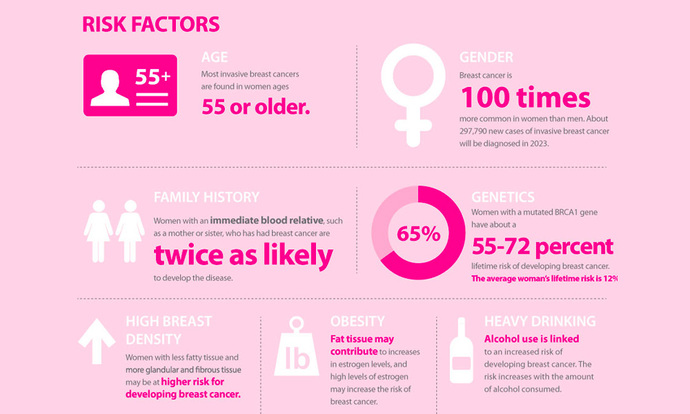
The general rule of thumb is that when you turn 40, you should start getting annual mammograms. If you have a family history, you should start sooner you should start earlier. But having a close relative diagnosed with breast cancer doesn't automatically mean you have a family history. 1 in 8 women get breast cancer and over 90% of cases aren't linked to genetics so it's not that unlikely that you'd have a close relative with it. If you had many relatives with breast cancer and some of them were under 45 when diagnosed, that would indicate you have hereditary risk factors and you should consider starting mammograms earlier. On the flip side, a lot of women get lulled into a false sense of security because they can’t think of anyone in their family who had breast cancer. But again, since 1 in 8 women will get breast cancer, the odds that none the women you can know in your extended family won't be diagnosed aren't astronomically low. So, if you don't know of any relatives who were diagnosed with breast cancer, it doesn't mean that you have some kind of genetic resistance to it. It just means that your family has so far gotten lucky and luck is a fickle thing, and you should get screened like everyone else.
2. The squeeze will be uncomfortable, but it won’t hurt
Okay, probably the number one thing women worry about when going in for their first mammogram is having their boobs squished in the machine but what does it really feel like? Well, you’ll definitely feel a firm pressure on your breast when it’s squeezed by the paddle. How hard do they squeeze? First, I can tell you that it’s nothing like having your boob in a clamp and if I was to compare how much force they use to anything else, I’d say that it’s most like a blood pressure cuff. The skin on your breast will also feel tight and the plates are also a bit cold so be prepared for that. The best way to minimize discomfort is to schedule the exam the week after your period.
3. The flatter (not harder) they squeeze your boob the better
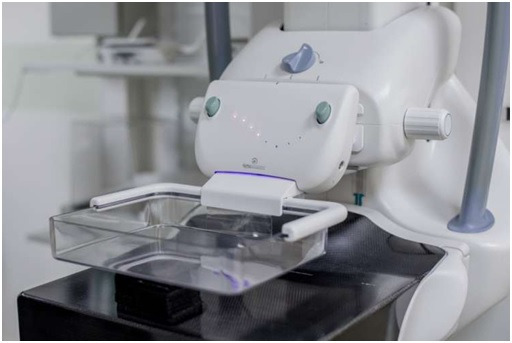
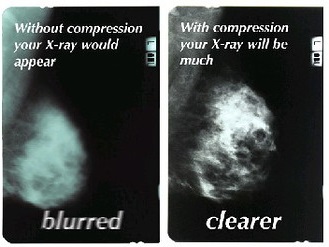
Even if it might not be agonizingly painful, the whole idea of pressing a woman’s breasts in a machine might seem a bit intrusive to say the least. But it’s very important for two main reasons. First, it holds the breast in place. Second, they’re trying to view the breast (a 3D object) on a 2D image so spreading the tissue out will help them identify any abnormalities. The flatter the breast is squished, the better the X-ray will be but pressing the breast beyond the limit the skin on it can be stretched won't make it any flatter (i.e. make the image better) it'll just hurt the patient. When applying compression, the tech checks how tight the skin is and stops bringing the paddle down once it becomes taught to get the best compromise between image quality and patient comfort.
4. Boobs aren’t balls and men get breast cancer too
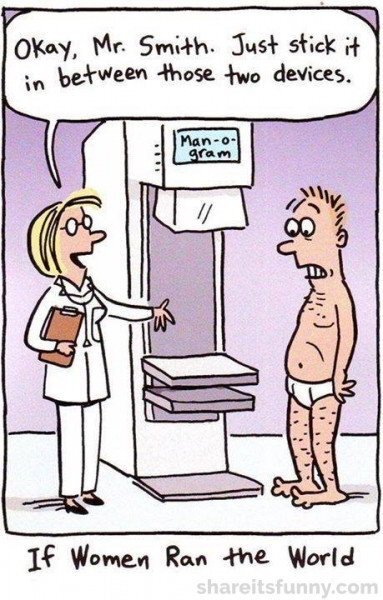
At some point, many of you might have thought that medicine should be equal and by that, I mean guys should have to have their balls squeezed like. But men can get breast cancer too (in fact they're more likely to die of it than breast cancer) and if they notice some symptoms, their doctor will recommend a mammogram. My technologist and I joked about this, and she said that she had performed mammograms on men, and they said that putting their balls in there would be WAY worse. So, maybe medicine isn't exactly fair between the sexes but it's not a one-to-one comparison either.
5. You may get nipple markers
Depending on the facility, you may or may not get some “accessories”. Some of the clinics will put a pair of stickers on your nipples. These have little metal balls in the middle which mark where the nipple is on the X-ray, making the image easier to interpret and identify any abnormalities. Before scheduling your mammogram, call different facilities to see if the use the markers. If you're shopping around, you should also see if any facilities offer 3-D mammograms as well. BUT, while the squeeze was uncomfortable, taking the stickers off afterward straight up HURT (which is why now I schedule my appointments at a time I can take a hot shower afterwards).
6. Forget about personal space
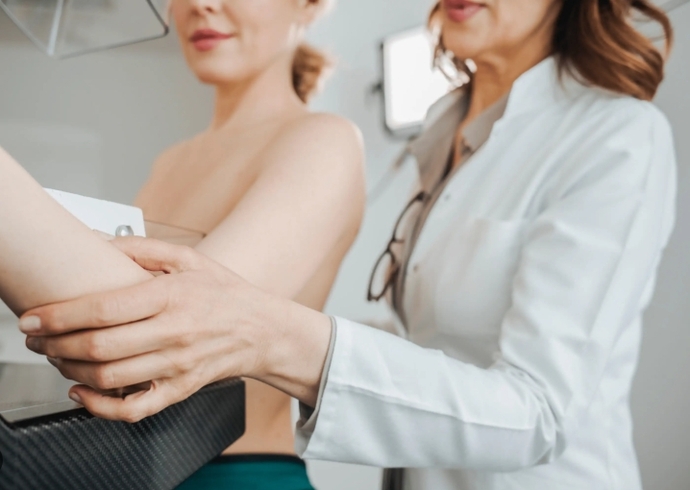
You’ve probably figured out that you can forget about modesty but that’s not the only thing you should leave at the door. But during positioning, the technical will be standing torso to bare torso with you while she’s holding your breast. She’ll also position you so you’re standing right up against the machine with your cheek up against the top and your sternum up against the cassette plate while making sure your hips are angled just right relative to the machine. For the top-down views you’ll pretty much just have to stand against the machine but for the side-to-side squish, you’ll have to lean in at a weird angle.
7. There will be a lot of tugging
Remember when I said that compression holds the breast still? If you were thinking, “where’s it going to go”, the technologist has two jobs: one is to squish your breast as flat as it will go and the other is to get as much of it as possible on the plate so all of the tissue can be viewed. Once the tech has you positioned up against the machine, she'll pull your breast as far forward as it will go, hold it outstretched against the plate and then lower the paddle. Apart from the sheer force applied to your breast, the paddle pulling on the skin on your chest will cause as much (if not more) discomfort.
8. They’ll get your boobs flatter than you thought possible
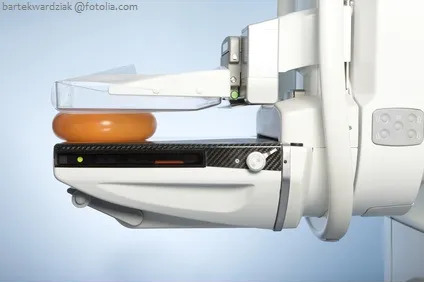
Going back to the whole, “the flatter the better" thing, while the procedure won’t hurt as much as you think it will, your boobs will be squished flatter than you thought possible. The squish was what I worried the most about, taking the stickers off was the most painful aspect but actually seeing how deformed my girls looked pressed in that machine was the most traumatizing aspect of the whole thing. If you’re squeamish, maybe don’t look down BUT don't worry about sagging; when the paddle releases, they pop right back into shape :)
9. Relax like your life depends on it (because it kind of does)
I know it’s a bit of a stressful situation but try to relax as best as you can. But worrying too much about pain can be a self-fulfilling prophecy. If you tense up, your chest muscles will pull on your breast tissue resulting in more tension which can make the procedure go from uncomfortable to painful. This also means not as much tissue will get on the plate, which could lead them to missing something. Just relax, space out and it’ll make everything go a lot easier. Also don't get startled and jump when the machine starts beeping or they’ll need a re-do. Lastly, when the paddle releases you, wait until it’s all the way up before backing away from the machine or you could get a nasty skin tear.
So, better safe than sorry and make sure that you get your girls checked. Remember, no matter what shape or size, all boobs are beautiful! Just make sure that once a year, yours are shaped like pancakes ;)
The peace of mind will be 100% worth it!












What Girls Said
I made it two years ago and I'm wondering i didn't get cancer after they squeezed my boobs with 200 kg pressure after each other.
I work with ionized radiation sources (weak Roentgen device) and I'm exposed to mercury vapors sometimes while removing amalgamate fillings, so I should make mammography regularly but why all the pain.
It saved my life. I had a mammogram done in 2015. Cancer was detected, treatments started immediately, and I've healed. I've been in remission since 2019.. I still go every year for a mammogram, it's free,
Very informative and well written!