If you're planning on buying a new or used car now is the time to do it. Most current year models will be marked down and priced to sell to get ready for the 2017 models. However, before you go car buying take some of these tips to heart.
Do your research ahead of time!
To get the best possible price, you need to learn as much information about the vehicle you are shopping for before you ever enter the dealership. Consider several vehicles and research the accessories, features, and trim levels available on each one ahead of time, so you know what trim levels interest you, and which ones you would not want to pay extra for. Keep in mind that most vehicles are packaged according to specific trim levels, and can’t always be purchased to specific requirements without a special order.
Do know how much you can afford.
Don’t shop for a luxury car if you’re living on a small-car budget. The rule of thumb when buying a new car is to put about 20 percent down, try not to borrow for more than four years (48 months), and keep your monthly payment lower than 10 percent of your income. Trust me the faster you can get it paid off the better.
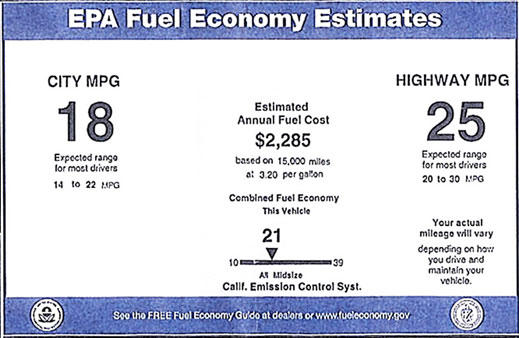
Don't forget to factor in fuel costs and yearly maintenance.
Most modern automobiles have a EPA fuel economy estimates sticker in the window at the car lot that show the average miles per gallon, annual cost of gasoline, and maintenance costs. This is very important to go by to decide what kind of automobile to buy
Don’t base your purchase on monthly payments
Instead consider the total purchase price after sales tax, and then evaluate the monthly cost. Once you know your total price, financing the car should cost about $20 a month for 60 months for every $1000 financed (for buyers with good credit), so keep that in mind when you’re looking at the bottom line.
Do contact your insurance agent ahead of time to check the best rates
It might seem backwards to check with your insurance agent before you actually purchase a new car, but if you knew the premiums were going to be sky-high for a certain vehicle, would you be inclined to choose a different vehicle or trim level? Certain cars like Ford Mustangs and Chevrolet Corvettes usually have higher insurance premiums that smaller four or six cylinder vehicles because they are sports cars and most common for accidents.
Do check your credit score before going to the lot
It does make a difference. It can affect your acceptance for financing, what kinds of cars are available to you, and payment terms. The higher your credit, the lower your payment terms will usually be.
Do arrive dressed neatly, but leave the expensive clothes and accessories at home
You want your salesperson to know you are a serious buyer. So dress neatly to try to strike a better deal.
Don’t let your excitement over a specific vehicle make you a victim
Be prepared to walk away. There is no such thing as “now or never,” and it’s likely you can find a similar car on another dealer’s lot. If you don’t think you’re being treated well, leave and find another dealer. Be reasonable: the dealership needs to cover its costs and pay the salesperson’s commission, but if they’re not being fair to you, you will most certainly find another car on another lot on another day.
Finally: Don’t trade in a car that is worth less than you owe on it. When that happens, the balance of your old loan will be rolled into the new car’s loan amount, combining the debt of two cars into one, larger, loan. This will take way longer to pay off
So when you go car shopping, remember these steps and have fun. But, watch out for those tricky slick salespeople. You don't wanna buy a car from Wormwood Motors like the people in the movie Matilda did. Some used car lots do actually use those tricks to pass off a car. So when you do go to a car lot have fun and don't be afraid to ask questions, but remain always aloof.
This is geared towards buying a new car. Used car tips: -find the owner's club or owner's forum online, and read/ask them about the most common issues or faults to look out for. -do NOT buy the first example of a used car that you see. Go and see several so you can compare them. -absolutely walk away if the dealer says or does anything that you don't like. This can include wanting go over the extra services they provide if you know for a fact you don't want any, being reluctant to give you a test drive, or refusing to offer a fair trade-in value -TEST DRIVE IT. Compare it to the other models you've test driven and see how it felt. Try and take it somewhere you can push the car's power a bit and see if it delivers it smoothly. Make sure as well that the engine is cold when you go for the test drive, unscrupulous dealers might warm the engine up knowing you're coming in the hopes of disguising problems -get a warranty, either from the dealer or from a car inspection service so if it turns out to be a hunk of junk, you can get it fixed at their expense
Good myTake. Luckily, I followed most of these before I purchased my own car, a '07 Mustang. I will admit I was pretty set on it from the get go, but I made sure to contact my mechanic for what to look out for and haggled the hell out of the dealer. It's worked like a dream ever since.
Great Take. One thing I always try to tell people looking to buy a car. Either for the first time or somewhere along the way. Is to keep in mind that cars are not investments to receive a return on your money. They are to get you from point A to point B in the most economical, safe, healthy, and somewhat classy manor if you've got the means.
I always try to go for makes that are still in business too like Chevy, Ford, Toyota, Dodge etc.. And to avoid like Oldsmobile, Pontiac, Mercury etc.. That's out of business
That's a great suggestion as well. Companies like Suzuki left the US a few years back, and a lot of Suzuki owner's were dealt with inappropriately towards possible needed mechanical help with their vehicles within the near future.
Another important one, If you know anyone who works on cars or a mechanic BRING THEM ALONG. They will be a HUGE asset when the time comes to negotiate the price. They'll be able to point out the flaws, and you will end up paying less
 Girl's Behavior
  Guy's Behavior
  Flirting
  Dating
  Relationships
  Fashion & Beauty
  Health & Fitness
  Marriage & Weddings
  Shopping & Gifts
  Technology & Internet
  Break Up & Divorce
  Education & Career
  Entertainment & Arts
  Family & Friends
  Food & Beverage
  Hobbies & Leisure
  Other
Other  Religion & Spirituality
  Society & Politics
  Sports
  Travel
  Trending & News


























Most Helpful Opinions