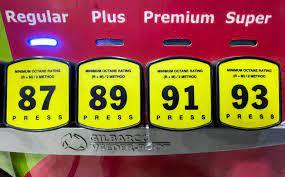
And the MyTake for everything you need to know about commercial automotive fuels.
87, 89, 91, What even is Super Premium Gasoline?

The numbers are the octane rating, or the resistance to ignition. The lower the number the easier the fuel will ignite. The higher the number is the opposite.
As your engine builds up deposits (kinda like tooth plaque), the older an engine gets, those deposits retain heat. When you use a lower octane fuel, that can ignite the gasoline ⛽ before the piston reaches the optimum pressure in the cylinder, causing your engine to knock. You can partially overcome this by using a higher octane fuel, but the real fix is to use higher quality (not necessarily higher octane) fuels. Those fuels have cleaners to reduce the buildup of deposits.
As they say... "Your mileage may vary."
They are the octane rating. The other numbers mean we have the wrong guy in the White House.
Opinion
10Opinion

Octane rating! A lower octane rated fuel will ignite on compression, before it should (When the spark occurs), Thus fighting the pistons motion and reducing power, leading to the pinging noise. A car should be fed fuel of at least the specified octane rating in the manual, but any higher is a waste, as the price of fuel increases with octane rating.
The number specifically identifies the octane rating of the gasoline. The higher the number, the more energy is in the gasoline. My car, and most cars, take 87. Sometimes it's good to put 89 in... it helps clean the engine. High performance cars may require 91 or 93. Check your owners manual and do what it recommends.
High altitude places have different numbers to account for the less dense air.
It should be the octan number if I am not mistaken? Something about the quality of its components, with higher number being better and more expensive. Been a while since high school chemistry lessons.
They don’t mean anything. They all taste the same to me.
E85 is your best bet.
It's the cheapest, the healthiest, and it'll make you feel fantastic!
In the US, it's called anti knock index, AKI.
It's a different rating system for fuel octane than most of the rest of the world.
MON+RON/2 .
Most of the world uses the RON rating, that's why there is a difference in numbers .
its the octane rating indicating the burn rate... highr the octane the more efficient you engine will run. then there's b5 or b7 for diesel which indicates the bio diesel percentage and e5 or e10 for petrol indicating its bioethanol percentage
I use regular with an octane rating of 87 because that is what the onboard computer is set up for using. Due to the computer settings if I used any of the other higher octane rated fuels I'd get worse gas milage.
89 in the city. Sometimes use shell high end with cleaners for long distance.
if you dont put the correct fuel into the engine you will eventually knacker it
Why are you asking this when you already did a myTake?
Yes I know what they mean!
Yes I know what they mean.
I don't have a car so no idea
You can also add your opinion below!
Most Helpful Opinions