 Girl's Behavior
  Guy's Behavior
  Flirting
  Dating
  Relationships
  Fashion & Beauty
  Health & Fitness
  Marriage & Weddings
  Shopping & Gifts
  Technology & Internet
  Break Up & Divorce
  Education & Career
  Entertainment & Arts
  Family & Friends
  Food & Beverage
  Hobbies & Leisure
  Other
Other  Religion & Spirituality
  Society & Politics
  Sports
  Travel
  Trending & News



Introduction
Love relationships are not static or purely biological; they are deeply shaped by economic structures, cultural values, technology, and power relations. From 1800 to 2025, romantic relationships have transformed from institution-centred unions to individual-centred emotional projects. This evolution reflects broader shifts in modernity, capitalism, gender equality, and digital life.
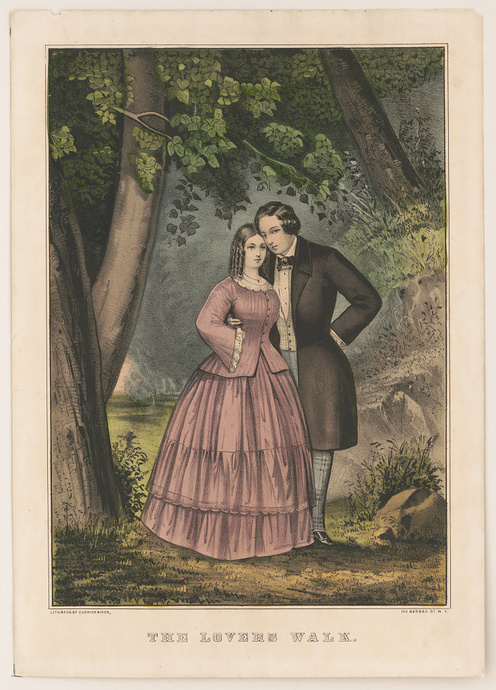
1. 1800–1850: Marriage Before Love
In the early 19th century, marriage in most societies—particularly Europe and North America—was primarily economic and social, not romantic. Love was considered desirable but not essential.
Marriage functioned as:
An economic alliance
A means of inheritance and lineage control
A stabilising social institution
Romantic passion was often viewed as unstable and dangerous if allowed to guide marriage decisions.
Historian Stephanie Coontz demonstrates that for most of human history, marriage was about property, labour, and kinship, not personal fulfillment (Coontz, 2005).
Key Insight:
Love was expected to grow after marriage, not precede it.
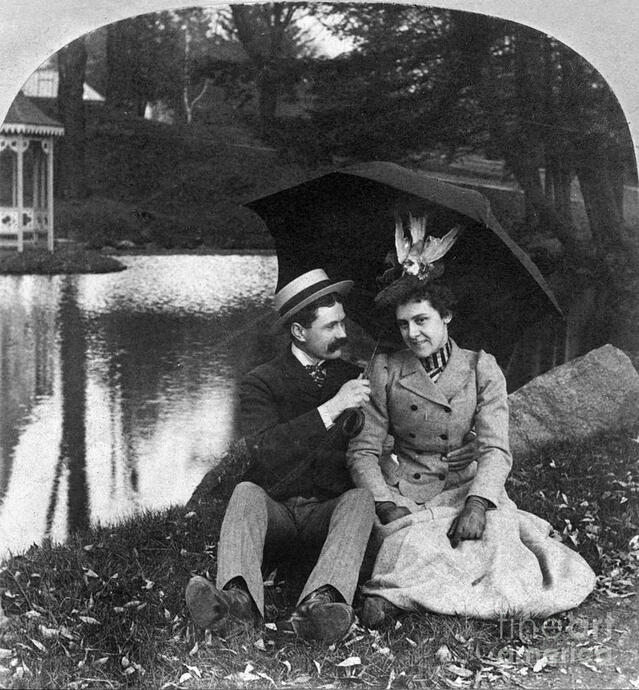
2. 1850–1910: The Rise of Romantic Ideals
Industrialisation weakened extended family control and increased individual choice. Romantic love began to emerge as a legitimate reason for marriage, particularly among the middle classes.
Increased literacy led to:
Love letters
Romantic novels
Emotional self-expression
Yet strict gender roles persisted:
Men = providers
Women = moral/emotional anchors
Alternative relationship forms also existed, such as “Boston marriages” (emotionally committed female partnerships), suggesting that romantic intimacy was already more diverse than officially acknowledged.
Key Insight:
This era marks the birth of modern romantic ideology, though still constrained by patriarchy and class.
3. 1910–1950: Dating, Companionship & Emotional Marriage
The early 20th century introduced dating culture, especially in the United States.
Courtship moved from family supervision to peer-based interaction
Emotional companionship became central to marriage
Sexuality remained regulated, but attraction gained legitimacy
By the post-WWII period, marriage became:
Earlier
More universal
Strongly idealised
Sociologist Talcott Parsons described marriage as a functional emotional unit, with clear gender divisions (Parsons & Bales, 1955).
Key Insight:
Love became institutionalised, but still tightly scripted.

4. 1960–1980: Sexual Revolution & Individualism
This period marked one of the most dramatic transformations in relationship history.
Key changes:
Contraception separated sex from reproduction
Feminism challenged traditional gender roles
Divorce rates rose sharply
Cohabitation increased
Anthony Giddens describes the emergence of the “pure relationship”—a relationship maintained only as long as it provides mutual satisfaction (Giddens, 1992).
Marriage was no longer seen as:
Lifelong by default
Morally obligatory
Key Insight:
Love shifted from duty to choice.
5. 1980–2000: Negotiated Love & Emotional Work
Late modern relationships became emotionally intense but fragile.
Partners expected:
Emotional intelligence
Sexual satisfaction
Psychological support
Eva Illouz argues that love became psychologised and commodified, shaped by therapy culture and consumerism (Illouz, 2007).
Paradox:
Higher emotional expectations
Lower long-term stability
Key Insight:
Love became central to identity—but harder to sustain.
6. 2000–2025: Digital, Delayed & Diverse Love
The 21st century introduced technological mediation of intimacy.
Key Trends
Online dating as a dominant partner-meeting method
Later marriage and long-term cohabitation
Normalisation of:
Same-sex relationships
Living-apart-together (LAT)
Serial monogamy
Research shows that dating apps increase choice but also decision fatigue and disposability (Rosenfeld et al., 2019).
Zygmunt Bauman describes modern intimacy as “liquid love”—flexible, fast, and easily dissolved (Bauman, 2003).
Key Insight:
Love is more free—but also more uncertain.
Conclusion
Love relationships have evolved from institutional necessity to personal self-expression. While modern relationships offer unprecedented freedom, they also demand emotional labour, self-regulation, and resilience.
References (Authentic & Academic)
Coontz, S. (2005). Marriage, a History: How Love Conquered Marriage. Viking Press.
Giddens, A. (1992). The Transformation of Intimacy. Stanford University Press.
Parsons, T., & Bales, R. (1955). Family, Socialization and Interaction Process. Free Press.
Illouz, E. (2007). Consuming the Romantic Utopia. University of California Press.
Illouz, E. (2012). Cold Intimacies: The Making of Emotional Capitalism. Polity Press.
Bauman, Z. (2003). Liquid Love: On the Frailty of Human Bonds. Polity Press.
Rosenfeld, M. J., Thomas, R. J., & Hausen, S. (2019). “Disintermediating your friends: How online dating changed mating.” Proceedings of the National Academy of Sciences, 116(36).
Cherlin, A. J. (2004). “The deinstitutionalization of American marriage.” Journal of Marriage and Family, 66(4).
















Most Helpful Opinions