As in are you Christian, Muslim, Atheist, Agnostic etc..
What do you consider yourself to be religiously?

 Girl's Behavior
  Guy's Behavior
  Flirting
  Dating
  Relationships
  Fashion & Beauty
  Health & Fitness
  Marriage & Weddings
  Shopping & Gifts
  Technology & Internet
  Break Up & Divorce
  Education & Career
  Entertainment & Arts
  Family & Friends
  Food & Beverage
  Hobbies & Leisure
  Other
Other  Religion & Spirituality
  Society & Politics
  Sports
  Travel
  Trending & News
As in are you Christian, Muslim, Atheist, Agnostic etc..


I prefer to say that I do not have a religion.
"Atheist" in principle applies as well, as I do not believe in any gods, but it is an odd way of putting it. I do not believe in mermaids, either, but that does not make me an "a-mermaidist".
I am also an ex Christian from between age 14 and 17 when I even trained to be a missionary. This training helped me in private life so I would not consider it a waste. Many thoughtful people are seekers at some time in their lives
good distinction. mermaids are imaginary but atheism is to deny something real.
the most populous religions are a, catholic Christian around 1.5 billion people. b islam around 1.1 billion people. c, protestant Christian 0.6 billion people. total twice as many christians as muslims. maybe they are able to convince people because have good proof?
correction, protestant 0.8 billlion significantly more than i wrote. a difference as huge as 2/3 u. s. population.
Christian with a Relationship with Our Father. xxoo









Opinion
7Opinion
Alhamdullillah, Muslim. Not a blind follower, I have enough evidences with falfication test to prove what I believe is right.
 u
u Christian, specifically Traditionalist Catholic.
i consider myself to be an ignostic, atheistic secular humanist.
@imran_ i do respect any questions if they are asked with genuine curiosity and without animosity. you asked how "i" was created. i know that i was created by the act of my parents having sex. that has nothing to do with the origin of the universe. that's a different question. i'm not trying to be pedantic, i just try to be as precise as i can.
so was your question really about "my" origin? or did you actually want to know what i think about the origin of the universe or humanity or life?
@imran_ ok this is gonna be wordy... i'll start with humanity. humanity develped from very basic single cell organism. which themself self organized from the chemicals that happened to be present on planet earth (mostly carbon, oxygen, hydrogen and phosphor), which is basically the result of a complex polymerization process that occured by these chemicals being blasted with solar energy. and then cells ened up banding together. forming multi celled organisms and that spawned a whole slew of different life forms like animals, fungi, bacteria protists and monera.
we are in the animal kingdom. within the animal kingdom a lot of different animals developed. among these were primates which we are part of. obviously i had to skip a "LOT" in between cause all that stuff in between could fill an entire encyclopedia.
@imran_ when it comes to "the universe", we can basically track everything that we can see back to one tiny little place in the center of the visible universe 13.8 billion years ago. so we know that "everything we can see" was in this tiny little place around 1.5 meters in diameter. and that's where our ability of observation ends. so with that ends anything we can show to be actually true.
so we know that "everything we can now see" was in this 1.5 meter space 13.8 years ago. we do not know what was before that. and we do not know if there was ever anything outide of everything we can now see or not. so we can not make any statements about that, that are true.
so what follows now is speculation.
the least contradictory speculation we can possibly make, is that this contraction we see back in istory untill the "big bang" goes back in time to infinity. and the expansion we're currently experiencing in the universe will go into the infinite future. so by that logic, there would not be a beginning. cause according to this speculation, everything was there for an infinite amount of time and will be there for an infinite ammount of time. think time as an infinite line. and we're some where on it and since infinity has no beginning and no end, even just imagining that is hard. so i am not claiming this part is true. i do not know whether it is or not. all i know is that it's the least contradictory statement we can make.
First of all thank you for writing all these.
Now coming to the points, critics may argue that the theory doesn't fully explain the complex processes involved in the transition from non-life to the first living organisms. Don't you think it's a huge claim? How do you reconcile that?
It is certain that there is a lack of direct experimental evidence as it happened billions of years ago to conclusively support the hypothesis of abiogenesis, which is the process by which life could have emerged from non-living matter. What do you have to say about that?
How can nature favor the selection of single-cell organisms capable of asexual reproduction over more complex animals like elephants, even though inefficiency appears to be penalized in nature?
@imran_ you're welcome. We can actually recreate the abiogenesis. And I'm not gonna pretend that I exactly know the specifics but In principle, since we can actually recreate how it would have happened naturally, we know that it can happen naturally. We have good evidence for it happening naturally and no evidence for a sort of devine creation. I would love to go more in depth into it but unfortunately my personal education ends there. I'm a layman. I am sure the experts know way more than me and you'd be best advised to speak to an expert in that field if you're curious beyond what information I can provide.
So while this model probably has some blind spots or minor flaws, there is absolutely no evidence that would allow for the conclusion that there must be a creator. (Evidence meaning: A body of facts which are positively indicative of, and/or exclusively concordant with one available position or hypothesis over any other.)
As to "has space existed indefinitely", the only true answer is "I don't know". However there is absolutely no evidence for "everything not being there" at some point so claiming that everything was created is not something that can be shown to be actually true. Neither can infinite existence down to be true. So I have to remain with my position of "I don't know"
@imran_ natural selection is not a smart, Organisten process. It's a chaotic series of mutations reacting to environmental changes that are never ideal or perfect. It just keeps happening cause the sun keeps blasting the earth with every. That however will not be an infinite process. Life will end in the planet. That's certain. But it will take a few billion years before that eventually will happen.
Excuse my auto correct XD
Thank you once again. I come from a countryside background, and most of the people here are farmers. They may not have much knowledge about the origin of life or the universe, much like you and me; they are laymen. If you could provide me with the contact information of an expert in this field, it would be a tremendous help. In the meantime, we can continue our own studies.
Based on my research, please correct me if I am mistaken, the idea of recreating abiogenesis is fascinating. However, the fundamental question remains: Can living beings evolve from non-living matter? To be honest, as a rational and logical person, I find it hard to believe until I witness it happening before my own eyes. If this is indeed possible, if living beings can evolve from non-living matter, then I would be inclined to question the existence of a creator.
But then again, where did all these non-living things originate from? Did they come from nothing?
Behind the scenes, there is a lot happening in the scientific world, known to those in the field (Academics). The vast majority of the public may not be aware of the potential flaws in these scientific theories or theses because they are presented in such a way that they appear nearly perfect. However, upon closer examination, a clearer understanding emerges.
As you are aware, scientific theories are built upon various factors, including assumptions, observations, laws, facts, mathematics, and more. Thus, while a theory may seem robust, scientists understand that it is not an absolute truth. Even a slight mistake or change in these factors can alter the entire outcome of the theory.
From what I have learned about recreating abiogenesis, scientists have managed to simulate certain aspects of it in laboratory settings by replicating the conditions resembling the early Earth's environment. These experiments have yielded organic molecules like amino acids and nucleotides, which serve as the building blocks of life. Nevertheless, the complete process of life emerging from non-living matter remains a formidable challenge and a subject of ongoing research.
About "Blind spots or minor flaws", critics don't think those are minor issues, those are big claims without substantial proof! For the time being, I am not bringing God here in the discussion, however there are alternative theories exist with its flaws, such as panspermia (life arriving on Earth from elsewhere in the universe) or the idea that life is a fundamental property of the universe, rather than arising from simpler chemical processes.
What are the reasons You don't accept them?
Your stance on only accepting specific kinds of evidence, particularly evidence that is positively indicative of, and exclusively concordant with one available position or hypothesis, is a very stringent criterion. While it may sound rational, there are several criticisms and challenges associated with this approach: It excludes other forms of evidence, such as testimonial, historical, or circumstantial evidence. This limits the scope of what can be considered valid.
Many real-world problems and questions are complex and multifaceted. Insisting on evidence that exclusively supports one hypothesis can be impractical when dealing with issues that have multiple contributing factors or where complete certainty is difficult to achieve.
Relying solely on evidence that exclusively supports a single hypothesis can lead to false negatives. In other words, it may dismiss valid explanations or hypotheses simply because they don't meet the strict criteria, potentially causing missed opportunities for discovery.
There are many other many other challenges associated with such a stance, such as lack of consideration for probability, confirmation bias, inflexibility in scientific inquiry and so on.
So while seeking strong, exclusive evidence is essential in scientific inquiry, it's crucial to recognize the limitations of this approach, especially in complex and dynamic situations. Scientific inquiry often involves a combination of empirical, testimonial, and circumstantial evidence, along with probabilistic reasoning, to arrive at the most reasonable and well-supported conclusions.
Do you agree with me so far?
You don't know whether space has existed indefinitely or not. That's fair. I have a theory I would like to share with you.
"Natural selection is not a smart, organized process." So, what is the evidence for what is claimed to have happened, i. e., the transition from single-cell to multicellular organisms in terms of reproduction?
@imran_ it's great that you show such curiosity in how the world works and it seems you're coming from a place of genuine curiosity. i don't happen to know a person that is an expert in the field. and in order to answer the cluster of questions that you asked, you'd need an expert evolutionary biologist, an expert astronomist and an expert molecular chemistst+biologist. when it comes to biological evolution, aaron ra is a great source on youtube. when it comes to astronomy, niel degrasse tyson is pobular. for the rest, i don't know someone off the top of my head
we need to talk about the understanding of words we are using here first, cause otherwise we'll talk past each other.
"scientific theories" are different to the informal use of the word "theory". a theory can be a guess or a hunch. a scientific theory isn't a hunch or a guess. its "A body of knowledge including all known facts, hypotheses, and natural laws relevant to a particular field of study.
and a hypothesis is also not a hunch or a wild guess. A hypothesis is a potentially-falsifiable explanation which includes predictions as to what different test results should imply about it.
so a scientific theory has to have mechanisms built in with which you can show that it is wrong, "if" it is wrong. science tries to show things to be false. you can not show things to be true that is not possible cause for that you would have to be omniscient. with our limited knowlegde, you can only fail to show that something is false. so if there was no way to test it and an instruction on how to reach the found result so everyone can try it for themself and confirm, it wouldn't be a "scientific theory". and that is not true for any sort of religious theory that i ever heard of.
so the reason we have to explore the formation of life in tiny parts and not just the entire thing is obviously the fact that the process took billions of years in nature and we don't have that sort of time in our limited life time. so the fact that we can experimentally only do tiny fractions of it doesn't at all give someone footing to claim it's wrong. there might be blind spots and missing pieces.
so i can give you an example from my scientific backround, cause i actually know a lot more in that area obviously. so i come from social science. and you probably heard of the gender pay gap. it describes the fact that women earn less on average then men do. in the media and public discourse this fact gets constantly abused to claim there's some sort of "social injustice" between and women. when in fact we have deeply researched that topic. the difference in income is explained to over 99% by different variables that predict income. like working hours, education levels, line of work, biographic breaks (often caused by child bearing and rising)... so depending on what litterature you read the ammount of "yet unexplained variance in the income between men and women" is around 0.6%. and there "could" be some variance caused by "social injustice". and if there was, it would only be within these 0.6% of income variance... but claiming that there is such social injustice, is a lie, cause we don't know that. and yet people still do that despite the science being very clear on this issue.
so all that to show how there's often a gap between public perception of facts and scientific knowlegde of facts. and i would say public perception of facts laggs 30-40 years behind the cutting edge of what science currently knows.
so the fact that there's some tiny blind spots in biological evolution or in astonomy doesn't mean tha the entire construct is wrong. it means the construct is mostly right. it just needs refining.
so the reason i don't accept testimony as evidence is cause testimony can be A: a blatant lie or B: a genuine error. what mechanism is there to check wether it's a lie or an error? none. and cause there's none, i don't accept it as evidence, cause i have no way to even begin to estimate the probability of a theory based on testimony. and if can not do that, that's just objecitvely worse than a theory where i can do that.
and the reason that i do not accept these sorts of evidence you mentiones is that i actually care about truth. these evidences have objectively a lower chance to actually let me approach truth.
and your critique of the "multi faceted issues" is actually accounted in my line of science by multivariate analysis. so if i wanna see which factors predict income, i can actually take a look at all the different variables like working hours, education, line of work and see how much that actually varies the income in precise percentages. i can manage uncertainty by quantifying how large that uncertainty actually is in numbers and if that uncertainty is under 0.05% (meaning the chance that my theory is actually wrong is under 0,05%, then in science we accept that as a good theory. and it CAN and IS still sometimes shown to be wrong later down the line. and that is because the entire process is documented and eplained to be redone and checked multiple times, so we have a better chance at actually not being wrong.
i hope i answered most things you asked. tbh stuff is getting a bit wordy and i don't have all that much time. so please if i ignored something that was important to you, feel free to ask again.
You are a truth seeker, so I.
By your narrative, scientific theories or hypothesis are appeared to be robust and not subject to change. Vast majority of the common people have the same understanding.
Are scientific theories unquestionable facts? i. e does science leads to certainty?
Can science provide absolute truth? (The kind of truth we are seeking is absolute)
Falsification test can make or break scientific theories based on current observation or new observation. The Qur’an too offers its readers several falsification tests. The Qur’an says that if it is not what it claims then all you have to do is this or that, to prove that it is false.
First falsification test: Produce a chaper like the Quran, Qur’an put forward a falsification test, which is the easiest of all. In Surah Al-Baqarah chapter 2 verse 23 and 24: it says,
“And if you are in doubt about what We have sent down (i. e. the Qur’an) upon our servant, then produce a Surah like thereof and call upon your witnesses (i. e. supporters) other than Allah, if you should be truthful. But if you do not – and you will never be able to – then fear the Fire, whose fuel is men and stones, prepared for the disbelievers.” – Quran 2:23-24
The criteria for producing a surah like the Qur’an are as follows: since the Qur’an is in Arabic, the Surah so produced should also be in Arabic, which should be equivalent in standards to that of the Qur’an.
The Qur’an maintain throughout the highest possible standard of in its speech.
The Language of the Qur’an is most clear, meaningful, intelligible, unsurpassable and miraculous.
It does not deviate from the truth and still maintains its eloquence, rhythm and style unlike human poetry and literature.
The Qur’an repeat several information in difference styles and by passages and narrations of varying sizes, all being of a very high standard that one cannot be preferred to another.
The Qur’an encompasses a vast range of meaning in a surprisingly small number of words without losing its charm and majesty.
The Ability of the Qur’an to address a multitude of people. The same verse of the Qur’an is appreciated by an intelligent person as well as a common man.
Certain Surahs of the Qur’an hardly contain three verses which consist of only a few words. Not that people did not take up the challenge, the best poets of Arabia at that time tried their level best but they miserably failed. Some of what they produced has been preserved in historical books to show that they were the laughing stock. They did not have a rhythm similar to verses of the Qur’an. The context of this verses were trivial, they contained no wisdom and were hilarious.
This is yet a standing challenge and a falsification test which is unanswered for the past 1400 years and will not be answered till eternity.
@imran_ it's not "my narrative". it's the formal definition of science. it is built to be disproven. and only once you fail to disprove, theory is accepted. so even you can attack it by doing an experiment according to instruction and reaching different outcome. it's not about claiming wild shit nobody can ever question. it's about making it such that everyone can reach the same result, so we eliminate human error as much as possible. tho you would have to learn a lot first to get up to speed with the methods which in theory anyone can do. just takes time.
so if you can show that the science on biology is wrong, you're not being shunned and ignored like you would if you say religion is wrong. in fact you are highly awarded if you can show that a major scientific theory is wrong.
The Qur’an also gives a falsification test in Surah Nisa chapter 4 verse 82 which any one in the world can try.
“Do they not reflect upon the Qur’an? If it had been from (any) other than Allah, they would have found within it much contradiction.” – Quran 4:82
Today if any one wants to prove that the Qur’an is not the word of God, he just has to point out a single contradiction in the Qur’an.
There are many unbelievers who tried to point out several alleged contradiction in the Qur’an but all of their attempts were either out of context, mistranslations or misquotations. So if you want to prove whatever Quran claims as false, you just have to produce a chapter like it or You have to find Contradictions in it. However if you want to try, please try by your own self, don't go to Mr. Google.
the key words in your quote is "and you will never be able to" it's written claims by a person that nobody ever showed to be actually true. and then they have the audacity to say "you can't proof it wrong". which is technically correct, cause you can't show that something is wrong that was never shown to be right in the first place, which is sort of hilarious. and you mentioned that "
It does not deviate from the truth", which if you apply that standard to the quran, it would fail by it's own standard.
i was a bit too lazy to read all of it if i'm honest. so one thing that can quickly invlidate a lot of what you're talking about is: the manner in which something is said does not at all matter for it's truth content. i could be talking to a hillbilly or i could be talking like an aristocrat. that doesn't mean shit for the truth or untruth of my statement.
ah that's a super easy challenge with any religions, cause religions are always contradictory.
What was man created from: blood, clay, dust, or nothing?
1:“Created man, out of a (mere) clot of congealed blood,” (96:2).
2“We created man from sounding clay, from mud moulded into shape, (15:26).
3“The similitude of Jesus before Allah is as that of Adam; He created him from dust, then said to him: “Be”. And he was,” (3:59).
4
“But does not man call to mind that We created him before out of nothing?” (19:67, Yusuf Ali). Also, 52:35).
5“He has created man from a sperm-drop; and behold this same (man) becomes an open disputer! (16:4).
quran contradicted itself on the creation of humans 5 times.
and by the way. the only statement that can be shown to be true is statement 5, so quran also lied 4 times in this collection of contraictions.
do a tiny fraction of it doesn't at all give someone footing to claim it's wrong," there are valid criticisms to consider. One could question the extent of this "tiny fraction." Is it limited to 100 years, 1000 years, or even 10,000 years? Additionally, it's essential to contemplate where these experiments can take place within the vast universe. Generalizing findings from such experiments to encompass the entire 13.5 billion years of the universe's existence may be an insignificant assumption.
This argument appears to oversimplify complex processes by reducing them to a tiny portion in comparison to the whole universe. Furthermore, asserting that "science is very clear on this issue" might be overly assertive, as scientific clarity can vary depending on the specific aspect under investigation. Acknowledging these complexities and uncertainties in our understanding is essential.
About gender pay gap example, Its not always true, as we know common mass believe, not all of course, but whoever believes in theory of evolution, they think that it is set on stone, not subject to change. So they believe more than what academics manifest.
@imran_ so at this point, i'll actually advise you to get a science education. so you can understand what science actually is. and what it actually is is: bar none the BEST way to KNOW things. quran and religion has nothing to do with "knowing". it's about believing, not knowing. if it was about knowing, religion wasn't a thing.
i'm not condescending by the way. i spent 6 years to gain expertise in one branche of science. and condensing that into one chill conversation is not possible.
@imran_ so i'm not saying it to condescend. i'm saying it to show you the way to knowledge you might be seeking that i can not provide to you within the time that i have for our conversation.
About "Tiny blind spots in the biological evolution", My point is if the assumption is wrong, about which we have no data about, the whole construction may fall.
As a truth seeker, we should try to seek truth in our day to day life as well, not just for scientific theories, isn't it?
So the issue arises when someone doesn't accept other forms of evidence beyond strict empirical evidence: In the criminal justice system, relying solely on direct empirical evidence (e. g., DNA evidence, fingerprints) while ignoring circumstantial evidence or witness testimony can lead to wrongful convictions. In some cases, the lack of consideration for the broader context of a crime can result in a miscarriage of justice.
In healthcare, if a physician insists on accepting only empirical test results without considering the patient's medical history or subjective symptoms, they may miss crucial information that could lead to a correct diagnosis. This can result in misdiagnoses and inappropriate treatments.
In climate change, historical research, Educational assessment, Economic policy, even in scientific research, limiting oneself to only empirical evidence and refusing to explore hypotheses without strong supporting data can stifle innovation and prevent the discovery of new phenomena or theories that challenge existing paradigms.
In these examples, the refusal to accept other forms of evidence beyond strict empiricism can result in incomplete or flawed conclusions, which can have significant consequences in various fields and industries. It underscores the importance of considering a wide range of evidence types to make informed decisions and arrive at more comprehensive and accurate conclusions.
About theory of probability, You understand it, even I understand it, the assertion that if uncertainty is under 0.05%, then it's considered a "good theory" is arbitrary. even if the the fraction is 0.0000000000005%, still it is probable. It might be right or wrong, so please don't ask by saying 0.05% is a good probability that theory is certain.
My question is Who set that limit to 0.05%? And why can't it be 0.0005% or something else?
It's important to note that replication alone doesn't guarantee that a theory will never be shown to be wrong. Scientific knowledge evolves, and new discoveries or improved methodologies can challenge existing theories.
As you don't believe in testimonial evidence, why are you making exceptions to your own assertions?
I didn't get anwer to all of my questions,
1. So you believe in speculative concepts?
2. What is the evidence for what is claimed to have happened, that is the transition from single cell to multi cellular organism in terms of reproduction?
3. If scientific theories involve a combination of testimonial, historical and circumstantial evidence along with empirical evidence to arrive at the most reasonable and well supported conclusion , why don't you believe in those evidences as well?
4. Why don't you accept the alternative theories to the origin of life?
5. Can You show proof that living being can evolve from non living beings? I'm not talking about nucleic acid or nucleotides. I'm looking for living organism from non living organism.
Okay, it's not your narrative, but you aren't addressing my questions. I feel like you are beating around the bush, sorry but I'm looking for a straightforward answer. Please provide a concise answer first, and then you can elaborate.
No, you will not be shunned for attempting to prove the Quran wrong or anything else because the Quran challenges its readers to prove it wrong. If any individual shuns you or anyone else, I am with you. In that case, such an individual will be called a hypocrite. If you can prove it wrong, I will join you, but only if you can provide evidence. Mere claims won't suffice.
There are a few assumptions in your text, such as "its writing claims by a person...," and "Something is wrong that was never shown to be right in the first place." You arenot asked to prove it right rather the challenge is to prove it wrong. If it's already wrong, as you stated, you just have to indicate it and demonstrate it. It's not hilarious; you are assuming it negatively. Just demonstrate it. Again, "if you apply that standard to the Quran, it would fail by its own standard." Lots of words, nothing else. Just demonstrate it or prove it.
Please don't be lazy; it doesn't suit a truth seeker. Please read all that I wrote. Thank you for being honest. I agree with you on the issue of "hillbilly" or "aristocrat," so you need to prove that those are just a mere jumble of words that mean nothing.
Humans are made from a clot of blood. This is not a very good translation, however, the early stage of embryonic development is a bloody clot. 96:2 says 'alaqa', Although it is often translated as congealed blood, it has various meanings. One is "leech-like substance", The verses about this was shown to Dr. Keith Moore, HOD of Anatomy in Toronto University at the time... And he didn't know this. He checked a human embryo in the early stage of development, and voila, it does look like a leech, in shape, and it clings to the mother's body, like a leech clings to us to suck blood. Dr. Keith didn't know this before. He included this in the 3rd edition of his book "The Developing Human" giving credit to the Qur'an for this, and the book got the award for the best medical book written by a single author.
Qur’an mentions in several places that humans were created from
dust/Mud/clay. We now know that all the elements present in the human body, i. e. the constituents of the human body are all present in the earth in small or great quantities. Scientifically it gives weightage to the Qur’anic Verse that says that man was created from dust/mud/clay.
In certain places the Qur’an also says that man was created from water. Every living thing is from water. All cells contain 50-90% water.
As for creating humans out of nothing, that's one of the attributes of God, he can originate things out of nothing, but as we didn't establish the existence of God yet, let's put that aside.
In certain Verses, the Qur’an says that man was created from sperm, while in other Verses it says that man was created from dust/mud/clay, in other Verses water. However this is not a contradiction. Contradiction means statements, which are opposite or conflicting and cannot both be true simultaneously.
However science has proved all these statements to be correct. Man has been created from sperm, dust/mud/clay, as well as water.
It is a Contradistinction and not Contradiction:
Suppose I say that in order to make a cup of tea one needs water. One also needs tea leaves or tea powder. The two statements are not contradictory
since both water and tea leaves are required in order to make a cup of tea. Furthermore if I want sweet tea I can even add sugar.
Thus, there is no contradiction in the Qur’an when it says that man is created from sperm, dust and water. It is not a contradiction but a contradistinction. Contradistinction means speaking about two different concepts on the same subject without conflict. For instance, if I say that a man is always honest,
kind and loving, it is a contradistinction, but if I say that the man is always truthful and a habitual liar then it is a contradiction.
And you now show it as a contradiction! Happens when you do quick Google searches.
Can't agree with you on Quran, Quran asks us to logical and asks us to use reason, asks us to ask the experts, not to believe things blindly and so on. It seems you being a student of science talking about Quran without knowing.
I would ask you to read the Quran with proper meaning and understanding.
And if you are not reading my words entirely then I'd rather discuss with someone who also listens and reads the responses.
I'm so a Christian 😊😊😊
I'm an atheist.
I don't label it. It isn't important enough too.
Non religious
When did you make this decision?
I suppose I've always been that way but didn't really accept it until I resolved to be honest with myself on some key points. Namely 1) I have wanted magic to exist for as long as I can remember 2) I still would prefer it if magic existed 3) but it doesn't. Nothing that has happened requires magic to explain.
While every religion promises some version of magic, none of them actually delivers. The instant one does I will be first in line to convert!
Oh, by "have always been that way" I mean I've always needed to see something work before I can be confident that it will continue working and I've always been fascinated when it does. Like "watching grass grow" is often used as the most boring thing possible but I would be delighted to do nothing but that.
@sean1234 yes the difference between magic and miracle, to you, is which side does it. I'm saying to someone who assumes it is all fiction, it is the same violation of the laws of physics. People have dedicated their lives and souls to Satan for magic, just as they have dedicated their souls to your God for miracles. Both wasted their souls because they received zero magic or miracles.
And before you get too hopeful I'm using "souls" as a metaphor that makes it easier to convey what I mean. I don't literally think we have souls, as that would be magic.
One guy claims he wad driving down a road with his future spouse, there fell a boulder, boom, the undercarriage of his vehicle was totalled out and the front bumper had not a scratch on it AND the boulder disappeared like it was never there. The people in the house above were summoning spirits that were supposedly going to alarm him of danger of a boulder. The man in the car was saying later on a program they were demons, fallen angels that did it all made it appear then dissappear, destroyed his vehicle because he didn't play to Jesus, lapsed in his faith... a 7th day Adventist.
@sean1234 there is no proof of creationism. Even pretending there is "proof of a great flood" (there isn't) that would be proof of a great flood, not proof that a god did it, certainly not proof that your god did it, and having absolutely nothing to do with proof that your god made life the universe and everything..
The problem isn't the proof, the problem is not having eyes to see and ears to hear with. Right on the cigarette package, causes cancer, yet people buy it.
At any rate it starts here for the proof.
https://youtu.be/qMU1soRrtJk?si=Dkq5QhqdaH-AE-Fp
With a lifetime of brainwashing, it practically takes a college course in the "truth" to understand the actual truth.
@sean1234 "many hours to be retaught the truth" is classic brainwashing language.
Anyway, what I've studied s the human condition. I understand why people would want to believe their religion even if it is false. And I understand why someone would make up a religion even without any actual divine intervention in the form of guidance. Both of these combined are natural explanations for the existence of all religions. Which means there is no need for supernatural explanations for the existence of any religion. So, if a religious person wants to convince me that magic/miracle started their religions, they have to show me the magic.
But keep in mind this would still only be why I would remain unconvinced. I can explain this to a religious person but I can't make them consider it objectively. However, fortunately, it's not really my problem to convince anyone of anything. As long as religious people don't bother anyone, they can believe whatever they want, as far as I'm concerned. But of course if they do bother people on behalf of their religion, then I have to push back because the sort of mind that has trouble considering things objectively is the same sort of mind that can't be satisfied no matter how much they devour. They have to be kept in check with the rule of law or they will write that parasitic religion into the law.
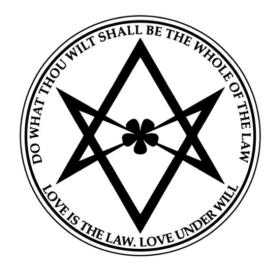
Thelemite

Muslim..

You can also add your opinion below!