 Girl's Behavior
  Guy's Behavior
  Flirting
  Dating
  Relationships
  Fashion & Beauty
  Health & Fitness
  Marriage & Weddings
  Shopping & Gifts
  Technology & Internet
  Break Up & Divorce
  Education & Career
  Entertainment & Arts
  Family & Friends
  Food & Beverage
  Hobbies & Leisure
  Other
Other  Religion & Spirituality
  Society & Politics
  Sports
  Travel
  Trending & News
On 26th June 2015, a Tunisian Isil operative, Seifeddine Rezgui, opened fire on a crowded beach in the resort of Port El Kantaoui, outside the city of Sousse, in Tunisia, killing 38 people.
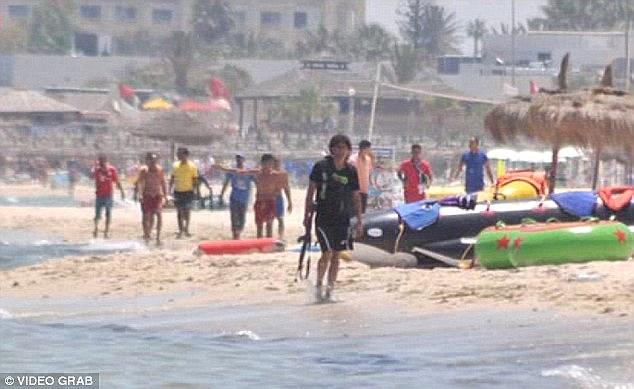
It will probably surprise some people, but Tunisia was for decades a place where many Europeans went for sun, sea and relaxation. It had a reputation, perhaps, as a somewhat downmarket destination, and was certainly one that provided good value for money.
Many of the people who used to visit would never leave their resort, oblivious to the fact that there was more to the country than simply the coastline. Some even appeared to be unaware that they were in North Africa, unable to even locate the country on a map.
Yet there is much more to see in the country, and it doesn't take a lot of effort to do this. The national language is Arabic, but if you speak passable French, all kinds of doors open to you, in terms of what you are able to explore.
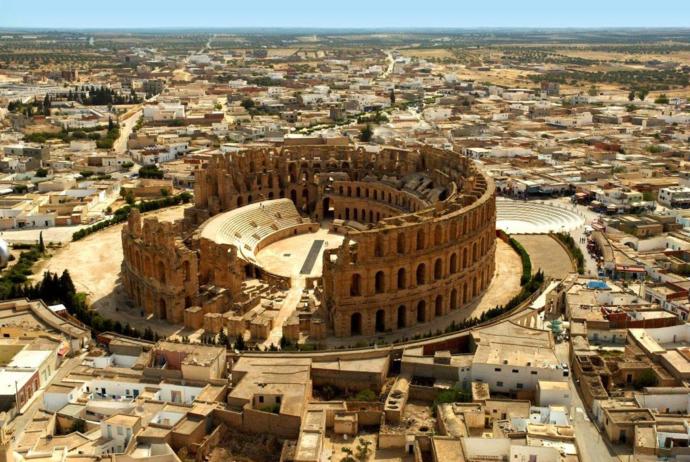
For example, one of the largest and most complete Roman amphitheatres in the world is in Tunisia, in the town of El Djem, which also contains one of the world's greatest collections of Roman mosaics.
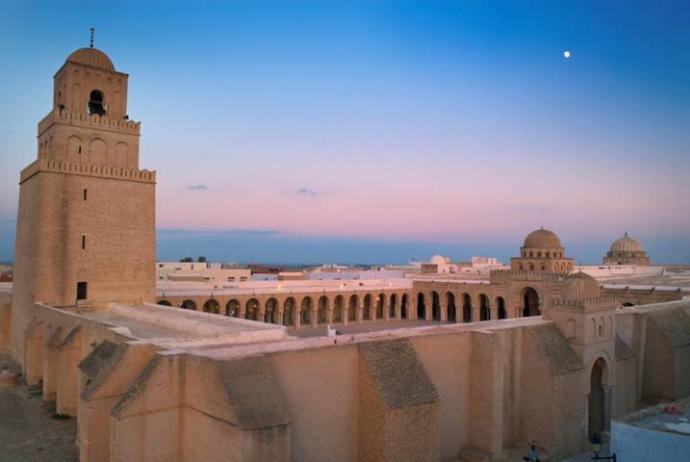
Tunisia also hosts the fourth holiest site in Islam, coming only after Mecca, Medina and Jerusalem, in the city of Kairouan.
But the sunny weather and the beach were what most visitors to the country came for, in much the same way as many North American tourists visit Mexico and Jamaica.
In hindsight, we're entitled to ask whether it was responsible or not, to build resorts, which were fundamentally at odds with the character of the country in which they were located, and for the tour companies to have reassured their customers that all was safe and well there.
I visited there, with my girlfriend at the time, in April 2012, three years before the Sousse Massacre, and got a very good deal with the best hotel in Sousse, which nevertheless was barely half full. We were interested in the sights, rather than the resort, and were very impressed with what we saw.
But I also did my research very, very thoroughly beforehand, looking at travel advice from the UK Foreign Office, the US State Department, the Australian and Canadian Foreign Offices, all of which did not advise against travel, at the time we visited.
But I was very struck by how so many of our fellow guests had no interest in what was beyond the hotel's walls, and knew so little about it.
In the intervening three years, the situation continued to deteriorate, with the US State Department advising against travel to Tunisia, and the situation in neighbouring Libya getting worse and worse. I read an article online about how Sousse had become a hotbed for Isil recruitment, and how Tunisians comprised the largest non-Syrian or Iraqi element within Isil. So I wasn't entirely surprised when Sousse was hit by terrorist attempts prior to this one.
Is it really acceptable for tour companies to send their customers to destinations where there is a very real threat to their lives? Many European countries are once again sending package tourists to Tunisia...
























Most Helpful Opinions