 Girl's Behavior
  Guy's Behavior
  Flirting
  Dating
  Relationships
  Fashion & Beauty
  Health & Fitness
  Marriage & Weddings
  Shopping & Gifts
  Technology & Internet
  Break Up & Divorce
  Education & Career
  Entertainment & Arts
  Family & Friends
  Food & Beverage
  Hobbies & Leisure
  Other
Other  Religion & Spirituality
  Society & Politics
  Sports
  Travel
  Trending & News

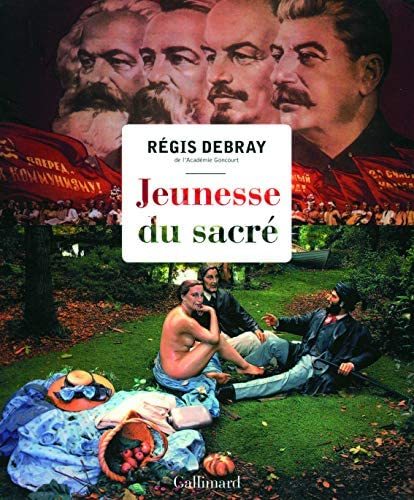
Thus, a modern might believe that we are now vaccinated against rites, exempt from all holy veneration, Nietzsche and the Internet having been there. In his essay, "Youth of the Sacred", Debray invites us to reconsider the landscape.
As long as we know how to dissociate it from the divine, the sacred, this "intractable ghost", is everywhere. What is the sacred? Anything that "legitimizes sacrifice and prohibits sacrilege", writes Debray. Have you heard of the Stalinist mausoleums, the flame of the Unknown Soldier, the Pantheon mound, the Yad Vashem memorial in Jerusalem, the Mount Valerian crypt? Did you know that the neo-Byzantine cellar of the Institut Pasteur houses the body of the great scientist?
No doubt these sanctuaries create an image, but that is still too little. Debray sketches, in a mischievously illustrated book, the prolegomena of the contemporary sacred. Doesn't article 2 of the European Convention on Human Rights stipulate that one must respect "the sanctity of life"? Don't the flowers placed on Jim Morrison's grave transform a corner of Père-Lachaise into a vampiric altar? Wagner, in connection with "Parsifal", did he not speak of "sacred representation"?
Debray shows how the secularized sacred enters into our secular cult. An investiture ceremony at the Elysée maintains a diffuse sacredness. In various ways, the right to strike, heritage, the duty of memory have become untouchable rites.
Doesn't the law of time push for the unmistakable sanctification of the victims? Not to mention the ecologists, who worship at Mother Nature . The need for ritual unites, writes the author.
Debray distinguishes between the sacred of order (national funerals) and the sacred of communion (Sartre's funeral). We are happy to form a group around the sacred, parades, processions, processions, commemorations, and respect for secrecy is law - so we cannot enter a Masonic temple without being invited. Secularized, the sacred can touch on a paradox: if we compare the very restrained public of a courtroom with that of tourists in shorts who visit a cathedral, the profane sacred now seems more demanding than the confessional sacred..
Debray says in an interview
"Out of intellectual laziness, we assimilate the sacred to the religious, the mystical, the supernatural. I mean to cleanse the sacred of its esoteric or incantatory trappings. reveal what we prefer to evade, either by volatilizing it into states of consciousness, or by making it old-fashioned into retro folklore.The sacred is an obscure and repressed dimension of our modernity, which we only approach in negative terms, edges, through violations, blasphemies, scandals. This is why I offer a contemporary observation of everyday life. My book is an invitation to lift the lid: the sacred is inscribed in stone and sounds, monuments and songs . "
"We do not want to see what this incoercible feeling reveals to us. We are also embarrassed by the fact that this area involves regulations, prohibitions, sanctions. Take the status of the corpse and the cemetery, which remains a place of sacredness: the Penal Code gets involved. As with organ transplantation. We are not free to do anything with a body. Yet, even if each culture respects its red lines without saying so, our era claims to prohibit forbidden. The first of our taboos is the notion of taboo."
“The sacred is what imposes sacrifice and what prohibits sacrilege. In other words, it is what we sanctify! It does not exist in itself. It is not a timeless absolute and mysterious that overhangs or encompasses us, but a certain relationship, dated and localized, between a community and objects, places or people.As if, to go beyond the ephemeral and escape death, we needed certain things which exceed us, precede us and succeed us. And it is this which, like a main beam, holds together organized groups, societies, communities. The sacred is an antidestiny - from which we cannot escape. pass. Which makes it, paradoxically, our unsurpassable Destiny . "







Most Helpful Opinions