 Girl's Behavior
  Guy's Behavior
  Flirting
  Dating
  Relationships
  Fashion & Beauty
  Health & Fitness
  Marriage & Weddings
  Shopping & Gifts
  Technology & Internet
  Break Up & Divorce
  Education & Career
  Entertainment & Arts
  Family & Friends
  Food & Beverage
  Hobbies & Leisure
  Other
Other  Religion & Spirituality
  Society & Politics
  Sports
  Travel
  Trending & News
Have you ever thought of seeds as sacred?
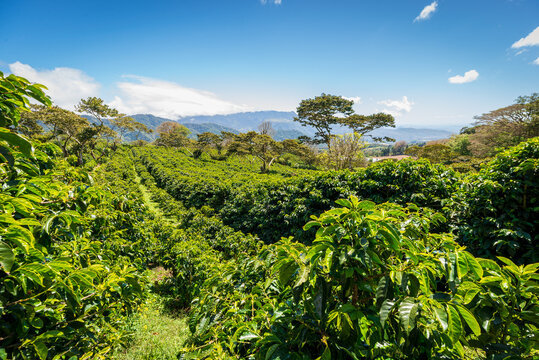
Since the beginning of time, people in their different parts of the world thrived on the abundance of food that Earth generously provided. Farmers have always recognized the sacredness of the Earth, celebrated the gifts of the seasons, and praised the Creator for the fertility of the Earth and the gifts of the harvest.
Since seeds reproduce themselves, farmers were free to save a portion of each harvest to replant, even if they had purchased their original seeds from someone else. Seeds were seen as part of the commons, a gift from nature, to be shared by all.
In 1880, the U.S. Department of Agriculture distributed over 1.1 billion seed packets. But, while the free seed program helped to feed a growing nation and increase trade exports, the program ran counter to the interests of a fledgling private seed industry that longed for a way to make farmers buy seeds year after year. This industry realized that the best way to achieve their objective would be to patent seeds.
Initial attempts to patent the fruits of the Earth were, of course, met with strong opposition. But, thanks to incessant pressure, a body of intellectual property rights law steadily grew. The seed industry’s efforts finally paid off in 1970, when the Plant Variety Protection Act prohibited “the unauthorized propagation or dissemination of patented seeds”. This legal construct made it possible, for the first time in history, to ban the saving of patented seeds and required farmers to buy new ones every year. Nature’s gifts could now be treated like human inventions. With the flourish of a pen, the commons were privatized and the sacred became a mere commodity.
Spurred on by subsequent laws and court rulings, pharmaceutical companies in the 1980’s became interested in discovering and collecting plants for medicinal research. By patenting plants that were already known to, and used by, indigenous peoples, these companies gained the sole rights to their use in a manner reminiscent of the “discovery” and subsequent theft of the New World lands by Europeans in the fifteenth and sixteenth centuries.
Also in the 1980’s, biotech companies began patenting genetically modified organisms – otherwise known as GMO’s. In a radical departure from the natural practice of selecting, cross-pollinating or grafting different varieties of apples to create new varieties with desirable traits, these biotech companies were able, for the first time, to combine genetic material from different biological species and even families. For example: A GMO plant might be a corn/bacteria/fungus plant. What appears to be corn might actually be a multiple organism.
These new “multiple” organisms are capable of pollinating non-GMO varieties. When they do, the seeds from the cross-breeds wind up containing the proprietary genetics of the GMO. By this method, GMO’s gradually colonize the planet, destroying biodiversity and exponentially expanding the assets of their developers, the patent holders.
As acre after acre is rapidly overrun by these new organisms, one farmer after another becomes involuntarily indentured to a corporation like Monsanto. According the US Center for Food Safety, “Feudalism has returned to farming in the US and Canada.”
In the past 16 years, a quarter of a million Indian farmers have committed suicide because contracting to plant Monsanto cotton drove them into bankruptcy.
And aside from spelling economic hardship and even financial ruin for farmers, GMO’s may also pose a serious risk to human health and to Earth’s ecosystems. Monarch butterfly populations are being decimated by Bt corn, according to a 1999 study by Nature Magazine. Ladybugs and other insects are suffering the same fate. Independent studies from Australia and various European countries suggest that Bt corn causes liver, kidney and reproductive damage in animals. What could it be doing to humans?
The long term effects that certain GMO’s may have upon Earth’s ecosystems and on human health are incalculable. Does corporate profit justify this kind of misery and devastation?
Over the centuries, our relationship with the Earth changed. Humans began to see themselves as separate from the interdependent web of life. The philosophy of Descartes led to a scientific outlook that sought to separate, compartmentalize and control nature. Rather than seeing our fellow creatures as little miracles, they were viewed as mere machines with no value other than their potential for study and exploitation. Our present-day concerns for ecological and economic sustainability are the result of this separation from the interdependent web of life.
I feel grief, disgust and even outrage when I think of the coldly clinical, anthropocentric worldview which supports industrialism and rewards greed, power and domination. There is no sense of reverence and no role for the sacred in such a worldview.
Now I ask you to think of all the vegetation in the world. Think of all the plants that are propagated by seeds. Think of all the creatures that depend on seeds for survival.
In considering this, is it possible to view seeds as sacred?
Physicist and internationally renowned activist, Vandana Shiva, has said, “Seed is created to renew, to multiply, and to be shared. Seed is a common resource, and we have to protect it for future generations. Seed is life itself.”
Ms. Shiva said the time-honored practice of seed saving is “…a problem for Monsanto and other major seed companies who want to turn seed into a non-renewable resource.” She describes this as “…a description of dictatorship.”
Denying people the right to save seed is despicable, but things got much worse in August, 2011. In a decision denying basic property rights and even exceeding the FDA's contempt for food freedom, Wisconsin Judge Patrick J. Fiedler ruled that :
* People have no fundamental right to obtain any food they wish;
* They have no fundamental right to own a dairy cow, or to consume the milk from their own cow; and
* They have no absolute right to produce or consume any particular food or feed it to their children.
This means is that the government has seized the power to regulate what foods people are allowed to produce for themselves, and what foods they may and may not eat.
The Judge also ruled that “Private contracts do not fall outside the scope of the State’s police power.”
This basically means that the government now claims the right to forbid sharing, selling or giving away food without a license. This is supposedly for our own protection. Essentially, if it’s not a product of the food industrial complex it’s unsafe to eat.
So, the sacred gifts that Earth provides are not only considered to be private property, but they also considered to be dangerous unless approved and taxed by the government.
Since time immemorial, when people gave thanks for the harvest or said grace before their meals, they didn’t pray to corporations for creating the food, or to the State for allowing it grow.
Instead, people around the world used words that echo the sentiments of the prayer I learned as a child growing up in a Catholic family … “Bless us, our Lord, and these Thy gifts which we are about to receive from Thy bounty, through Christ, our Lord. Amen.”
Whether one believes that a God or gods or Mother Earth or random natural processes provided the bounty that allowed humans to evolve and to thrive over millions of years, it is impossible to imagine that an artificial, legal entity created such abundance. Monsanto’s crude genetic experiments have managed to splice multiple organisms together to produce chimeras that bring to mind the work of Dr. Moreau. But the act of combining a goat with a lion and a serpent does not compare with the wondrous processes that created the original goat, lion and serpent. Nor does it compare with the genesis of every other kind of animal, vegetable, flower and tree on this earth.
My point is that these companies did not create life. And their patented creations may cause much more harm than good. Furthermore, their behavior embodies a Cartesian indifference to the suffering of our fellow sentient beings and a lack of reverence for life itself.
I won’t argue that genetic research is a bad thing in itself. And I even agree that some of the results from that research might turn out to be extremely beneficial. What I do oppose is the release of GMO’s into the wild without first researching the possible consequences. I believein the precautionary principle. But, companies like Monsanto are only concerned about consequences that will outweigh their short term profits, regardless of the devastation they produce. I find this kind of attitude appalling.
The time has come for people to reconnect with the interdependent web of life and acknowledge, with reverence and gratitude, those things that are truly sacred. Perhaps we should be mindful of that from which all life springs; and give thanks to the mysterious generosity of the Earth for spreading such a diverse array of nourishing goodness upon our tables.






















Most Helpful Opinions