 Girl's Behavior
  Guy's Behavior
  Flirting
  Dating
  Relationships
  Fashion & Beauty
  Health & Fitness
  Marriage & Weddings
  Shopping & Gifts
  Technology & Internet
  Break Up & Divorce
  Education & Career
  Entertainment & Arts
  Family & Friends
  Food & Beverage
  Hobbies & Leisure
  Other
Other  Religion & Spirituality
  Society & Politics
  Sports
  Travel
  Trending & News


In the annals of history, wars are often cloaked in the rhetoric of ideology, freedom, or tyranny. Yet, beneath these lofty justifications lies a more primal truth: conflicts erupt over resources that underpin economic dominance. By 2030, the United States will find itself at war with China, not over communism’s specter or Taiwan’s sovereignty, but over the Taiwan Semiconductor Manufacturing Company (TSMC). This singular entity produces the silicon chips that power the global economy, from smartphones and cars to AI systems and military hardware. TSMC commands over 64% of the global market share in dedicated contract chipmaking, manufacturing more than 90% of the world’s advanced semiconductors. The company’s output represents about 8% of Taiwan’s GDP and 12% of its exports, making it a linchpin of not just Taiwan’s economy but the entire world’s technological infrastructure. As geopolitical tensions escalate, the US cannot afford to let China seize control of this vital resource, echoing patterns from past wars where economics, not ideals, drove the bloodshed.
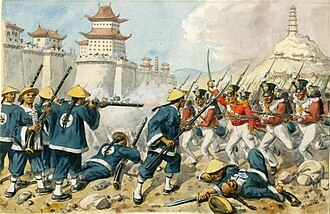
Consider the Opium Wars of the 19th century, often romanticized as clashes between imperial Britain and isolationist China. In reality, they were economic power plays. Britain, addicted to Chinese tea imports that drained its silver reserves, sought to force open China’s markets by flooding them with opium from India. This reversed the trade imbalance, ensuring Britain’s access to lucrative goods like tea, silk, and porcelain. The wars (1839–1842 and 1856–1860) dismantled China’s trade barriers, granting Western powers unfettered access to its economy. It was never about civilizing the East or combating tyranny; it was about securing economic lifelines. Similarly, TSMC’s chips are the “opium” of the modern era, indispensable for global trade and innovation. China’s potential control over them would cripple US technological supremacy, much like Britain’s desperation for tea fueled its aggression.
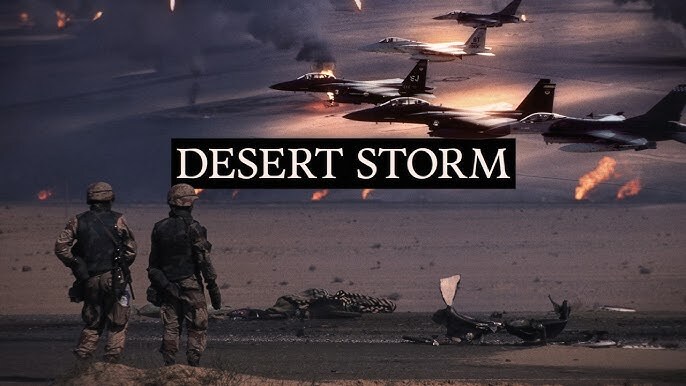
Fast-forward to the 1990–1991 Gulf War, where ideology again masked raw economic motives. Saddam Hussein’s Iraq invaded Kuwait not for abstract notions of Arab unity but to seize its vast oil fields. Iraq, burdened by war debts from the Iran-Iraq conflict, accused Kuwait of overproducing oil, which depressed global prices and starved Iraq of revenue. By annexing Kuwait, Saddam aimed to control a significant portion of the world’s oil supply, bolstering Iraq’s economy and regional power. The US-led coalition intervened under the banner of liberating Kuwait from tyranny, but the underlying fear was a disruption to global oil flows that could tank Western economies. TSMC parallels this: its dominance in semiconductor production means any Chinese takeover would disrupt supply chains worldwide, potentially costing trillions in economic output. The US, reliant on these chips for everything from consumer electronics to defense systems, would view such a move as an existential economic threat, just as oil was in the Gulf.

The 1967 Six-Day War offers another stark example of resource-driven conflict, often framed as a preemptive strike for Israel’s survival against Arab aggression. However, water resources played a pivotal role in escalating tensions. Israel, facing water scarcity, had begun diverting the Jordan River, a critical source for the region, prompting Arab states like Egypt and Syria to retaliate by attempting to block Israel’s access through dams and military posturing. Egypt’s closure of the Straits of Tiran was the immediate trigger, but the war’s roots traced back to disputes over the Jordan’s waters, essential for agriculture and population growth. Post-war, Israel gained control over key aquifers and water sources in the West Bank and Golan Heights, securing its economic viability. Freedom and tyranny were secondary; water, as vital as oil or chips, drove the calculus. In the TSMC scenario, semiconductors are the new “water”: scarce, essential, and concentrated in one vulnerable location. China’s ambitions in Taiwan threaten to “divert” this resource, forcing the US to act to prevent economic drought.

Even the ongoing Russia-Ukraine War underscores this pattern, stripped of its ideological veneer. While portrayed as a battle against Ukrainian “Nazism” or NATO expansion, economic undercurrents reveal a grab for resources. Ukraine’s Donbas region holds vast untapped natural gas fields, including significant shale gas reserves that could rival Europe’s supplies. Prior to the 2022 invasion, Ukraine was producing around 20 billion cubic meters of gas annually, with potential for more in the east. Russia’s seizure of Donbas territories conveniently aligns with controlling these assets, disrupting Ukraine’s energy independence and bolstering Moscow’s dominance in European gas markets. The invasion’s timing, following Ukraine’s push to develop these fields, suggests economics over empire-building. TSMC fits this mold: China’s interest in Taiwan is amplified by the company’s irreplaceable role in global supply chains, where disruptions could echo the energy shocks from Ukraine.
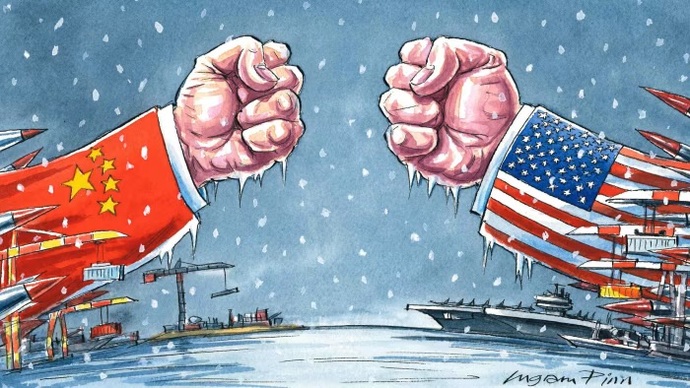
These historical parallels illuminate a timeless truth: great powers clash when economic necessities are at stake. TSMC’s geopolitical weight is immense; its facilities contribute up to 15% of Taiwan’s GDP, and global reliance on its output heightens tensions amid US-China rivalry. Efforts like US reshoring initiatives, including TSMC’s investments in American fabs, underscore the stakes, but they cannot fully mitigate the risk of a Taiwan blockade or invasion. By 2030, as chip demand surges with AI and electrification, the US will have no choice but to defend this “silicon island” militarily. Make no mistake: the war will come, not for lofty ideals, but for the chips that sustain our world. It’s only a matter of time.

















Most Helpful Opinions