Elaborate.
How subjective is morality according to you?

 Girl's Behavior
  Guy's Behavior
  Flirting
  Dating
  Relationships
  Fashion & Beauty
  Health & Fitness
  Marriage & Weddings
  Shopping & Gifts
  Technology & Internet
  Break Up & Divorce
  Education & Career
  Entertainment & Arts
  Family & Friends
  Food & Beverage
  Hobbies & Leisure
  Other
Other  Religion & Spirituality
  Society & Politics
  Sports
  Travel
  Trending & News


Very.
After all, "acceptable casualties" and "involuntary manslaughter" are the same thing, aren't they?
"1st Degree Murder" and "Execution" are both the act of killing someone with malice aforethought, the intent to take the life of another.
That's society's own rules. Nothing is "good" or "bad" until one of those options becomes more convenient for society at the time, and we as people are just constant states of change.
For that purpose, I submit the Trolley Problem:
Kill 1 or kill 5? Either way, someone has to die. At that point condemning 1 person to an inevitable death becomes acceptable, and you're a hero for saving 5. Switch the track and, despite saving a life, you're a terrible person. That 1 person must simply not deserve to live under this circumstance because society said so, they made a "noble sacrifice" despite not having any choice in the matter. So clearly the idea is that "of course, 5 saved is better than 1," right? Well, let's add some more information: 1 friend, or 5 strangers? Now it's up to YOUR morality, not what society thinks is right.
TL;DR
A moral compass needs constant calibration, and true north is wherever people tell you it is.

Not very much. The Bible is very clear on what is right and wrong. The Bible is literally God's instruction manual for how to live life. Anything God deems moral is moral and anything God deems immoral is immoral. While God DOES offer mercy to us, his mercy is not permission for us to simply do whatever and not face consequences. However, good works alone cannot get us into Heaven so there is no gaming the system by just simply obeying the Commandments. Jesus is the ONLY path to Heaven and therefore HIS instructions are what determines what is moral and what is not.
Yes, there are such things as kind and helpful atheists. Some of the nicest people I know are atheists. However, at the end of the day they have no real reason to be moral. In their minds death is the end of everything. If that is the case then why not just break the law, cheat or do whatever you want? As long as you never get caught there would be no consequences, right? The point is atheists have no real standard of accountability for their souls. That means THEY could decide morality, even if their actions are immoral to others.
As for other faiths, at the end of the day nobody really knows who is right or wrong. That is why it is called faith. However, if you truly believe in your faith then morality is bound by the texts of your faith. If you truly practice your faith, then ANYTHING that goes against it is immoral.
I fully believe the Bible is the ONLY path of morality. Other faiths feel the same about their faith. Atheists have no real reason to be moral other than their own thoughts. No matter which category you fall in, you either are grounded in a faith and the morals it dictates or you are atheist and therefore have no real morality. In either case, morality is not subjective. You either follow the morals laid out to you in faith or you lack morals.
Ah this is a fun one. To all the people who say Morality cannot be objective then what do you call a sociopath? Are they not someone who will objectively do bad things because there mind has been damaged? Proving that humans themselves when not damaged have a somewhat objective empathy that leads to morals been created therefore there must be some objectivity within it all.
You see if they were subjective then a sociopath would never need to be pointed as one because we wouldn't think anything of it and go yup there just been a normal average human with their own capability to be subjective when it comes to morals.
There is people mentally ill who straight because of that cannot be moral while everyone who is not can be? Seems like an objective difference there.
Or is it just subjective there mind is damaged in the first place?
You can easy make an argument that it's subjective whether someone thinks is abortion bad or not. But there is a reason humans and even animals developed a core based empathy, to create objective morality.
Also I don't think someone just doing bad things because they like it makes morals subjective because that person actively knows there doing bad therefore they have a set line bases for morality just they ignore it, ignoring it is different to it existing. Even if you were brought up with no good teacher for morals your empathy would kick in.
I could be wrong here, but I feel like I made an interesting point either way and if someone wants to say empathy is subjective then that's a whole other opinion for another question.
But think my short answer to that would be somewhat yes but also somewhat no because we all objectively have it in some form unless we get damaged but even then will still have it just our mind don't process it correctly.
I believe you may have the wrong interpretations for objectivity & subjectivity. "Objectivity" are things that are irrefutable to us & would continue to be how they are with or without our opinion of it. I like to think of science as being the ultimate objective truth of our reality. And I also believe that whether it's truly objective or not, it would be best for us to treat it as such since our being is dependent on it.
And I view "subjectivity" as our perception of experiences when observing, interacting, or embodying (etc) the objective world. And ofc the subjective experience can have biases, preferences, or tendencies that provide a necessary illusion to help fuel our goals as living beings. Especially the big one about propagating.
As for sociopaths, they manipulate people for personal gain. And we normal people do it all of the time. Granted, in more subtle & harmless ways that aren't often consciously planned out. They're more subconscious or instinctual. But it might be best to think of them (sociopaths) as you might a hacker. A hacker can be perceived as good or bad based on their behavior. And we'd likely consider their behavior to be good if their behavior & goals align with what we agree with. But their nature wouldn't change. They'd still be exploiting vulnerabilities. Only our perception of them would change. Simply because of our biases, preferences, or tendencies. The subjective.
And even though I believe morality as a concept is fully subjective, the footprint of morality can be objectively seen. Similar to religion or any other belief-based thing that has influences on our behaviors. As we are objective beings.
Well even though I believe that any behavior or action from us is objective. In the objective world, nothing is good or bad. So the sociopath wouldn't be doing a bad thing from that point of view. They'd just be doing a thing. A thing that can be interpreted in any way depending on a specified situation, goal & everything related.
I suppose but then in a true objective world empathy wouldn't exist but objectively we grew with the very purpose to have it within us. No different to having organ or some other thing we evolution to have there must be an objective reason?
And wouldn't that be to protect and procreate and create a prosper spot for us as creatures so we can survive therefore hurting someone that may hurt our prosper site objectively bad?
Yeah, I agree there's an objective reason & need for empathy & morality. We need them in order to function. But I think we should look at objectivity & subjectivity as not being mutually exclusive.
I view objectivity as being the thing we're predicated on. And that there would be no subjective without it. It's why I made the religion analogy. As science is the source of spirituality like objectivity is the source of subjectivity.
And since I like to view all science as the objective world, it would include almost everything about us (aside from consciousness). Even our instincts. But ofc I could be wrong about that since we don't know much information on the origin of our consciousness & I don't know much about the instinct's relation to consciousness.
I guess the real question is things that come naturally to us at the core? Objective. Since surely a spider spinning a web is it's natural state, so objectively that's what the spider does. So if naturally humans have empathy that lead to us not creating a web but creating a social understanding of morals now as morals become more complicated than the simple survival things it will become more subjective but the objectivity is for sure there.
Otherwise we wouldn't bother develop it tbh.
It's not like we just objectively create a liver. If we then use that liver to apply to things outside it's core reason for existing it would become more subjectively used.
It's like any emotion for us to evolve with it, it's purpose must be for an objective reason. Unless we start off a theory were we could just create wings for the fun of it because subjectively humans wanted it. Which tbf would be awesome. But evidence shows that's not the way it works we develop things because objectivity we need it.
Therefore Empathy must be it and empathy routes morals in the first place.
I'd argue that we humans don't have much natural true empathy. I believe we formed morality for more self-interested reasons. Because if we allow certain bad behavior, it could come to bite us.
But I'm not sure I'm following the rest of what you're saying. Is there a way you can structure it differently?
Of course Humans naturally have lots of empathy. If we didn't then sociopaths who are actually damaged would be seen as the normal ones. But even without that as an example, a true empathy formed within us cause we are creatures that needed to learn how take care of each other and our babies.
Hmm well it's like this you start off as a simple human without the knowledge of much following more primal nature but there would still be an emotion of empathy and morals if to look after baby that would just come naturally to him because that's part of our primal nature, then more humans gather making a small tribe now this tribe has complexed things now so this empathy may have to apply in other situations one may not of thought of with less or no people around.
However this is still proof that at the primal sense of things we would have empathy and morals making them a thing that will objectively be there.
The subjective part actually comes from the more complex issues that are raised within a society than just morals 100% been subjective because that would mean empathy is too. But we've seen that not the case especially when we know damaged to the Frontal lobe can effect highly on it when that becomes damaged. Giving us a more or less accurate amount that healthy brain has/should have.
Also would just like to mention, empathy it's self would of been created by self interest but you can make that argument for everything. Just the way living things live really if they didn't do it for self interest they wouldn't at all. But that don't mean we didn't create lots of empathy cause we did. So you are right about the self interest thing in a way.

There is black and white and pure evil, like physical harm to others, murder, theft etc. ... the things all but the craziest among us agree upon.
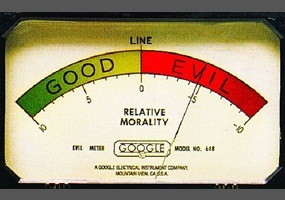
Then there are the many gray areas, which are more of a personal choice. That's where subjectivity comes in, and in most cases, rightly so... don't you think?









Opinion
47Opinion
If you take "the golden rule" - treat others the way you would wish to be treated yourself - that's pretty universal, if a little vague.
Anything more specific though, tends to be more subjective, and there are usually exceptions or grey areas. For example, "thou shalt not kill" is also pretty widely accepted, but what about euthanasia, abortion, self-defence, etc and does it apply to animals as well as humans? Those questions are all still up for debate.
Personally, I think morality and religion are two separate things, so if you take the 10 commandments, I'd dismiss the first three out of hand. Even if God exists, and taking his name in vain really pisses him off, that doesn't make it immoral.
There is a handfull of key human emotions that are universal within time and space. From knee slapping laughing to fetal sobbing you don't need to understand the language or culture to fell whats going on.
The thing is all cultures carve there own path in understanding these key human emotions. So even though all of humanity might have started with a single point, the culture and environment carved a unique path of expressing these emotions. Thus creating the subjectivity of humanity.
Same thing happens with language. People are sometimes limited by the capacity language they speak. The easy example on how advanced a language is the wording on colors. It's an off shot of your question but it's still very relevant.
Orange as a color was first used in 1502 in English even though it's apart of nature. Sure orange as a color has was a thing earlier then that but our language was only processed it in 1502. The same can be said with morality.
I believe that morality is fully subjective since it's based on the approval or disapproval of certain behavior. If it was something like physical pain, I'd be saying it's objective. But morality changes with collective preferences. It's a result of groupthink.
Like anything morality can end up in conflict with each other. And what is worse smong inmoral actions can be very subjective. Does it matter who get robbed? Is robbing a rich person less of a crime then a person that lives pay check to pay check? Is it okay to steal food if you starve? Is it okay to kill in self-defense? What about if you defend someone else? A bet that the longer I make this list the more likely is that we won't agree on each item. So yes morality is subjective.

So we have a standard of what's acceptable in the culture through a general concensous but individual morality is more fluent. Meaning sometimes imorality is not unacceptable in an individual circumstance sometimes. You may need to bend the rules to reach a better outcome.

Morality is not subjective at all to me. It is objective and it is defined by GOD.
Subjective morality would imply that things like incest and zoophilia are moral if a certain society sees it as such. I believe that incest and zoophilia are immoral no matter the time, place and society.
people choosing their favorite version of sky beard to define morality is precisely why morality is so subjective.
Sky Beard*
@nachosaresexy 😂😂😂
@nachosaresexy Cool strawman pal. I'm not Christian or pagan tho. I don't believe God is a bearded man in the sky. In fact he's not man at all, never was never will be, not even metaphorically.
Moreover I did not assert that there was only one moral system in existence in this world. In fact there are multiple moral systems in this world and all have different sources whether it being philosophical/ religious, or not. However affirming that morality is subjective would imply and purport that all these different moral systems are valid in their own way. I do not believe this is the case. Therefore I believe that morality is objective because a moral system that would for example deem father-daughter intercourse as morally valid is immoral to me.
"pal" is the nicest thing someone has called me in long time!
weird tho is using random circumstances of incest in an attempt to prove some broader point about morality, especially after making some arbitrary declaration about "GOD".
but yeah, strawman, man.
@nachosaresexy it is not weird at all I simply used a more poignant example to illustrate my point more easily, this logic can even be applied to other less chocking scenarios. Although you'd know that incest between siblings was practised in places such ancient Egyptian pharaohs and it is technically possible for it to be accepted in the future as well if our morality as societies doesn't depend on a stable source and is merely dependant on our desires at a specific time in history or place.
you really think people in healthy societies couldn't figure out that incest and zoophilia are wrong?
pretty silly thinking there.
I would go as far as to say the only intellectually honest atheists are those who are moral nihilists. Otherwise they're either dishonest or unreasonable.
haha ok...
@Still-alive how do you define a healthy society? How do you define an unhealthy one? This claim is pretty arbitrary to me!
its not arbitrary. we determine it through utilitarian principles. we build a society which favors eliminating the most amount of suffering for the most amount of people. Health care, general well being. things that help us live longer.
that stuff IS objective and i would hope is desirable to most people... which a lot of polls suggest they are.
@NorthAfrican i've read the bible. lotta incest in there, including early hebrew heroes. werid arbitrary thing to isolate as part of some sort of broader take on humanity's ability to grapple with morals & function as a society.
@nachosaresexy I told you I'm not Christian so this is irrelevant to me personally because the prophets of God in my religion didn't commit sins. Our version of the story of Lut is different than that of Christians and Jews. He did not sleep with his daughters.
We believe the Bible got corrupted and the stories were changed as well. The oldest bible we have isn't even written in its original language. Nevertheless I do not think Christian canon allows for incest!
I get what you're trying to say but this really is besides the point. The morals you guys have today in the west are still largely influenced by Christian values and morality. Although you are slowly departing from it, your current moral compass still relatively lays on top of a Christian foundation.
The pre christian and post Christian morality was so different it is probably hard to gasp for modern society.
Here is an example, many highly functioning societies practiced human sacrifice and even saw it as a good thing: the Mayans, Vikings, Celts etc even Hindus practised a ritual where a widow would sacrifice herself by burning with her deceased husband (sati) and it was outlawed by British Christians. If you believe that morality is subjective aka moral relativism : something might be me morally wrong to me but if it is morally correct to someone else's culture, it would mean that you see both your and his position as equally valid and "moral" within their respective cultural frameworks.
Morality is objective to me because it doesn't matter if Human sacrifice was morally accepted for the Vikings; I still see is as objectively immoral and wrong.
It is immoral today and would have been immoral back then and will still stay immoral in 2000 years even if future civilisations decide to do reintroduce it and decide to consider it morally allowed.
Kind of begs the question is it the case that god commands good things or that god commands are by definition good. In other words, if we take god commands to be good by definition, if god commanded mass genocide, it’s good by definition to commit mass genocide, and begging the question of why good things should be done. Or if god commands good things, that would mean there would be some other way to determine right or wrong that isn’t from god.
@NorthAfrican i find arbitrary beliefs in stories passed on legitimately fascinating. good luck with your version.
@nachosaresexy how is it any less arbitrary than having laws (in legal positivist sense AND moral sense) depend entirely on the wishes of the "people " making it depend entirely on the whims and desires of societies or, in less democratic societies, the ruler or/and political and economical elite?
If something is morally wrong it should be morally wrong in all times and places. If marrying your dog is wrong today it should be wrong also in 2000 years. If you leave morality to be defined entirely by arbitrary preferences of societies at a certain time then you could allow for such transgressions...
@NorthAfrican of course it's all subjective, when we think of the topic as a whole.
with respect, it seems you're cherry picking specific examples that should be objective ("no you shouldn't chop off your third child's foot and feed it to your neighbor's dog!") and somehow extrapolating that in a way that suggests morality should be similarly *objective* (i. e. black and white). One more example - even Osama BL shared a love of $$ with the west, but yeah...
Morality is the farthest thing from objective, regardless of which cultural backstory we each happen to have been exposed to and/or choose to subscribe to today.

not so much at da core. almost every1 wanna thrive socially. almost every1 wanna live a rich life of meaning and purpose. almost every1 prefer harmony 2 disarray. dispute is mostly how
like health. what is healthiest food 2 eat? lotsa disagreement there. u got vegan carnivore paleo medit if atkins u name it. and u even got ideologues building whole philosophical framework around what 2 eat. and people fight over this. but at the core da goal is da same. all these people wanna be healthy. they wanna live long. not be sick. be strong. be energetic
Understood

It can only be subjective. People who claim objective morality don't know what'objective' means.
Something that is objective is something that is true, independent of a thinking agent. There is no yardstick by which you can measure morality, and in the total absence of thinking agents, morality ceases to exist.
Extremely subjective. For example, my moral judgement of whether a person is good or not is purely based on their character and actions. As long they're kind and good person, they're amazing in my eyes. But my best friend's mom is a religious fanatic hence sees atheists as immoral. I could go to the middle East tomorrow and single-handedly bring down ISIS and she'd still see me as an unworthy person cause I don't believe in her religion.
So very subjective I'd say.
It's ONLY subjective. Statistically speaking there are some general morals that apply in most societies but the fact that there are loopholes even in the "thou shall not kill" - morality makes me think most if not every rules is flexibel, breakable and in some cases not even considered in the first place.
Entirely subjective, but most people seem to agree on most aspects of morality.
But, for example, nothing was right or wrong before consciousness came into play. Like before life was on earth, if a rock falls and breaks another rock, nothing "bad" happened. But if I break another humans arm, that's another story. Morality is entirely dependent on us, conscious creatures. And we can't all agree on every aspect to morality.
It is based on what you and/or your environment sees as right and wrong. I put OR there because certain events can influence our judgement and the decisions we make.
Example: In some countries people eat dog. Many people treat dogs as companions. And oh how good they are at it. So for most people it would be wrong to eat dog.
In my opinion I don't think morality is subjective at all, people, everyone would just lack the wisdom or knowledge to understand something or comprehend something completely. Morality is surprisingly not grey in itself, it's the quest to the answer that can be so grey, but once you see it, you can't unsee it.
Very subjective. Everyone has their own ideas as to what is good for people and society as a whole, to varying degrees and rationales.
For example, I see it as a moral good to execute a rapist, where as many see that as murder and wrong, even if proven to be guilty.
Entirely.
Morality is an abstract construct, it's mind-dependent and as such it has no empirically measurable or observable properties for it to be able to be considered objective in any way.

Obviously 100% subjective. Because morals don't exist without the subject (s) that decide (s) on them. Humans just often agree about morals because the human experience is very similar. But even then, there's still some disagreement.

It's subjective in that it is culturally contextual. So some things will be understandable just because I know that the values of that country or that people group are different from mine. But I will still look down on them privately, and I won't won't want those values to be part of my family.

pretty subjective.
my morals are basically 'reduce the most amount of suffering for the most amount of people' a kind of utilitarianism of sorts.
i would hope others agree with mine in some form... but thats human beings for you.
Not at all. Because we have a moral-giver, that is God. If morality is subjective, then nothing is moral, but we all know as humans deep inside that isn't true. Whether we believe in God or not we still act as if there is one when we abide by an understanding of what is right and wrong, murder, rape and theft is wrong, helping, sharing, telling the truth is right, as if they are a given. But nothing is a given in a world where there is no higher power that has decreed it so.
Appeals to a god don't get you to objective morality - your god's opinion in morality is still just another subjective take on morality.
If anything, what you have is might-makes-right. Like obeying a dictator in the sky.
@CountessSarah If it isn't the self-styled countess. Here to impose her objective reality on me. Appealing to God is exactly what makes objective morality. Morality has to come from someplace if we want to say that some things are objectively right or wrong, as soon as we say that they have to come from somewhere, and an atheist premise cannot explain that. God who stands outside time and space and has made us and the Universe itself; when He says what is right and wrong it isn't an opinion it's fact. Just as you cannot say that an author's information on what his fantasy world is like is a mere opinion, no he made that world so it's fact. Or what we call "canon".
Of course it's a might-makes right. When you are the Almighty who has made heaven and earth, your might makes what is right. And I for one am happy to serve a good God.
Why assume 'morality has to come from some place'?
It comes from us.
And the very fact we could disagree on some moral issueand neither of us has any more weight to our position than the other throws your objective morality out the window.
It's fine if you happen to like the morality you claim to source from your religion, but I'd wager there are things your holy book commands or permits that you disagree with. So... Are you knowingly being immoral or is your religion wrong?
@CountessSarah How does morality come from us? If there is no moral-giver, who's to say that me killing you is objectively wrong? What if I reason that it is in my best interest to do so. Or to steal from you; well I do so because I have a family to feed. Or I comitt incest because it feels good, or I lie to the police protect someone I love even if they have comitted a griveous crime. If morality came from humans themselves then yes, morality is wholly subjective. But then it seems to me that we should not see any concurrence on what is simply right and wrong, no discussion, so also on what should be law and order, but it isn't the case is it, and never has been. The fact is that even those who comitt crimes or do something like lying or cheating do so in quietude and secrecy because they know it is wrong. If they did not they'd be fully open about it. We have global laws telling us right from wrong, constitutions, human rights which entirely leans on the existence on a higher power as a "right" as a human cannot simply exist because someone says so. As Scripture says: "They show that the requirements of the law are written on their hearts, their consciences also bearing witness, and their thoughts sometimes accusing them and at other times even defending them.)"
-Romans 2:15
You are confusing disagreeing with disobeying. Yes, I've had to come to terms with things in the Bible that I might not have started out agreeing with; that doesn't mean it's not morally right, quite the contrary. I mean that suggestion still rests on morality being subjectively imposed by humans but that is not the premise of faith in the Bible. You adapt your life to the truth of the Bible and not the other way around; an objective morality independent of our opinion of it is the literal definition of an ultimate truth.
I can't give you the fully thought out, respectful response I'd like to because I'm out right now. So I'll keep it short for now and expand later if needed.
But there's nobody to say that you killing me is objectivity wrong. Not even sure why you'd ask that when it's literally the opposite of my position.
All the things you've mentioned are just subjective moral positions. Nothing you've said is an obstacle for me or subjective morality.
I don't see why you seem to think that, granting me that morality was subjective, there'd be nobody doing things that we consider immoral - I mean, surely if anything, that fact should be an argument against objective morality, no?
Just to be clear - this isn't an argument I would use, but it just seems to me that people acting immorally would be an issue if morality was apparently objective - in a world with subjective morality, I would full expect people to do bad deeds and disagree. And that just so happens to be the world we occupy.
@CountessSarah I am saying exactly that, that there is something that tells us it's objectively wrong. What I said was in a world were morality is wholly subjective there should be absolutely no agreement on what is right or wrong, but there is. It's only silly to deny there isn't. We have 2000+ years of human history to prove it wherein almost exclusively all civilizations have handled matters like premeditated killing (murder) as wrong, and stealing hasn't been acceptable. If I was to kill you, I'd be met with an overwhelming condemnation for my actions regardless of how I motivated myself, and the law would condemn me because it forbids murder as wrong.
"All the things you've mentioned are just subjective moral positions. Nothing you've said is an obstacle for me or subjective morality." That's not an argument. That's just you claiming that it is so and frankly it's a cop out. You have to present something far more substantial that actually addresses my points and not just say "no it's not".
In a world were morality is subjective there are no bad deeds, only deeds. The argument lies not in disagreeing on *what is* right or wrong, but in *whether there is a right or wrong* at all in the world you claim is real.
"I am saying exactly that, that there is something that tells us it's objectively wrong."
Then you would need to demonstrate it. (And it couldn't be a god even if you proved one existed, because its morality would by definition also be subjective. You would have to explain where your god gets its objective yardstick independent of itself.)
"What I said was in a world were morality is wholly subjective there should be absolutely no agreement on what is right or wrong, but there is. It's only silly to deny there isn't."
I never denied that there's a large agreement on what is and isn't moral.
Morality evolved in us because we needed to co-exist as a herd species. The fact that morality is so often agreed upon isn't surprising nor an obstacle for subjective morality.
"All the things you've mentioned are just subjective moral positions. Nothing you've said is an obstacle for me or subjective morality."
"That's not an argument. That's just you claiming that it is so and frankly it's a cop out. You have to present something far more substantial that actually addresses my points and not just say "no it's not"."
Like I said at the time I was on mobile and couldn't type out the thoughts that I wanted to.
But now that I can...
On the contrary - you contended that I needed to provide a reason why murder, theft and incest were morally wrong, and I already stated that was never my position.
If we use your first example - murder - it isn't objectively wrong - you may be able to justify a motive for murdering me, and it would absolutely be your subjective morality that would be responsible. Of course I would disagree and be able to explain why it's immoral, but that's exactly the point.
You seem to have contorted this conversation to try and make me argue your case, then when I cannot do so, because... it's not my case to argue, proclaimed that I'm avoiding the question.
You've gotten a wired crossed somewhere.
"In a world were morality is subjective there are no bad deeds, only deeds..."
No. We still proclaim things to be good or bad deeds. You seem to think that a world with subjective morality would somehow be any different from the world you live in now. We do live in a world with subjective morality, and we do indeed discuss what is right and wrong.
We're doing it right now.
@CountessSarah No, that does not make any sense. You'd claim that you can reject objective morality even if an Almighty God who made the Universe and all its laws existed. That is simply nonsensical. And really you offered no real argument against that. I say again: If a God exists who has made Heaven and Earth, mankind and all laws of the universe, physics and nature, then His rules are those that apply. Logic in its most base form. You wouldn't question this about a creator of an epic novel, nor a builder of a new invention as to how and why it works.
And were then is the proof that all moral laws are simply a product of "herd" mentality from evolution? What about laws that has nothing to do with any survival of the herd. Lying has nothing to do with it, thieving need not have anything to do with it. And there's also no proof that a utalitarian mindset is somehow innate to us as opposed to for example strict egoism, what is best for *me* or at most my immidiate family is right.
I'd rather say that you're stuck in an inaccurate place of the argument here. I am arguing that beyond disagreeing there is still an objective morality. Disagreements do not prove that subjective morality is the only truth nor is it even an indicator. But if morality was truly subjective without any hint of objectivity then we would live in a world were we could make no claim to a universal law whatsoever, the Magna Carta or American Constitution couldn't have been written. Because they both appeal to greater standards of morality that goes beyond human opinion, and that very thing is what set them in motion. That humans have certain inailenable rights, that authority cannot do just about anything to its people and call it justified etc.
Yes, I can reject a god and it's morality.
As far as you're concerned a god /does/ exist, and I'm telling you now, I don't care what it says. If your god says nobody can eat shellfish, I don't care, I'm eating shellfish and your god has no authority.
"I say again: If a God exists who has made Heaven and Earth, mankind and all laws of the universe, physics and nature, then His rules are those that apply."
And I'll tell you again, that's not objectivity. That's might-makes-right. Your god is holding the biggest sword, therefore it's word goes. That's not objectivity.
"You wouldn't question this about a creator of an epic novel, nor a builder of a new invention as to how and why it works."
That analogy doesn't work.
If JR Tolkien says "There once was a hobbit who lived in a hole" and go "No, no - There once was a hobbit who lived in a shoe", that's... Subjective Lord of Rings.
Which is... a strange idea, for sure. But changing the details of a ficticious story, isn't the same as disagreeing over the rules of morality. You're comparing apples to oranges.
"And were then is the proof that all moral laws are simply a product of "herd" mentality from evolution?"
Go look at nature.
We don't fully understand how morality works, but we know that our distant relatives understand concepts like fairness and working together.
It's good to do things that are good for the herd, and bad to do things that are bad for the herd.
"Lying has nothing to do with it, thieving need not have anything to do with it."
If you lie to and steal from your herd, you are unlikely to stay in it very long.
"Disagreements do not prove that subjective morality is the only truth nor is it even an indicator"
It absolutely does.
You say X is moral/immoral, I say the opposite - You have no leg to stand on to contest that your morality is any better than mine.
"But if morality was truly subjective without any hint of objectivity then we would live in a world were we could make no claim to a universal law whatsoever, the Magna Carta or American Constitution couldn't have been written."
If you lived in a world with objective morality, they wouldn't have /needed/ to be written.
@CountessSarah You can say that you would; but for the sake of the theoretical logic it doesn't make sense. End of story really. If you're going to say that even if Jesus Christ stood before you clear as day, real, the Bible and God all of it true; you'd still refuse Him. That's not you disproving anything, that's just you choosing yourself and your own beliefs. The existence of an objective morality does not necessitate people to choose it. And with the shellfish, if we pretend for a second that you accept the premise of the Biblical God which is the basis for my objective reality then you are simply incorrect. God has all authority. Now He chooses to allow people free will to choose Him or sin, but He's still the one in the right and if you choose to reject Him and to want nothing to do with Him till your dying breath, one thing is wholly out of your control which is where you go next, which is Hell. And that's on you, not on God.
You really seem unable or unwilling to grasp the simple context: of originator of something=objectivity of that something. You mention might makes right as if that by default means it's incorrect and not objective when, for the third time it doesn't. It does mean that the Almighty God who holds the reigns, is omnipotent and stands outside the laws of time and space, is the one who knows and dictates what is right and wrong. To essentially simply respond "nah I'll do what I want and it's not objective" isn't a rebuttal by any measure.
It works fine. And you're not presenting the argument properly. In the context of you claiming that even if God exists He has no right to objectivity it's the same as to say J. R. R Tolkien's writings on Lord of the Rings doesn't make what is objectively true about the world of Middle Earth. That's the point. And if you want to dispute that then please provide something more detailed than "no it's not".
@CountessSarah No. That only proves that you oppose my claim. Not that objective morality doesn't exist. One disagreement does not unversial subjectivity make. And you cannot ignore the plethora of examples of agreed upon objective morality that has also stood the test of time. There's no explanation for our shared conscience with a wholly subjective mindset. What is "best for the herd" doesn't even exist in the animal kingdom. Primates for example, are readily violent enough to kill their rivals without provocation no matter their position in the pack.
"If you lived in a world with objective morality, they wouldn't have /needed/ to be written." Incorrect. Objective morality existing does not equal it being perfectly enforced. Nor does objective morality necessitate that no one disagrees on it.
"We don't fully understand how morality works, but we know that our distant relatives understand concepts like fairness and working together." You don't understand it unless you adapt the idea of a moral-giver, which is God. Then the fact that people have always understood cooperation and fairness becomes evident. As does the issue of sin in those that deviate which isn't explained by the herd mentality.
Look at nature indeed. In all its intricacy and harmonious tandem, entire eco systems working perfectly together. To me, it's as foolish to deny an intelligent designer is behind it as to say no intelligent designer made a plane or wrote a book. Accidents do not engender harmony.
Before we go any further - Can I ask you to simply define objective and subjective for me.
I'm not sure you actually understand what those words mean.
@CountessSarah There's a lot of things you seem unsure of. In fact I think we can narrow the debate somewhat by focusing on just that. Something that comes to mind when speaking of morality is Immanuel Kant's "postulate of practical reason" Kant held that a rational, moral being must necessarily will “the highest good,” which consists of a world in which people are both morally good and happy, and in which moral virtue is the condition for happiness. The latter condition implies that this end must be sought solely by moral action. However, Kant held that a person cannot rationally will such an end without believing that moral actions can successfully achieve such an end, and this requires a belief that the causal structure of nature is conducive to the achievement of this end by moral means. This is equivalent to belief in God, a moral being who is ultimately responsible for the character of the natural world.
Objective truth, holds veracity regardless of whether or not you say it's false. A reality independent of our awareness of it, which can be said to fall under a realist ontological stipulation. If it's a subjective opinion then it is just that, subject to the shaping of its self by opinions. It exists because of human perception of it and is shaped by it, a social constructivist ontology. Does that suffice as to your request to define?
"Objective truth, holds veracity regardless of whether or not you say it's false. A reality independent of our awareness of it, which can be said to fall under a realist ontological stipulation."
Exactly - If your god ceased to exist, so would it's morality. Because your gods morality doesn't exist outside of your gods own mind. You've just killed your argument.
@CountessSarah Haha, what? That makes even less sense than the first time I said: That does not make any sense.
Many problems here.
1. "If" God ceased to exist is an irrelevant hypothethical that isn't possible by either Biblical or logical standards when discussing the premise of an eternal and immortal God.
2. You seem to simply have taken the social constructivist assumption and taken it as true as if God only exists by His own awareness, but if we are discussing God's awareness of His truth then the same rule premise apply, it's eternal. This wasn't even the argument at all. And you completely brushed off the postulate of practical reason argument by Kant.
You're just dodging the question by arguing that you're god /couldn't/ cease to exist. The point is that your gods subjective morality is just based on it's own opinion. Remove the god, and the morality goes with it. Because it was a product of the gods mind, not based on an external objective standard.
@CountessSarah As I said that is just you breaking the premise. You're making up your own rules here. The very idea is that objective morality exists because an eternal God who made them exists. If He was temporary like say, the old Norse gods the Aesir then yes, I'd be inclined to say that Aesir commandments were subjective. But this isn't the foundation from where I argue so you just imagining that "well let's say he dies" it's not an argument. The external objective standard can only be something/someone that is eternal, has been here before anything else and will never go away, i. e. God. I've adressed your points.
And I tell you once more: Opinion isn't what is presented by the One who made you, everything you can see, touch, hear and smell. His universe, His rules. And objective morality without God means that all morality we lay claim to is self-refuting because it has no objective source. You can say all you want that you believe in absolute subjectivity but you don't. Go right now and shoplift something even if only of moderate value, and you will feel guilt, and you will hide your action.
"You're making up your own rules here."
Absolutely not.
I let you provide your own definition, which your own standard for objectivity doesn't meet.
With all due respect - I let you make the rules, then /you/ broke them.
"The very idea is that objective morality exists because an eternal God who made them exists."
No. That simply doesn't follow. That's a non-sequitar.
You must, and I absolutely must, provide the objective yardstick. The burden of proof lies on you to demonstrate this objective morality. And so far all we've gotten is 'Because got said so'. And by definition, that is subjective.
"If He was temporary like say, the old Norse gods the Aesir then yes, I'd be inclined to say that Aesir commandments were subjective. But this isn't the foundation from where I argue so you just imagining that "well let's say he dies" it's not an argument."
Again, I'm not convinced you've understood the point, and are now just being obtuse. It's not a question of if your god can cease to exist or not, only a hypothetical that if it did, what that would point to.
Whether your god is eternal doesn't really matter, the point is that it's opinion on morality is subjective, because it doesn't exist outside of its mind. It's morality would not persist outside of its lifespan.
But I can't make this any simpler to follow, so if you can't get it I may need to just move on.
"And I tell you once more: Opinion isn't what is presented by the One who made you, everything you can see, touch, hear and smell. His universe, His rules."
Then we can go no further until you demonstrate the god and it's moral yardstick.
Because otherwise, opinion is all you've presented.
"Go right now and shoplift something even if only of moderate value, and you will feel guilt, and you will hide your action."
Which... proves nothing. I haven't made a claim to the contrary.
@CountessSarah "I let you provide your own definition, which your own standard for objectivity doesn't meet.
With all due respect - I let you make the rules, then /you/ broke them."
Not correct. You'll have to be way more specific to evidence that claim.
You're misrepresenting the idea heavily. "Because God said so" isn't the argument. Because there is a God who is God, is the argument. A very simple concept that you reject without a rationale to back it up. The Creator of the Universe is the very definition of an external objective standard as He stands outside the very laws of time and space. I'll repeat that until you can't ignore the logic of it. It isn't a non-sequitar because again: The idea is that objective morality exists, but it cannot exist without a moral-giver. As morality is a human-specific phenomena and social mechanism it also must have a sentient and intelligent originator.
You have given no proof whatsoever for the sole explanation of subjective morality. All you have said is "because I do not care about any objectivty".
No, it's rather you who's being obtuse. I demonstrated perfectly well I understood your argument but that it was nonsensical for the premise. A hypothetical that is irrelevant for the premise is irrelevant.
You're misunderstanding what an external standard implies, you seem to believe it must also apply to an all-powerful entity when this is contra-logical and contraintuitive. If you're saying that an external moral standard also must exist outside of God himself to be valid then you're reasoning in circles. If an external standard outside of God existed He wouldn't be God, because then He'd have to submit to it. God *is* the external standard. He is the object of argument in a debate of objective morality. You saying otherwise is subjective, but you cannot dictate such terms on my premise.
Actually what I have demonstrated is Faith, belief. But you'd have to specify what you mean by "demonstrating God".
@CountessSarah It's exactly what you've claimed. If all morality is subjective then your conscience shouldn't have any innate trigger to send of negative signals in shoplifting, because all morals are subjective. You don't have to believe it's wrong because the store clerk does, yet your conscience compells you to. Indicating a commonality across biological behavioralism as even animals who thieve will demonstrate guilt (dogs) or attempts to conceal their actions. Thus, indicating objectivity.
OK, so to recap - I let you provide your own definition, which your own standard for objectivity doesn't meet.
With all due respect - I let you make the rules, then /you/ broke them.
I asked you to define objectivity. You said;
"Objective truth, holds veracity regardless of whether or not you say it's false. A reality independent of our awareness of it, which can be said to fall under a realist ontological stipulation."
In other words, something is objective because it's true outside of a thinking agent.
And you've just said in your last post;
"Because there is a God who is God, is the argument."
Which is, despite you claiming otherwise, just 'Because god said so'. You attempted to create a distinction without a difference.
Objective morality is true independant of a thinking agent. Your 'objective morality' is /dependant/ on a thinking agent. Ergo it is not objective.
@CountessSarah Ok, good. Now I'll explain again how you're wrong. Recall I mentioned realist ontology, this principle is officially based on the notion that most or at least many things of reality is independent of *human* minds. It bears no demand on divine minds. Ontology is the discipline of humans knowing about existence, and God is the originator of all things in existence who has made, and stand outside, these realities. The two are perfectly capable of coexisting as one single fact. And indeed it makes sense that they have to be. You insist that God must subject Himself to an external standard if it's to be objective, I say that goes against itself because then He wouldn't be almighty God. I further say that God Himself is independent of human awareness, He does not need us to exist. Therefore He himself is an objective reality and what issues from Him unto our earthly world is too. Ergo, morality. So yes, with this in the background we can then pressupose that; because God says so, it is so. Now you can refuse to reconcile with this principle, but you cannot decry it as illogical.
That's just special pleading.

When your actions cause suffering to yourself or other people you accumulate Karma which keeps you in deeper bondage to your material and sensual desires.
Every human has to learn to navigate the two dimensions of our existence. The fact that we have a material body and the fact that we are infinite spiritual beings interconnected to the rest of the universe.
I think it is on the details, but the essence is not.
In the end, morality comes down to not wishing ill needlessly. Even in old times, sacrificing children to the mountains was for the safety of the society. Od course it was horrible, but it was moral, they didn't do it just to make the children suffer.
Morality is subjective, shaped by own experience, expectation how others should be treated and society surrounding an individual. Even majority of mass murders develop their own morality and ideology which justifies their crimes for themselves.

Most people have an internal meter of right and wrong. If they don’t they should be examined.
none. there is zero subjectivity in morality
that's the difference between morality, and an opinion, if you aren't forcing it on others... its just an opinion.
when the British arrived in india the indians had a cultural practice of burning women alive if they were widows because... they had to bury husbands and wives at the same time. The British hanged any indian who tried to practice their "culture"

The more different people are, the more subjective thier morality.
Everybody grew up under different norms, I say we judge morality based on biases we have growing up. Parents, family, school, religion, social status and friends have influence over those biases
It's pretty subjective. If you were raised to believe cannibalism is ok, you would be a cannibal etc.

A lot of morals are based on common sense concepts about what’s beneficial and what’s harmful to society as a whole.

It's always changed throughout history and even now it varies from location to location.
Everybody's moral compass is a little different. We all seek the person whose moral standards match our own.
Don't harm children. Don't abuse animals. Consenting adults only. And mind your own business and don't allow your lifestyle to encroach on my peace.

I mean it is subjective. There’s not much more to that.

A lot of our individual morality is subjective. One can believe eating animals is perfectly fine while others can believe animals should be killed to be eaten among other things.
I would say morality is about 75% subjective.
1) objective morality can’t possibly exist. Ever.
2) a society can have subjective morals we all agree on. That’s as close to “objective” as you can get.
It's a human concept not rooted in much besides our basic evolutionary instincts. But it still matters to us, almost nobody wants their close family harmed for instance.
for me it is simple... "Do unto others as you would have them do unto you" no more, no less... I am kind, loving and generous... because thats what I want in my life
I think that it is a lot more objective. You generally know when you are doing something wrong. And don't need a class on ethics to parse out the details to figure it out.
if i am walking in a store and a women gives me the universesal signes for kidnapping, i'll act including violance but in the same vain if a man gives me the same signs , i'll actually think about it.
My point of view will differ from another. People may question your morality or vice versa. I don't concern myself with people's integrity or morals unless they specifically get me involved. If there's doesn't align with mine I won't associate
I try to keep morality universal and fail sometimes.
It's not subjective at all. Something either inappropriately harms another being or it doesn't.

Objective morality is a form of religion. It makes us feel safe and stable but it's just humans coping with the brutality and randomness of life.
Extremely. What one considers moral someone else considers immoral.
Morals is the base for any choice you make in life so i am very strict about it
Do what u do to others want u want to be done for u
Out shouldn’t be subjective at all. People need to use there morals more often
 u
u it's absolutely relative, indeed...
Morality is a set of moral rules. Subjective pick and chose so ot weaknesses of the set rulers
Morals are completely subjective
It always changes by time
Depends if you are democrat, they have no morals.
As subjective as anything objective.
Morals can be ignored and changed. If you hit your head against a rock, that will always hurt the same no matter what you think about that XD
@genericname85 That's a good point.
You can pick and chose your moral precepts, but like math, they better be simple and they better not clash, except with morals, there's some you can't avoid picking.
You can pick and choose. That means it's not objective at all
@genericname85 Well, in math you can pick and chose axioms as long as you maintain internal consistency between them.
That's how it's objective.
With morality, there's even some you can't pick, nature picked it for you.
well math is a language of logic that humans invented because the world is just way too complex to understand. you don't have to dig far to find the flaws. it already starts in basic education maths. look at PI. nobody knows what the fuck that number "exactly" is. we just decided to agree that for our purposes it is not really needed to know the "exact" number.
also look at trigonometry. you can figure out the length of theoreitcal distances in a virtual coordinate system. however in the "real" world, no line is "straight" and we always have to basically agree on a resolution (simplification) that is sufficient for the job in stuff like let's say cartography.
and even in the very highest end of maths, there's still lots of subjective opinions. for example we never actually measured the speed of light. einstein just proposed a number and we stuck with it, because it's just accurate enough for what we do and cause measuring it is technically impossible in the real world.
and maths is the most accurate and least subjective measure we have.
determning is something is to be deemed good or bad can't be expressed in numbers and broken down to adequate levels of adequate mathmatical complexity.
i mean i am in social science. and you can not make such a simple thing as a globally accurate quality of life comparison and assessment, because quality of life can not be expressed in numbers. you see there is of course objective measures. the easiest one is income. but then according to what society you look at, the correlation between income and subjective quality of life is different, cause people assess their individual quality of life differently an feel subjectively better or worse comparatively completely independend of the stuff that you can objectively measure.
@genericname85 Exactly, morality ain't much different.
We should go the same way, it's not that hard.
it is hard. cause what's good and right for you isn't good and right for me. people are very different. even just in one society, they can't seem to agree. much less across multiple societies.
@genericname85 Well, that's the blessing of "universality", you ignore what's not a constant.
In math and science, the holy grail is always symmetries, same should be for morality.
Which is why the principle of equality under the law is so important.
It just makes everything easier.
Find the symmetries in people's moral hierarchies.
there's none. there's near infinite variance. you know why? cause morals are fucking SUBJECTIVE xD
you could develop a sort of objective moral based on basic observations of all species, which strive to survive instead of death, therefore having the first axiom that death is not favourable... but even then some societies think that murder is fine. i mean we do have the death penalty in many countries still.
@genericname85 Well, if you think murder is fine, murdering you is fine as well.
Congratulations, you just arrived at self defense.
Well if you think murder is not fine, how can you be ok with death sentence?
@genericname85 Murder differ from killing.
And again, there's the principle of parity, you justify actions done unto you by the actions you done unto others.
And I'm not even that in favor of death penalty, but it's very easy to justify. (I just don't think it's the better solution at least in most of the time.)
well here we come into padantry territory but i'm fully willing to go there :D murder is only different from killing by the fact that murder is unlawfull ending of a life and killing is lawfull ending of a life.
law having emerged from social consent and therefore accumulated, "somewhat" democratic "opinions" of a society are still subjective even if subjective to a larger group of people. so there we circle back to subjectivity again. subjectivity doesn't become objective by many people agreeing. a killing is only different from murder by subjective moral standards that i (and many societies on the planet) don't agree with. and of course disagreeing with that is again subjective... so I don't know. i just don't see the objectivity. maybe you can point me to it.
@genericname85 As I said, the premisses only have to he internally consistent.
Which is why the golden rule is called the golden rule. (or why rules of thumb are called rules of thumb)
The "do unto others as you'd done unto yourself", which quickly translate "how people treat each other justifies the same treatment unto them." is a very simple premisse that easily synergizes with other premisses.
Let's stick with the example you mentioned. Why is the statement "do unto others as you'd done unto yourself" objective? It's logically coherent in a sense but not objective. I mean you could as well treat yourself preferentially. It's a subjective decision not to do that right?
And you could find good arguments reason pretty logically for both sides. What you decide to choose is still subjective.
@genericname85 It's as objective and as simple any axiom in zermelo-fraenkel system of axioms used for their set theory. Or any system of logical axioms.
well now you're just describing an abstract theoretical system without practically applying it, cause it can't be practically applied in the case of morals, cause morals are not objective values that always mean the same to everyone and are interpreted the same by everyone like natural numbers.
@genericname85 It can be practically applied in both cases.
It's literally one of the basis of the world's legal system, and the bases of basically all math that all the science depends on.
In both cases, your own computer and logging into this site is a practical application of all of those axioms, including the moral axiom of "your behavior towards others moralizes same behavior towards you."

All depends on what it is..
It's not. No!

The 2 are opposites

How are you doing
You can also add your opinion below!