What is your opinion of Napoleon?
 Girl's Behavior
  Guy's Behavior
  Flirting
  Dating
  Relationships
  Fashion & Beauty
  Health & Fitness
  Marriage & Weddings
  Shopping & Gifts
  Technology & Internet
  Break Up & Divorce
  Education & Career
  Entertainment & Arts
  Family & Friends
  Food & Beverage
  Hobbies & Leisure
  Other
Other  Religion & Spirituality
  Society & Politics
  Sports
  Travel
  Trending & News

Quite impressive for an Italian French person... and a short one. Makes me proud someone so short could be so bossy!
For a religious guy, a Catholic in training, he sure got a lot of people slaughtered... he sucks a lot more than Trump. If you hate Trump, you should desipise Napoleon times about 10 million. Did he ever sing..."A mighty fortress is our God, a bullwork never failing...". Maybe he didn't understand, or it was different back then?
I don't claim to understand his reality of the time, the difficulties. But peace maker... nope.
I think he had serious ego complex and a bad one... maybe his mom warped him... given he got so many killed. Maybe he had middle child syndrome? If only such leaders could get a good therapist. But he was a skilled, probable Narcissistic nut case... they often are very intelligent, and very devious.
It's really messed up he was Italian. He's an italian whom took over France. I gotta wonder if the French know what they got themselves into. They paid the price.
He sure lived a lot... and made a lot of history.
Any good authentic movies to watch, I'm interested.
Let us recall the historical facts. Napoleon was not Italian, and Italy did not exist as a unified state at the time. Italy was composed of several independent entities, and they certainly did not want to be united.
Secondly, when Napoleon was born, Corsica was French.
As for the deaths, you can also blame the British, Austrians and Russians. Would you like me to remind you how much each of these countries expanded during the same period?
Is the internet wrong... "Yes, Napoleon Bonaparte had Italian parents. He was born to Carlo Maria Buonaparte and Maria Letizia Ramolino, both of whom were of Italian descent"?
I'm sure plenty, as I said, I don't know his reality. maybe he was fighting with snakes from every direction.. as it appears that seems how he was reacting. He invaded Russia right? He would attack before being attacked. Question is, was he right? I don't know.
If Mother Teresa, another Catholic, was alive and in charge of France at that time, what % of those killed in the ensuing conflicts would have survived? Or would have more died and France lost?
It is his mind that fed the conflicts. Understanding his mind, would be relevant. Beyond my knowledge of him and honestly, I know very little, so it's just my reaction to what little I know. My answer could change. Maybe he was a great savior and leader? If anything, at first blush, he reminds me of "General George Patton", if you know that story. He was not, "Dwight Eisenhower".
Of course... I've not absolved the others. They are all guilty and should get the firing squad, just like their soldiers did. Agree?
It's not easy being a leader... and it's easy being an "armchair quarterback".
Lastly, my opinion of him... he is dead. Others are alive.
Go care for the citizens of France and the immigrants whom are stuck on the streets and misery.
I don't know what to do with those whom are mentally ill... met some when in France. They need greater guidance. It was an interesting trip to say the least. I'd go back, on a mission trip.
Once again, when Napoleon was born, Corsica was French, and Italy was not a unified country. As a result, people felt Genoese, etc., but not Italian.
As for the rest, Napoleon declared two wars, one against Spain and one against Russia. It was not Napoleon who broke the Treaty of Amiens and declared the other wars, so while Napoleon certainly took advantage of his victories to make conquests, once again, he did no more than others.
Moreover, he had enormous political achievements.
For example, the Napoleonic Code (or Civil Code): This is undoubtedly his most influential creation. Promulgated in 1804, this code unified hundreds of local codes into a single system based on rational principles such as equality before the law, freedom of contract and the secularity of the state. Today, the Napoleonic Code forms the basis of civil law in many European countries, and its principles have been adopted by forty countries on five continents.
First take care of the USA in terms of humanitarian aid, because there is no doubt that the USA has no shortage of needy or mentally ill people, and then you know the saying, America first.
@julie07 So... Napoleon was born three months after France annexed Corsica from Genoa (modern Italy) . His parents were Corsican (modern France) and Tuscan (modern Italy). He was Italian as a foetus but French as a baby. Many an evening drinking beers in smoke-filled pubs could be filled with that argument... and have been!!!
He also wasn't short. Slightly taller than the average frenchman at the time (or italian men, to reopen that argument). Basketball must have been a lot more challenging back then...
I need to learn more about him. He does sound like an innovator and strong leader. I admire that when he went to wars, he was right there.
Yes, USA has many problems, homeless is one of them. But I've not seen the level of despair that I saw on the streets of France. I've seen worse addicts, which are hard to fix. But I'd not seen "that level of despair".
As well, had odd encounters of scammers likely outright lying to my face, which is common. doesn't happen in my area. France is unique. I'm not negative on France, just observing of reality.
In the United States, approximately 16–17% of the population (nearly 50 million people) had a substance use disorder (SUD) in 2024, and approximately 28 million specifically struggled with a drug use disorder (excluding alcohol) during the year.
In France, this represents less than 4 or 5% of the population.
Not so sure about France, but there were a lot of people on the streets... migrants but we met French as well and some BSer said he was Canadian, but probably a scammer.
I suspect more than that have a problem in USA. We are a nation of addicts. We are beyond pathetic if not prescribed drugs, recreational, then illegal. But it's a lot.
Don't get me wrong, I'm not down on one or the other, I think we suck and I'd like to see us do better. I see French people that I know desiring to escape to the USA, I know France is not "shangri la". But there's a lot that's good as well.
Best so far is taiwan and china in some ways... clean, orderly, modern. need to work on bathrooms in china.
But even Napoleon was feeling more close to the italian ruts, unlike his fater.
Napoleon had many fight with his own dad for that.
After he been educated in France, promoted by France, accepted by France and trusted by it, yes.
But his beginning whasn't a very nice one for him.
Whas boiled in school for his italian accent.
He had been cheated by his first sluty wife, you care for her even after that.
His dad enforce the franch spirit on him.
It is quite favorable. I came across an interesting comment last night that his skill was to cause opposing soldiers to panic and break ranks and soldiers columns were key to that. That was where most deaths happened as cavalry would pursue and slaughter.
The presenter described him as the pinnacle of generalship prior to industrial war and I think that makes sense.
Industrial war goes back to the Crimean war at least but the generals still fought it like it was 1815.
Incidentally Wellington was using industrial aged weapons at Waterloo. because he had shrapnel shells. So the imperial guard got shrapnel'ed from 1,000+ out, then when they got within 300 yards they got case shot. After that Colburn ran out on the wings of the column and delivered devastating volley fire to which the imperial guard could not reply..
You could argue Waterloo was the end of old school battle and the first industrial age battle
Yeah my mob saved the day by getting to Waterloo in time after Ligny :).
Napoleon did well to split the allies but partially an own goal sending de Grouchy chasing the Prussians.
I'm not so sure a Napoleon win at Waterloo would not have made a considerable difference.
A loss could have peeled off Prussia for a considerable period. A lot of Wellington's hardened Peninsular troops had been reassigned to North America. Even after Leipzig,, Napoleon administered several battle defeats to the coalition.
The Coalition only started winning when they declined battle with Napoleon
In saying a win would not have changed much are you thinking more from economic causes?
What you say is true.
Moreover, by the end, Napoleon was weaker, and he fought his battles with less genius than before. But when the allies invaded France in 1814, Napoleon had regained his military genius, and the coalition forces chose a new strategy: to fight his marshals, because against Napoleon they had suffered repeated defeats.
But let's be honest, you know how much I admire Napoleon, but he was struck by hubris.
I hesitated for a long time, continued the Emperor, but as I am a strong believer, I felt that I could not resist the coalition from outside, the royalists from within, the multitude of sects that the violation of the Legislative Body would have created, that part of the crowd that must be marched by force; to the moral condemnation that blames you, when you are unhappy, for all the evils that arise. So I was left with only the third option, that of abdication; it lost France in spite of me, but it saved my honour and my character. I saw it, I said it; but I had no other choice."
Yes I know how much you admire Napoleon but rightly so. Even those who were on the opposite side of the battlefield admired him. Even today he is admired and whilst victors write the history, little could be written that reduces him.
The Duke of Wellington is celebrated mostly because of Napoleon. In the most recent movie, I and many others thought the portrayal poor because it didn't reflect our image of him. Which reflects the colossus he was.
The quote is of the first abdication... or second?
Unfortunately, there are no films worthy of the name about Napoleon.
But I like Christian Clavier's performance as Napoleon.
https://youtu.be/0VmcfDY-bIU?si=gXOCiFDcjwLn9Y72
Jacques Bainville writes
“If ever a man could flatter himself that he had forced destiny and applaud himself for having achieved exactly the result he sought, it was Bonaparte in June 1807. His zenith coincides with this summer solstice. A profound synthesis: equal success in military combinations and political combinations, arms placed at the service of a reasoned diplomacy; a Mazarin who would be his own Condé, and a Condé who would be Mazarin; a great captain who no longer says merely of his adversary, ‘I shall defeat him there,’ but ‘We shall embrace there,’ and who indeed defeats him and then embraces him. Rarely have so many calculations succeeded all at once. And never, until this maturity of genius and of age—he is now thirty-eight—has he given or felt such a sense of plenitude. It is at this moment that he writes: ‘The honest man always fights to remain master of himself.’ His favorite tragedy adds, ‘as of the universe.’ One can dominate events and the world only by first dominating oneself, and Bonaparte remembers his prudent beginnings, the hardships power cost him, the inconstancy of victory. ‘If great reverses were to occur and the fatherland were in danger…’ This sentence, which recalls the anxieties of Eylau, precedes by two months the double success of Friedland and Tilsit.
Cont
“At bottom, just as his soldiers loved in him both their glory and their sufferings, men admire themselves in Napoleon. Without regard either for the events that allowed him to rise so high, or for the consummate skill with which he seized circumstances, they marvel that a mortal could have achieved such an ascent.
An artillery officer who, in a few years, acquires more power than Louis XIV and places upon his head the crown of Charlemagne—such stages burned through at full speed—this phenomenon rightly appeared prodigious to the Enlightenment century, in a rationalist Europe, and especially in France, where the beginnings of other ‘races’ had been slow, modest, difficult, and where ancient dynasties had taken several generations to establish themselves. Napoleon’s contemporaries were no less dazzled by the speed than by the height of his ascent. We still are. He himself, thinking of it, marveled in a somewhat bourgeois way when he told Las Cases that it would take ‘thousands of centuries’ to ‘reproduce the same spectacle.’
The strangest thing is that he is still asked today what, in his own time, the ‘school of the possible’ already reproached him for not giving. Why did he not restrain himself? Why was he not reasonable? One has formed—and persists in forming—so superhuman an idea of Napoleon that one believes it depended on him to fix the sun in place, to stop both the spectacle and the spectator at the most beautiful moment.
Cont
And he himself—what was he? A man early disillusioned with everything, to whom life granted everything beyond all measure, only to wound him without mercy. His first wife was unfaithful, the second abandoned him. He was separated from his son. His brothers and sisters always disappointed him. Those who owed him the most betrayed him. Of an ordinary man, one would say he was very unhappy. There is nothing he did not exhaust prematurely, even his will. But above all, how many days, at his most brilliant period, could he steal from the anxiety that pursued him, from the feeling that all this was fragile and granted to him only for a short time? ‘You grow without joy,’ Lamartine said to him with admirable insight. Always in haste, devouring tomorrow, reasoning leads him straight toward the reefs his imagination shows him; he rushes toward his ruin as if eager to be done with it.
He knew his reign was precarious. He saw no certain refuge except a first place in history, an unrivaled star among great men. When he analyzed the causes of his fall, he always returned to the same point: ‘Above all, a dynasty not ancient enough.’ That was the one thing he could do nothing about. Doubting his ability to keep this prodigious throne, even while neglecting nothing to make it solid, he rested his thoughts on other images. Daru did not believe that such a vast intelligence indulged in illusions: ‘It never seemed to me that he had any other aim than to gather, during his ardent and rapid course upon the earth, more glory, greatness, and power than any man had ever gathered.’ Madame de Rémusat confirms, for the religious sense, what Daru said for the practical sense: ‘I would dare say that the immortality of his name appeared to him of far greater importance than that of his soul.’
Cont
A thousand psychological, intellectual, and moral portraits of Napoleon have been drawn, and as many judgments passed upon him. He always escapes through a few lines from the pages that try to confine him. He is elusive—not because he is infinite, but because he varied as much as the situations in which fate placed him. He was as unstable as his successive positions. His mind, which was vast, was above all supple and plastic. Yet it had limits.
He has been called Jupiter-Scapin; the ‘comedian-tragedian’ has been repeated to the point of weariness. But he himself said there is not far from the sublime to the ridiculous—and if one wishes to take him whole, it is not even on that side. Nor is it by his Italian or Corsican origins. If he had a vendetta with the Duke of Enghien, he had none with Fouché, nor with many others whom he spared, even if they were Bourbons.
Finally, if so many explanations of Napoleon are proposed—if there are so many plausible ones, if it is permissible to conceive him in so many ways—it is because the mobility and diversity of his mind were equal to the variety, perhaps without precedent, of the circumstances of his life.
Cont
Except for glory, except for ‘art,’ it would probably have been better had he never existed. All things considered, his reign—which, in Thiers’s words, continues the Revolution—ends in a dreadful failure. His genius prolonged, at enormous cost, a game already lost. So many victories, so many conquests (which he had not begun)—why? To return to a point behind where the warlike Republic had set out, where Louis XVI had left France; to abandon the natural frontiers, relegated to the museum of dead doctrines. It was hardly worth so much agitation, unless it was to bequeath beautiful paintings to history.”
These pages by Bainville are magnificent—and cruel at the same time, especially in this sentence, which cuts like a guillotine wrapped in velvet:
“Except for glory, except for ‘art,’ it would probably have been better had he never existed.
It will take me a while to digest the quotes though a few re-reads have helped already. Elusive is a good word. It is easy to see a Napoleonic desire to emulate Alexander but then he seems to have bemoaned the need to always win which the victories directly carried with them.
The aristocratic game of snatching pieces of territory from other aristocrats was always followed by consolidation. Nationalism was more limited back then and German people could be quite happy with Napoleon. And Napoleon did not limit himself to reordering by military conquest alone to set the sun in place.
As an admirer, do you feel you understand Napoleon? if you can't I doubt I ever will.
He is dead. He was French.
I don't know much abouts war.
Only that the wrong are the victims.
Better to fight war outside the own country than to wait until it comes to destroy families and infrastructure inside.
Best would be if there wod be no war in the world.
Utopia.

A fool. He should have fixed France first then used it as an example to encourage other countries to come under him. Once you start poking people with swords they kinda go off you. He could have easily conquered by offering a better life than people's own leaders.









Opinion
25Opinion
I think it depends on what side of the fence you're looking at him from some would say that he's a hero , some would say that he's evil
Some would say he's a good guy. Some would say he's a bad guy. But it all depends on where you're from how he\nAffected , you was it in a good way or that way
Usually when one of those happened to somebody , the other one happens to somebody else
He was smart if an asshole. How many leaders would know to do this.
It is by making myself Catholic that I brought peace to Brittany and Vendée. It is by making myself Italian that I won minds in Italy. It is by making myself a Moslem that I established myself in Egypt. If I governed a nation of Jews, I should reestablish the Temple of Solomon.[6]
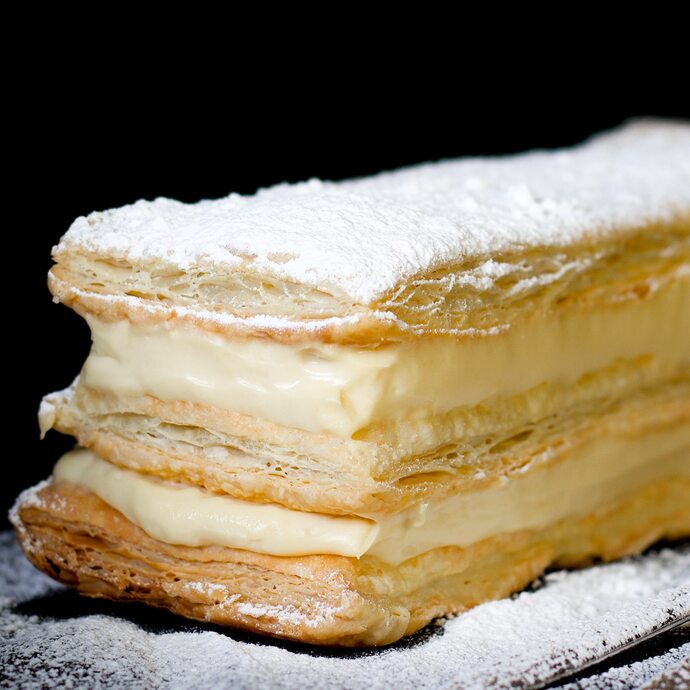
He invented a fantastic pastry!

A conquerer but he did a lot of good administrative things for France and Europe. I think he was benevolent except that he kept attacking people, which was his ultimate downfall.
Yes, his military career tends to make lots of people overlook the fact that he was also a very accomplished politician who passed many good reforms.
A testament to human resilience
He was not a good man
But he made himself from practically nothing into the most powerful figure of his time
I can’t help but be impressed with that

One of the most impressive humans to have lived. A great reminder that no matter how smart you think you are, we all have weaknesses.
 u
u perhaps... the most romantic of the megalomaniacs out there, a lot of adornment and self praise but, that's the French thing to do... lol
He's not any different to Hitler so that's about my view on him. Dumb, got to power in a similar way and made the same mistake in Russia, and naturally thinking he could take on the world he wouldn't of stopped with Russia if he had won.
No one in history has conquered all of Europe. He came close, as others have. He failed, for the same reason they all did... Trying to expand too quickly.

The greatest military strategist in human history, but not a perfect man - as all men and women aren’t.
One of the great men of history.
Even though his empire didn’t last the cultural impact of his governance has lasted down the centuries.
A great man, a great conqueror and liberator, reformer, inspired, surprising with his tactics, disciplined, firm.
I like his records!
I have zero opinion of Napoleon. I know nothing about him, or his life. I'm therefore unqualified to speak on the subject.

He liked Polish people and had an alliance with us so, GREAT GUY

Think he was like julius caesar in that if he didn't end up with absolute power then he was dead.
Overall effective and good. Tried to take more than he could hold.
A short answer for a short man: loser.

In my opinion he had a Napoleon complex. 😃
Interesting historical point...
Napoleon was 5'6" tall (1.68m). At that time, this was about average or slightly above average height for a man in France.
The idea that he was so short came from mocking propaganda originated by the British.
He was short
Mixed. Had successes but was headstrong.
About the same as Trump... a small dick emperor
His overconfidence was his downfall
He was a loser.
didn't know him well

Racist POS.
Short...
He's a short asshole

You can also add your opinion below!