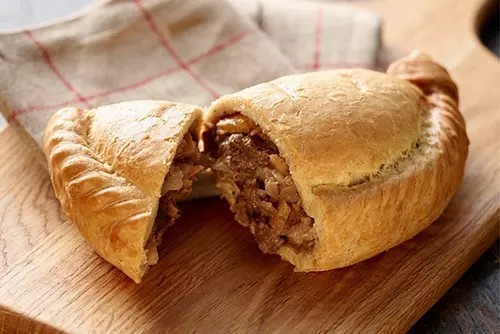
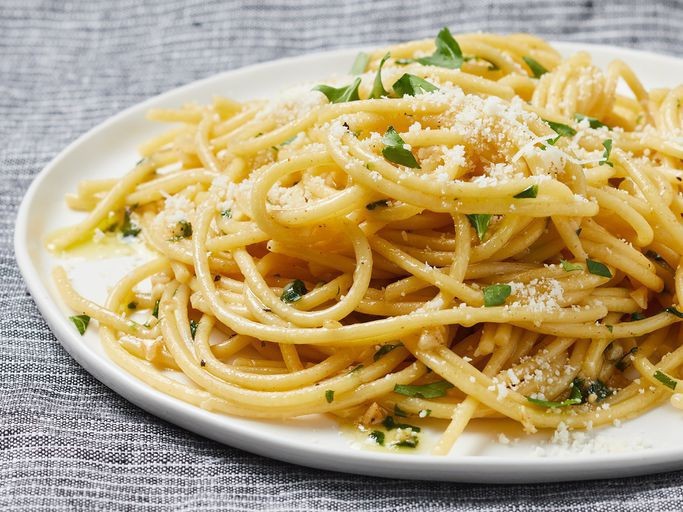
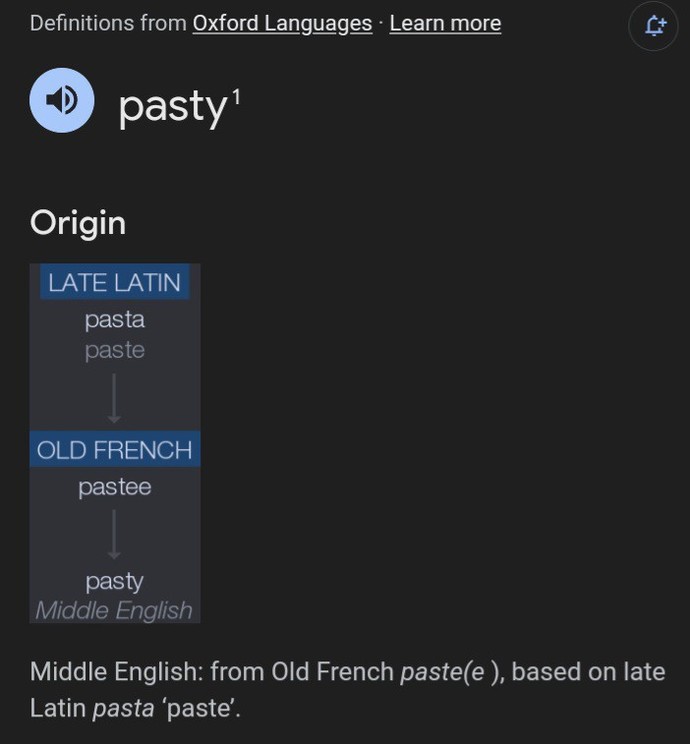
The words pasta and pasty are both derived from the Latin for paste because that's what you make them from. Hence a pasty like in the photo is the same as a bowl of pasta. Now you can tuck into a pasty knowing it's just as healthy as pasta.
Did you know pasties and pasta are the same thing?
The word origins both come from Latin "pasta" (dough).
The word “pasta” itself derives from the Italian word for the dough from which pasta shapes are made. The names themselves usually trace back to either their creation process or objects they resemble. “Spaghetti”, for example, derives from the Italian word spago, meaning string, resembling its long, straggly shape.
The word "pasty" comes from the Medieval French word paste, which means "pie". The earliest known mention of pasties in a cookbook was in 1393. The Cornish pasty descends from a broader family of medieval English meat pies. The earliest literary reference to pasties is likely from Chaucer’s “Canterbury Tales.”
The word "pastry" also comes from the word pasta (paste), which means a mixture of flour, liquid, and fat. The word "pastry" was first recorded in the 15th century, and its origins can be traced back to: Ancient Greek: Pastá Late Latin: Pasta
So, although they all have the same etymology, all three foods are quite different.
pasties and pasta are not the same thing; while both are made from dough, a pasty is a savory, handheld pie typically filled with meat and vegetables, originating from Cornwall, England, while pasta refers to a variety of Italian noodle shapes made from flour and water, usually served with sauce. Key differences: Shape and size: Pasties are enclosed pies, while pasta is typically long, thin noodles. Origin: Pasties are from Cornwall, England, while pasta is from Italy. Filling: Pasties usually contain meat and vegetables, while pasta is served with various sauces.
As an italian native i Say that the ingredients of both (not counting toppings or fillings) are basically the same, with slightly different proportions and quantity
The origins of words can indeed provide fascinating insights. Although pasties and pasta share etymological roots, they result in very different culinary experiences. Pasta, originating from Italy, is typically made from durum wheat and water, whereas pasties are British savory pastries filled with ingredients like meat and vegetables. Their nutritional profiles and characteristics vary considerably. While both have their own charm, equating their health benefits would be quite a stretch. 🍝🥟
The pasta is like, "OMG I'm twirling up in here." and the Pasties are just like "Yo, pasta why don't you come over here to my crib and get wrapped up in a blanket? I love you, baby." Then pasta is like "What is it you love about me exactly?" And the Pasties are like "Because, you're smart, and cute, and el dente, you know. I mean, I'm not good at talking about my feelings."
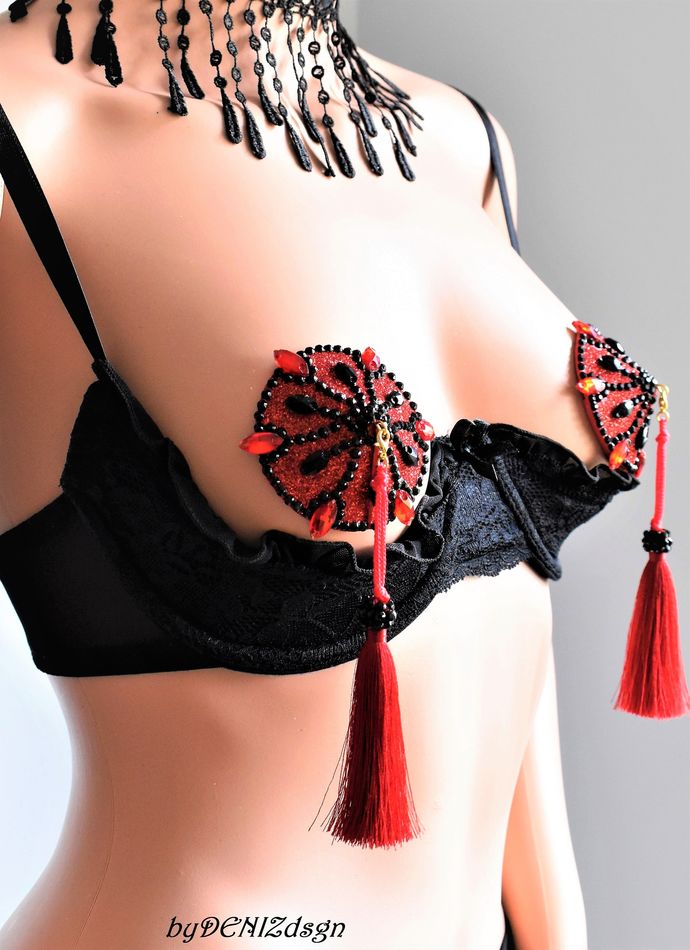
I'm not sure about the UK, but here in the US, pasties are things a female stripper uses to cover her nipples, while pasta is a delicious food, one of my favorites.
The thought that jumped to mind for pasties is nipple covers. They are shaped to cover the nipple and areola and have an adhesive backing to keep them in place. And they are not the same thing as pasta. I would not recommend eating them.
 Girl's Behavior
  Guy's Behavior
  Flirting
  Dating
  Relationships
  Fashion & Beauty
  Health & Fitness
  Marriage & Weddings
  Shopping & Gifts
  Technology & Internet
  Break Up & Divorce
  Education & Career
  Entertainment & Arts
  Family & Friends
  Food & Beverage
  Hobbies & Leisure
  Other
Other  Religion & Spirituality
  Society & Politics
  Sports
  Travel
  Trending & News