 Girl's Behavior
  Guy's Behavior
  Flirting
  Dating
  Relationships
  Fashion & Beauty
  Health & Fitness
  Marriage & Weddings
  Shopping & Gifts
  Technology & Internet
  Break Up & Divorce
  Education & Career
  Entertainment & Arts
  Family & Friends
  Food & Beverage
  Hobbies & Leisure
  Other
Other  Religion & Spirituality
  Society & Politics
  Sports
  Travel
  Trending & News

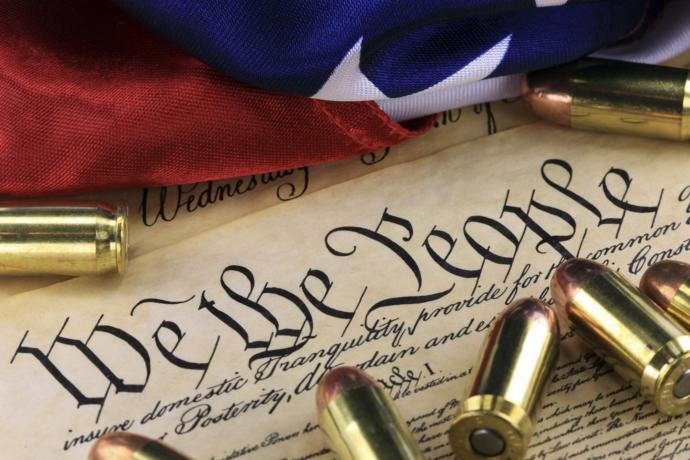
A well regulated Militia, being necessary to the security of a free State, the right of the people to keep and bear Arms, shall not be infringed. (U.S. Const., II)
In 1875, the Supreme Court had the very first case pertaining to the 2nd Amendment; U.S. v. Cruikshank. This case involved Cruikshank, who charged the that the KKK prevented African Americans from exercising their civil rights. In 1873, a white armed Democrat group attacked a group of black Republican freedmen (Justia). An estimated 100- 280 African Americans were killed. Federal charges were pressed against several white members under the Enforcement Act of 1870. This act prohibited two or more persons from conspiring to devest a person of his constitutional rights.
Among the charges presented to the Supreme Court was hindering of the second amendment right to keep and bear arms. The Supreme court ruled that the 2nd amendment pertained that the right to bear arms should not be infringed upon by government. That is to say that federal government did not have the to power to punish a private individual; rather that “to look for their protection against any violation by their fellow-citizens (Thompson 10).” The Court declared therefore that the right to keep and bear arms, since not stated in the Constitution (rather in the Bill of Rights), it was not ‘dependent’ on the Constitution for its existence, and was a right independent of the Constitution (Halbrook 174). So, in conclusion for this case concerning the 2nd amendment; it is a right, but Congress does not see it as their responsibility to protect that right, simply that they shall not infringe upon it.

In 1886, the case of Presser v. Illinois came before the Supreme Court. This case concerned the power of states to restrict firearms. The Supreme Court decided "Unless restrained by their own constitutions, state legislatures may enact statutes to control and regulate all organizations, drilling, and parading of military bodies and associations except those which are authorized by the militia laws of the United States (Presser).” That is to say that although the National Government and Congress, cannot restrict firearms, states have the right to. But the state cannot prohibit people from keeping and bearing arms (Presser). So states have the right to limit, but not ban firearms.
United States v. Miller, 1939, involved the National Firearms Act (NFA) of 1934. This act put a tax upon certain guns, and required the registration of shotguns and rifles with barrels less than 18” long, machineguns, firearm mufflers and silencers (Bureau). Jack Miller and Frank Layton were charged with violation of the NFA, when they transported a double barrel 12-guage shotgun in interstate commerce (United). Miller and Layton argued that the NFA violated their 2nd amendment rights. District Court Judge Heartsill Ragon agreed, and dismissed the case saying, "The court is of the opinion that this section is invalid in that it violates the Second Amendment to the Constitution of the United States, U.S.C.A., providing, 'A well-regulated Militia, being necessary to the security of a free State, the right of the people to keep and bear Arms, shall not be infringed.'"
The case also involved a 12” shotgun, which being shorter than 18” requirement of the NFA, for registration, did not violate the act. But the Supreme Court reversed the district dissension, saying that the 2nd Amendment protects the right to own military grade firearms. Justice James Clark McReynolds wrote that the procession of a sawed-off double barrel shotgun is not required for a well-regulated militia, and therefore is not protected by the 2nd amendment (United). So the Court decided that since the gun was not part ordinary military equipment, it’s use cannot be contributed to common defense.
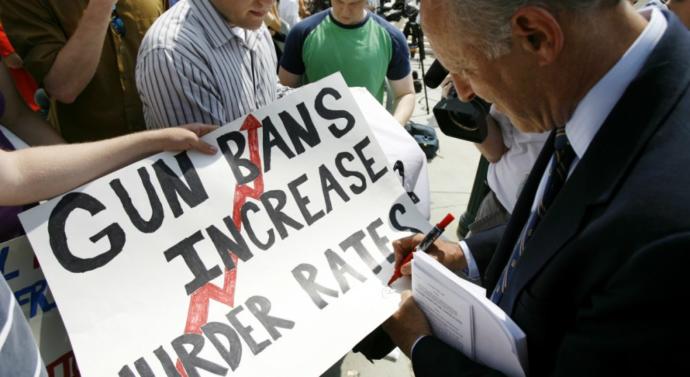
In 2007, the case of District of Columbia V. Heller was addressed. The District of Columbia declared a law concerning handguns. It stated that it was a crime to carry an unregistered gun, it prohibited registration of handguns; unless chief of police approves a 1-year issue, and required citizen to keep lawful handguns unloaded and with a trigger lock device. Heller filed that these laws were unconstitutional, since they restricted him from owning a firearm. The court ruled 5-4 that the ban was unconstitutional (District). They ruled that although a ban on registration is constitutional, a person must still be able to obtain a firearm. And finally, that guns keep in the home must be allowed to be functional. Since this ban was enacted under federal authority, it was decided that it violated the second amendment.
A landmark case was, McDonald v. City of Chicago, 2010. After the outcome of the Heller v. District of Columbia case, several suits were filed against Chicago gun bans (McDonald). Unlike the Heller case, which was a federal ban, this was state ban. The question was if the 2nd amendment applied to states, “because it is incorporated by the Fourteenth Amendment's Privileges and Immunities or Due Process clauses and thereby made applicable to the states (McDonald).” The Supreme court ruled that through the Fourteenth Amendment, the states have the right to keep and bear arms. The reasoning was that it is "fundamental to the Nation's scheme of ordered liberty (McDonald)" or that are "deeply rooted in this Nation's history and tradition (McDonald),” applies the power to the states through the Fourteenth Amendment.
So the Supreme Court gave the case to the Seventh Circuit, to determine if the certain gun bans in Chicago violated an individual’s rights. The finally ruling was that Second Amendment was incorporated under the Fourteenth Amendment, and thus was protected from infringement by the local government. Now certain gun laws in Chicago are still being disputed as to whether or not they are constitutional.
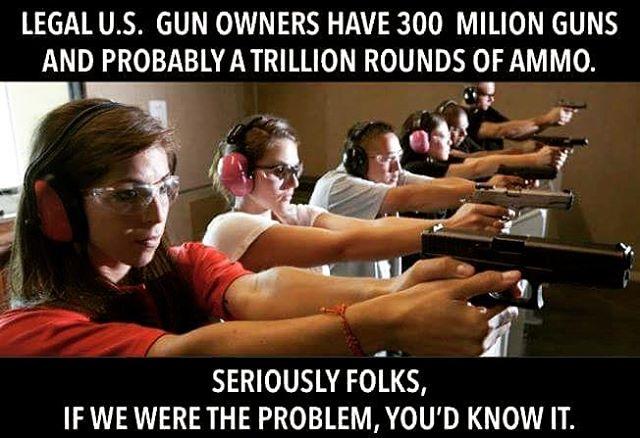
Gun rights have decidedly changed over time. Today we are faced with gun laws and restrictions. While new laws are being enforced, old laws are over thrown. In the case McDonald v. Chicago, the rulings from two previous cases, Slaughter-House and Cruikshank were overthrown. Guns have changed over our history. Back when the Constitution was written, practically everyone owned a gun. In 2015 only 22% of Americans owned guns (Jervis). Due to gun laws, many have not purchased guns.
Also, the simple fact of the decreasing popularity in hunting, has decreased gun ownership. In early American society, guns were a part of life. Persons would use guns for hunting and also for protection. Hunting for sport was also popular, with those who could afford to not hunt for their dinners. Now-a-days, we have such easy access to meats in the grocery stores, that the need for hunting is no longer so much a requirement. Society has also changed in the sense of gun violence. In the 1800s gun fights were more widespread, and things such as robberies and raids resulted in firearm misuse. Now we don’t have gangs of outlaws holding up banks and trains, simply because of society advancement and technology. We still of course have gangs, but they rarely hold up the bank by shooting the teller. It is move convened operation, involving more technology and strategizing. It not as easy to hold up a bank today as it was in the 1800s.
That is not to say that gun fights and murders don’t happen anymore. They do, even more than they did before, but the gun violence today is much different from that of the past. Simply put most of the nation does not walk around with a gun on their hip. What we face today is the increase problem of massacres.
Mass shooting seem to happen almost every week now! I just heard on the radio a case involving a man shooting his wife and two students at the school where she taught. He then shot himself. These kind of event is almost becoming popular in a sick way. Therefore, gun laws are becoming so heavy. In the U.S. “35,000 people a year die by firearms (Jervis).” People are afraid once more as they were in the 1800s that they could get shot. This is way gun bans aren’t the answer.
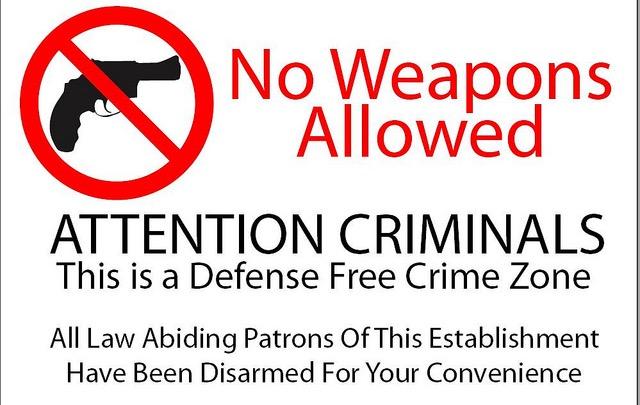
As they say, bad guys get guns, and good guys can’t. If a gun ban is enforced, the criminals will still get guns, heck they can even make them themselves. But law abiding citizens, can’t access guns, and now can’t defend themselves. Although some argue that time have changed since 1791, and the 2nd amendment no longer means the same thing, people today are still subjected to widespread violence.
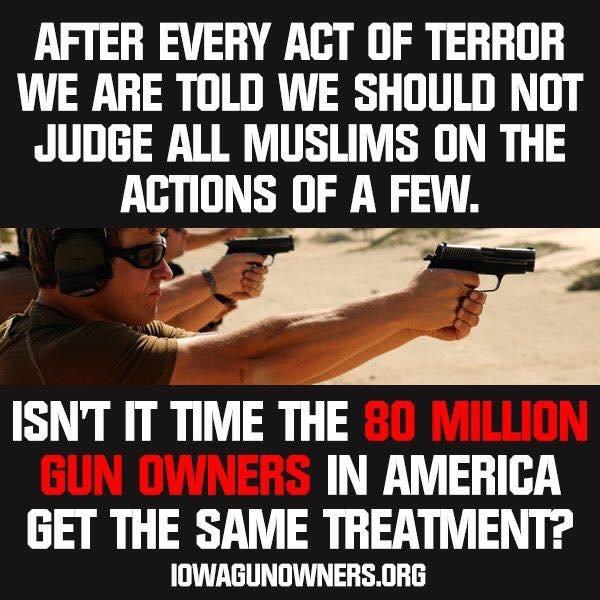
An unconstitutional broad gun ban is not the answer to all these problems. A gun ban would strip the rights of those who have no obstacles to keep them from buying and own arms. It would be unlawful and unjust. It is like a teacher punishing the whole class for something that one person did. Just think how unjust that would be. Why it might even make National News. That is the same thing as banning guns. What we need to do is find the balance that will protect both our constitutional right and communities.
Works Cited
"Blackstone's Commentaries on the Laws of England - Book the First - Chapter the First: Of the Absolute Rights of Individuals, page 139". Avalon.law.yale.edu.
Bureau of Alcohol, Tobacco, Firearms and Explosives. www.atf.gov/rules-and-regulations/national-firearms-act.
District of Columbia v. Heller. Oyez, www.oyez.org/cases/2007/07-290.
Halbrook, Stephen P. Freedmen, the Fourteenth Amendment, and the Right to Bear Arms, 1866-1876. Greenwood Publishing Group, 1998, pp 174-175
Jervis, Rick. "3% of Americans own half the country's 265 million guns." USA Today, 22 Sept. 2016, www.usatoday.com/story/news/2016/09/22/study-guns-owners-violence/90858752/. Accessed 10 Apr. 2017.
Justia. supreme.justia.com/cases/federal/us/92/542/. Accessed 10 Apr. 2017.
"McDonald v. Chicago." Oyez, www.oyez.org/cases/2009/08-1521.
"Presser v. Illinois 116 U.S. 252 (1886)." Justia, supreme.justia.com/cases/federal/us/116/252/case.html. Accessed 10 Apr. 2017.
Thompson, Isaac Grant, and Irving Browne. Albany Law Journal, Volume 14. Weed, Parsons & Company, 1876. Pp 10.
"United States v. Miller." Oyez, www.oyez.org/cases/1900-1940/307us174.
U.S. Const., amend. II





























Most Helpful Opinions