 Girl's Behavior
  Guy's Behavior
  Flirting
  Dating
  Relationships
  Fashion & Beauty
  Health & Fitness
  Marriage & Weddings
  Shopping & Gifts
  Technology & Internet
  Break Up & Divorce
  Education & Career
  Entertainment & Arts
  Family & Friends
  Food & Beverage
  Hobbies & Leisure
  Other
Other  Religion & Spirituality
  Society & Politics
  Sports
  Travel
  Trending & News

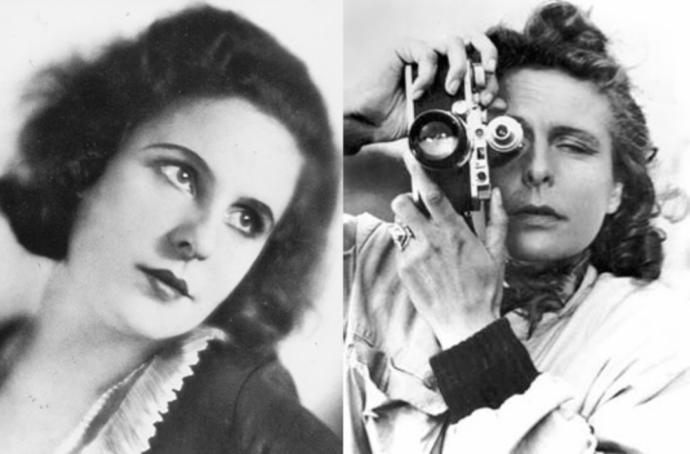
There have been many innovative movie directors and producers over the last hundred years or so. Some of them, like Roman Polanski and Harvey Weinstein, have a negative connotation to them. There was another one long ago who also had a dark cloud over her head, Helene (Leni) Riefenstahl. She was a beautiful dancer, actress, director, and producer. She prospered and benefited under the Nazi Third Reich, and although never a Nazi, she was personal friends with Adolph Hitler, and several Nazi leaders, who tried to use her as a tool for Nazi Germany’s benefit.
Her early work
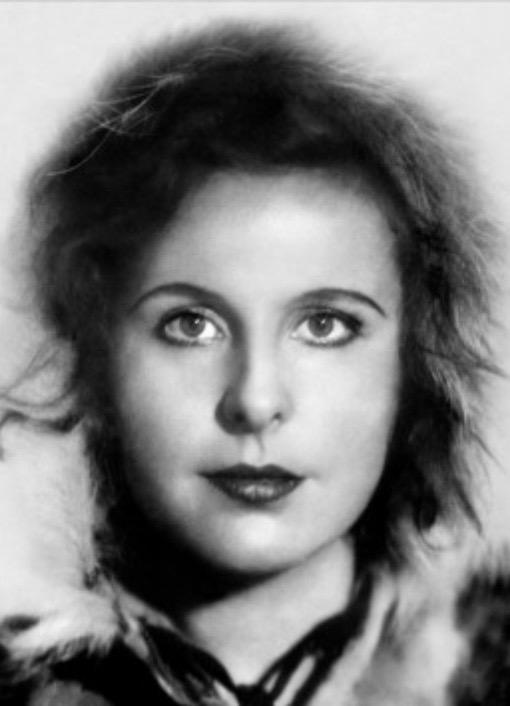
Leni Riefenstahl began her career as a dancer (and a very good one) in the early 1920s, but then switched to acting. Germany’s film industry in the 1920s and early 1930s was actually more progressive than Hollywood. There were many Jewish directors in the German film industry at the time, but Leni had no problem working with them, and even became close friends with some of them. She became famous as a star, and was often in outdoor adventure films that involved skiing and mountain climbing. She was also interested in directing. Leni not only starred in The Blue Light (1932), she directed it as well.
The Nazis arrive
When the Nazis came to power in Germany in 1933, Jews were forbidden to work in the film industry, whether they be actors, writers, directors, or producers. Many of them ended up fleeing to Hollywood, which ultimately ended up strengthening Hollywood’s creativity. Riefenstahl was able to step in and fill this vacuum, but the Nazis also steered the German film industry into being a Nazi propaganda tool. No film could be produced, unless it had the approval of Propaganda Minister Joseph Goebbels.
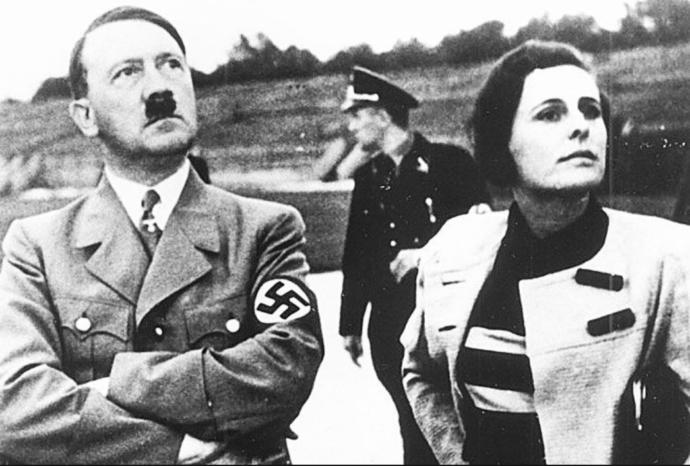
Riefenstahl was a perfectionist, and was totally focused on cinema. She wasn’t interested much in romantic relationships, and wasn’t much interested in politics either, but the charisma of Adolph Hitler captivated her. Hitler was also impressed with Riefenstahl’s films, and asked her to put together a documentary on the 1934 Nuremberg Rally. She didn’t really want to do it, but agreed when Hitler told her he would cover all expenses, and give her total support. He also promised Riefenstahl that he would allow her to work on any film she wanted, with his total financial support.
It was during this time that Riefenstahl became friends with Hitler, along with several other top Nazi leaders. One of them was Julius Streicher, who was the most virulent Jew-baiter among the Nazis. Joseph Goebbels appreciated her talents, but didn't like Riefenstahl. He had control over the entire film industry, except her. She would tell Goebbels she needed so many cameras, writers, or whatever, and if he refused, she’d just go over his head, and go straight to Hitler, who would then tell Goebbels, “Make it so!” It annoyed the hell out of Goebbels that he had no control over Riefenstahl.
Triumph Of The Will, and the Olympics
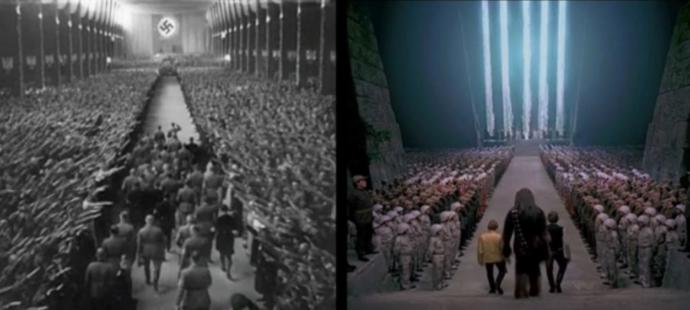
Riefenstahl was in charge of the staging, directing, script writing, rehearsals, filming, and editing of the 1934 Nuremberg Rally, which became a documentary known as Triumph Of The Will. She also invented new filming techniques, such as having a semi-circular set of tracks around the podium, so the camera can slowly pan around the speaker, rather than just being a stationary camera. Triumph Of The Will was hailed throughout the world as a cinematic masterpiece, and Riefenstahl was hailed as a cinematic genius, but on the other side of things, it gave the Nazis a polished-up ‘cool’ appearance, something they didn’t have previously.
Her next big project was filming and editing the 1936 Summer Olympics, and again, she did so in a detailed, spectacular way, such as having the torch-bearer entering the arena, running up a large flight of steps, to majestically light the flame. Yes, she kind of invented and staged that, as well. The filming and documentary of the 1936 Olympics was also hailed as a masterpiece, but like Triumph Of The Will, it also gave the Nazis a positive appearance.
The stigma begins
Leni Riefenstahl was more interested in her own project, a film titled Tiefland (Lowlands). The plot is largely about poor peasants in Spain, having to deal with water rights controlled by an arrogant, but broke, lord. Filming started in 1940, but there were delays and cost overruns, and some controversy. Some of the extras were gypsies picked from a concentration camp, and after filming was done, were sent off to Auschwitz. Riefenstahl denied having known any of this.
Riefenstahl occasionally did Third Reich propaganda films when asked, and was more or less branded as Hitler’s ‘girlfriend’ or Hitler’s ‘pinup girl’ during World War II, and even though she was a close friend of Hitler’s, it’s unlikely there was anything romantic going on. She was married to her work, and married for a couple of years to a man who went off to military service, and anyway, Hitler was more interested in the non-opinionated, dumber type of women, like Eva Braun.
The Legacy
After World War II ended, Leni Riefenstahl did some short prison terms, was under house arrest, was on trial 4 times, and was acquitted. Although the Allied authorities found her not guilty, the general public never changed it’s hostile attitude towards her. She managed to piece Tiefland back together and release it, but other than some photography projects with the Nuba people in Sudan, she was never able to produce or direct any future film projects, due to the criticism and toxic atmosphere she always encountered.
Leni Riefenstahl was a creative film producer and director, and even Steven Spielberg and George Lucas recognized this. On the other hand, she used her talents, either knowingly or unknowingly, to glorify the Nazi Third Reich, and that was a cloud that hung over her head for the rest of her life. It’s interesting that critics all over the world praised her skills in the 1930s, but these same critics disparaged her in the 1940s and 50s. She was beautiful, but not a particularly friendly person, who made a bad decision in life. In her own words, “I was one of millions who thought Hitler had all the answers. We saw only the good things; we didn’t know bad things were to come.”



















Most Helpful Opinions