Personally this is an idea that I find completely ridiculous, I know that certain European elites dream of it, but I do not understand why. If such a thing were to happen my country would end up being a kind of european california lol.
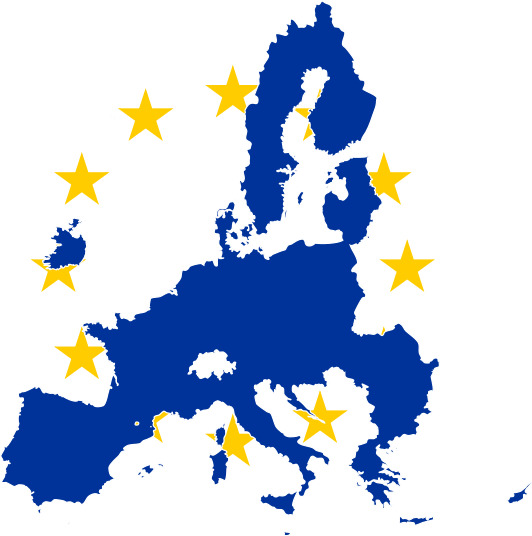
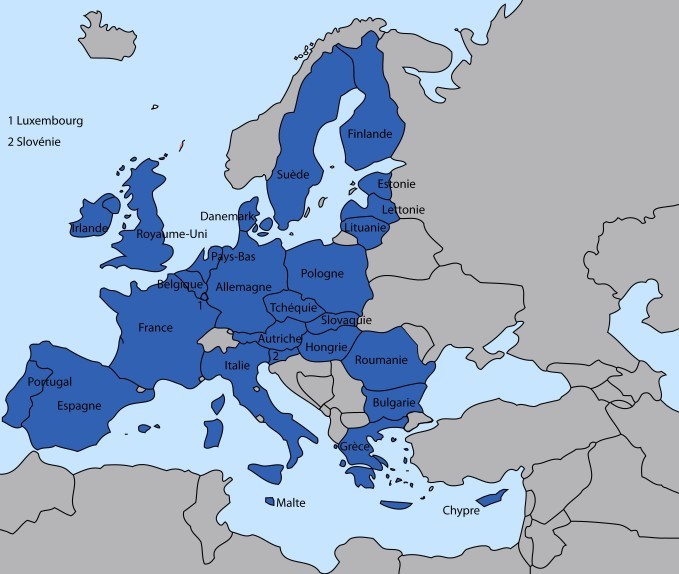
Do you think it would be a good thing if the countries of the European Union become one and only one country?
Not at all, but whether they are ready to give up their sovereignty is somewhat academic, as that has been what the EU has been about since before it was the EU. It was the Treaty of Rome that stipulated "ever closer union" as a goal. By definition, that meant that each state had to sacrifice its' sovereignty, presumably for the common good.
That said, your concerns are not unwarranted, and at the moment the mood in Europe is largely one of where there is a backlash against that diminution of sovereignty. See also Brexit - which, it must be added, is not inconsistent with Britain's historic foreign policy. (Pace "splendid isolation," as Lord Salisbury called it.) See also Poland and Hungary. See also the populist coalition in Italy. See also the backlash against President Macron in France. See also the "Alternative for Germany" party that is making Chancellor Merkel's life miserable.
The list is long and goes on. The EU was born of the backlash against what happened to nationalism - its turn toward an almost tribalism that led to two world wars, particularly the Second. It was also born of the rationalism of the 18th century Enlightenment. The idea that nationality, ethnicity, religion and such are mere superstitions and that man shorn of these things will live in peace and harmony with his fellows.
It also has precedent in the Roman Empire and in the dominance of the Roman Catholic Church over Europe in the Middle Ages. So it is not an entirely alien concept to Europe's experience, which may be why it tends to have more appeal among the young. It seems new but has a claim on historical memory.
However, that all said, as Burke pointed out, things like religion, ethnicity and such are not aside from the human experience, but are integral to it and to a sense of social cohesion. Take them away, and as Burke said, you reduce man to "his naked shivering nature." Hence, France, 1789, Russia, 1917, Italy, 1922, Germany, 1933, Spain, 1936-39.
For Germany, with its history of National Socialism, the idea of ceding sovereignty is less alarming. (Germans do not even sing the first verse of their own national anthem - "Germany over all" (translated from the original German) has a naughty sound to it.) The EU puts Germany in a context that is more conducive to stability and democracy.
Still, it is a misreading of history. To start, the EU has not eliminated the rival national interests that have made European history so interesting. For Germany, the EU solves what Kissinger described as its historic problem - "It is too strong for the European balance of power, yet too weak to dominate the world." For France, it is a way to harness German economic power to French national interests. For Italy, it is a way to hold the balance between France and Germany.
So it goes. On the whole, it is probably better that Europe solves those balance of power questions within the institutional ambit of the EU instead of on the battlefield. Still, it is apt - as Greece will attest - to come at the price of a country's freedom of action, with all that entails for the people of those countries.
So are Europeans ready to give up their sovereignty? It is a balancing act. Certainly, countries like Poland and Hungary that only recently escaped domination by the USSR (Russia) there is less willingness to ceded their sovereignty - as their domestic politics shows. In Germany, where nationalism took an ugly turn, there is more tolerance for it - though as domestic economic pressures grow, even there a certain resistance is building.
That all said, Merkel is coming from a particular generation and a particular country where national identity came to be marked by bloodshed and tyranny. (Also, to be fair, the EU does solve certain problems in terms of Germany's strategic interests.) So her views are not surprising.
A balance needs to be struck. Shifting the EU to an intergovernmental approach might be wise. It remains to be seen.
What you are saying is interesting, but it is true that already with the European Union sovereignty has already lost a lot. Besides, it is astonishing that de Gaulle accepts this Treaty of Rome, everyone expected him to reject it, in reality I understand why he accepted, in fact he had a Machiavellian vision of things lol.
The Russians in 1917 speak of the French revolution as the great revolution but they found that Robespierre had not killed enough lol
But indeed I believe it is impossible that the European countries form only one country, but what we call a Europe of nations why not
Well, on your first point, DeGualle was playing the balance of power game in a new way. He was opposed to the USSR, but he worried about a resurgent Germany. Yet, at that point, Germany was divided - (East and West) - which had also been an historic goal of French foreign policy.
Kissinger famously said that Germany's problem was that it was too weak to rule the world, yet too strong to fit securely in Europe. DeGualle recognized this and believed that if he anchored (West) Germany in Europe, France would be dominant on the continent and would be strong enough to hold (West) Germany in place and still avoid being subsumed in Europe.
This was DeGualle's strategy, and it has sort of worked. He did not anticipate a reunified Germany but France carried enough weight to push for the "euro," which Germany did NOT want, and thus piggy back French power on German economic dominance.
Two things have mitigated against this: 1) France's population is aging - and faster than Germany's - and this relatively weakens France vis-a-vis Germany to some degree. 2) Young people have come to accept, to some degree, especially among the upper middle class, the concept of a European identity.
P. S. One other little side note. Another purpose of the EU - as it would become - in DeGualle's vision was to act as counterweight to American dominance of the continent.
He did not want the USSR dominant, but he did not want a Europe - and thus a France - that would be eclipsed by American power. So a "European Community" - as it then was - was a three corner pivot.
To keep the Soviets out, the Germans divided and anchored to France and the USA in but not so dominant as to overshadow France's position as a European - and global - power.
I find you indulgent lol, the great degaulle project failed, for various reasons which would take too long to explain here.
You are right but the demographic problem of France is old, towards the end of the 19th century France will undergo a demographic decline while the others will have an increase in their demography, but in the 17th and 18th centuries France was a demographic giant. I think that the dechristianization of France is not for nothing in this demographic decline, moreover it is largely for that that we are going to colonize Algeria, it was to compensate for the demographic decline, at the time it was said that Algeria us would allow to be "100 million French"
As far as DeGualle failing, sort of. There were things even he could not foresee - and great nations are not great forever. As Lincoln famously said, "The only phrase that is true for all time and forever is 'This too shall pass."
Nothing lasts, including great powers. Just as Sparta, Athens, Rome, the Ottoman Empire, etc.
Still, it was not a complete failure. France remains a great power - albeit diminished from what it was. It has basically assured that Germany will not be a military threat again. It helped defeat the USSR.
In a world of imperfect and imperfectible beings, DeGualle did better than average. At the very least, he stretched out France's position on the world stage beyond where it had been left in June, 1940 - or even for that matter May, 1945.
Ah yes on that you are right, already in 1918 paul valery said,
"we know that civilizations are deadly"
Yet China offers us a good example, the China of the Han or the Ming was an incredible power, and then towards the middle of the 16th century the Europeans will gain the upper hand, China will remain land, it will fall back on itself and it will accumulate scientific delays. But look at China today, it has woken up well
Yes, China has. Just in time to see its' population aging rapidly. Indeed, made worse by the now scrapped "One Child Policy" and forced abortion.
China has numbers that will give it some weight for a time. However, it is literally missing a generation of 30 year olds. The odds are that it will grow old before it grows rich.
Just to add that there is nothing that says that the process of rise and decline is a straight line. It will shift and vary over time - until it no longer does.
Eh, I’d like to add that Le Pen basically dropped her French Exit of the EU. The Italian populists have agreed to Draghi’s government, which he himself says is a very pro-European government.
The most important trend in Germany is the Greens becoming really big and potentially delivering the Chancellor. And guess what? Heavily pro-European as well.
In terms of Poland and Hungary, they are likely to be sanctioned by the EU and a lot of people want them kicked out anyway. I wouldn’t see them as significant in terms of what other countries want for the EU
Same in Netherlands. The very skeptics of the EU and those want to leave basically cannot grow further in parliament and are expected to be boycotted from any government for decades to come. So the Netherlands will just be in favour of continued EU as well.
@tartaarsaus Italy is not too surprising. Italy's sense of national identity was always something of an amalgam of regional identities - even in the days of Fascism. Throw in the lingering cultural - and transnational - influence of the Roman Catholic Church. (Indeed, the European Community's dominant early founders tended to be Catholic. The RCC heralding back to the era when Europe was a more singular identity. See also Charlemagne - also explaining another reason why the Anglican UK was always such a tough fit.)
As to some of the smaller countries, the sense of national identity may mesh more comfortably with a broader European identity. The Dutch, for example, defined themselves as a trading nation and exposure to other cultures was more a part of their historical experience. Not to mention being a periodic invasion route. Thus a unified EU works at a cultural level and also for purposes of national security.
That said, this will tend to ebb and flow. The younger generation is trending Europeanist at the moment, but they are a shrinking demographic in Europe. So it is by no means certain that Europe will ever be fully comfortable with a sense of "Europeaness" absent national distinctions.
Above all, history shows us that following the collapse of the Roman Empire, the unification of the continent has never been possible in the long term for better or for worse.
Well, it depends on what you mean. The Roman Empire lasted 1000 years, give or take, so it was not exactly a flash in the pan.
All things tend toward entropy and I tend to think that the EU becoming a "United States of Europe" is, for a variety of reasons, highly unlikely. However, that does not mean that Europe has no history of long lasting multinational empires. See also again Charlemagne, Christendom, the Holy Roman Empire, etc.
The problem with the EU is that it is a confederation. All confederations fail eventually - even in the USA. (Example: USA before the US Constitution, the Confederate States of America). Here in America, we recognized the failure of confederation due to its inherent weakness. So, we embraced federalism and America has stood the test of time for 232 years since then.
If Europe could embrace federalism, it might work there.
The problem in Europe is similar to the problem in the USA though: Ethnic, racial, and religious tensions. If citizens in Europe and the USA could get over the mindset that a "real citizen" has a certain specific set of ethnic and religious traits (*), then they could move forward with the idea of what citizenship really is and could move forward towards true unity.
(*) I've read numerous articles over the years regarding the strife in France which ultimately has led to the French asking themselves: "What does it mean to be French?"
In the USA, which was founded with people from many different ethnicities, we don't have that exact problem. However, most of those founding ethnicities were white/European. So many conservatives - the kind Donald Trump appeals to, an American is someone who is Christian and, for most of those Trumpsters, white or "of European descent" - the kind of people that founded the USA.
When it comes to these questions, I ask a hypothetical question: If there was a pandemic that killed off every person of the ethnic group that you consider to be the defining ethnic group (the "real citizens") for your nation, then does your nation continue to exist even if the remaining people who are not "real citizens" still live in the country as if nothing had changed. For instance, what if France or America no longer had white people? Would France still be France? Would America still be America? At a government level, nothing should change... and that's the way it should be.
@julielamar you are exemplifying the fundamental problem that does prevent unification of Europe. The desire to still be unique and independent (and, with it, the desire to be a majority in your country and not a minority in a larger country), then Europe will never unify.
In the USA, we overcame that - the mindset of each citizen of the individual colonies had to think of themselves as American more than New Yorker or Pennsylvanian or Georgian etc.
Well, for Europe to unify, the French, English, Germans, Italians, etc., need to think of themselves as Europeans more than being French, English, etc.
You show that it is currently not possible in Europe. You think of yourself as more French than European and hold on to your Frenchness more than your Europeaness. This is to be expected and why it was easier for the USA. Despite being citizens of the various colonies, all the colonists were citizens of Great Britain so there was a large ethnic and cultural problem as there would be in Europe.
Notice though, the US Constitution is modeled after how the City of New York functioned... Many different ethnicities living and working together. This is because New York was founded by the Dutch and not the English. The Dutch didn't care about ethnicity or religion - they cared about business. This is unlike the other British colonies which were founded primarily for religious reasons.
Your reasoning is bad, because it forgets to take into account some important things, The history of European countries, my nation has been around for over a thousand years how can you compare to the situation in the USA? In addition, the European countries have built their identity by waging perpetual wars between European countries.
But I will teach you other things France is an artificial construction, it is a will of the kings of France who gradually conquered bits of territory and which ended up creating France which is known today, but at the beginning all these territories were not French, but they became French by uniting around the king and they exceeded their "regionality" and the Republic will complete the work by banning regional languages in schools and in public administrations. what I mean by explaining this is that these regions which were not French have agreed to go beyond their regionality to join a great project called France.
But how do you expect countries with such different histories, cultures, worldviews to unify?
Skin color does not matter, but assimilates to a lot.
LOL My reasoning isn't bad at all because you have no idea about life in the USA while I have plenty of experience in Europe. Anyway, I essentially agreed with you all along - that it would be difficult for Europe to unify like the US did primarily for the reasons that you indicated.
Yes for sure, nationalism was the worst thing to ever happen to Europe, the closer they can integrate the better it will be for everyone. It can even spread human rights to areas which are currently lacking them (Poland, Hungary)
No it's terribly dumb. There are literal millenniums of cultures in the old continent. Plethoras of different people with their habits, traditions and sub-languages. By putting all of them together you'd be getting the same thing that happens in Italy, country unified under a french regent to save England and France from the advance of Austria. As you might know, southerners and northerners often can't stand each other, and we are talking ONE country wich is about 1600Km top to bottom. Imagine doing that to a CONTINENT.
BEST IDEA EVER!!! UNITY, FRATENITY. ONE BLOOD ONE NATION, THE EUROPEAN NATION!!! THE GRATES ECONOMI THAT WORLD HAD EVER FACE IT. UNITE! UNITE! UNITE! UNITE! ONE LANGUAGE, ONE CAPITAL, ALL BROTHERS, ALL EUROPEAN!!! IT WILL BE THE BEST IDEA EVER AND NOTHING WILL EVER TO STOP US. WE WILL EVEN SURPAS THE USA AND DOMINATE THE WORLD TOGEDER!!! ROMANIA IS A PRO-COUNTRY FOR THIS PROJECT. (even if we need to accept Hungary unfortunatly) TRAVEL FREE AND CHEAP, DEVELOPMENT IN THE POOR AREA, THE RISE OF A NEW CULTURE!!! CAN ANYBODY IMAGINATE THE FUCKING POWER WE WILL FUCKING HAVE? OMFG WE WILL BECOME A ECONOMIC MONSTER AND MILITARY AND EDUCATIONAL ONE. WE CAN BECOME THE FUCKING ULTIMATE CIVILIZATION THAT THE PLANET HAD EVER HAD!!! UNITE UNITE UNITE UNITE UNITE
It needs to go through court to solve the conflict law so need time. and seek the hidden justice. I dont expect you not commit double standard in person as American but you would seek system without conflict and your behave would be smoothly. I am not reading law philosophy but I got this too when I read it. American system actually tend to go it but they dont admit it. dont listen to outside. They would think the same when they fall in the situation too.
There are really two questions inherent to this scenario: 1. Would the countries even want to do it? 2. Is it a "good" thing? (and by what measure, what time frame, etc)
I personally do not think there would be enough ONES to begin to create a decent TWO.
The EU lacks the strength in unity which would come with one nation under one banner. I feel the Euro helped but the disparate laws and regulations are causing friction. Strong nations resent the poorer, weaker ones but none are willing to give up their national identity.
yes BUT a country needs to have something to unify on or it won't last. that's not as simple as it sounds. you can't unify on an idea because ideas change over time, that includes values.
so how do we build a successful and stable country? there are only a few things to unify on. race, religion, culture language, nationality.
currently Europe has not built an identity on any of those things and seems deliberately unwilling to do so
Already is that way for many of our countries, because the EU law is above national law. Its a facistic federal state, and it would be better for us to destroy it and go back to full nationalism.
I kind of wish the Ottomans territories were once again united in a single Union state. That way there are no more visas, restrictions and more opportunities will be generated. Euro model but in Middle East and western Asia
It's impossible. Moreover this has been tried in a smaller scale, with Yugoslavia for example. It never ends well. Even in Switzerland the country is divided by its ethnicities.
Either way, we have far too different cultures and histories for this to work. But some will tell you that we could do like the USA, a Europe of United States, but where each one would keep its particularities. But I want to say it, I don't want my soldiers to die for Europe lol
Whoever uses the USA as a good example is a fuckin retard. Segregation in the US gets more intense every year. And that is all thanks to the identity politics of the far left. That's the biggest irony.
No, should we label all trans, gay, lesbian, non binary folks under the label “ homosexual? Should all politicians be labeled criminals? National pride, country pride, manufacturing , farming pride,
 Girl's Behavior
  Guy's Behavior
  Flirting
  Dating
  Relationships
  Fashion & Beauty
  Health & Fitness
  Marriage & Weddings
  Shopping & Gifts
  Technology & Internet
  Break Up & Divorce
  Education & Career
  Entertainment & Arts
  Family & Friends
  Food & Beverage
  Hobbies & Leisure
  Other
Other  Religion & Spirituality
  Society & Politics
  Sports
  Travel
  Trending & News