Why did the West drop its support for the Shah of Iran to support Khomeini?


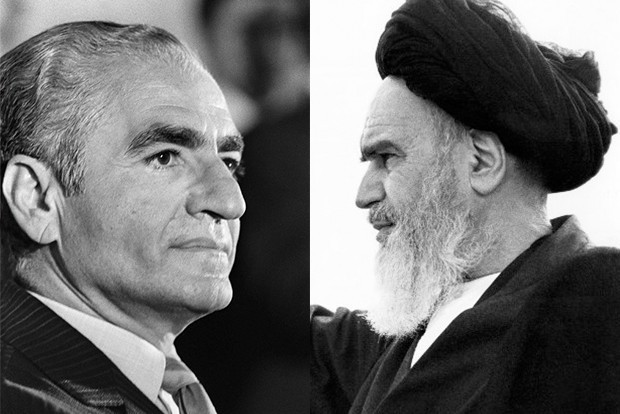
There is a misconception in your question. The West did not drop its support for the Shah of Iran to support Ayatollah Khomeini. In fact, the United States and other Western powers were initially supportive of the Shah, Mohammad Reza Pahlavi, and his regime.
The Shah of Iran, who came to power in 1941, was a key ally of the West during the Cold War. The West supported him because Iran was seen as a bulwark against Soviet influence in the region, and the Shah was a staunch opponent of communism. The United States, in particular, provided significant military and economic aid to Iran.
However, by the late 1970s, the Shah's regime faced internal challenges, including widespread discontent among the Iranian population. There were grievances related to political repression, economic inequality, and allegations of corruption. The Iranian Revolution in 1979, led by Ayatollah Ruhollah Khomeini, resulted in the overthrow of the Shah's regime and the establishment of an Islamic Republic.
The revolution took the West by surprise, and the United States, in particular, was caught in a difficult situation. The hostage crisis, where 52 American diplomats were held hostage in the U. S. Embassy in Tehran for 444 days, strained relations between the U. S. and the new Iranian government.
While the West did not actively support Khomeini, it had to deal with the new political reality in Iran. The relationship between the United States and Iran became strained, leading to a breakdown in diplomatic ties. The shift in power in Iran and the rise of an anti-Western government significantly altered the geopolitical landscape in the region.
In summary, the West did not drop its support for the Shah to support Khomeini; rather, the Iranian Revolution and the establishment of an Islamic Republic led to a breakdown in relations between the West and Iran. The complexities of the situation involved a combination of internal discontent, the Iranian Revolution, and the challenges of adapting to a new political order in Iran.
Over the years I've known a few Iranian Americans who came over either just before that revolution or shortly after. They pretty much say what you say. I don't think there was ever a time when the West was in favor of Khomeini.
Actually, I am going to so something I rarely do and point you to the opinion expressed by @msc545 . He generally has the history right and he nailed it.
The only qualifier I might throw in is that the Shah fell while the USA was under the administration of President Jimmy Carter. Carter was an evangelical Christian who had made human rights the core of his foreign policy.
Suffice to say, the Shah was hardly the paradigm of human rights. Thus, Carter was paralyzed and where there was precedent for US intervention - see also the Mordad Coup of 1953 - he failed to act. It remaining an open question that even if Carter had acted that he would have been able to pull it off.
Overall, though, @msc545 's knowledge of the history and his analysis of how things transpired is bang on the money. A tip of the hat to him.
Hope you are well - and Happy New Year.
I was listening the other day to the wife of the Shah of Iran, who speaks very good French, and the journalist asked her if she thought the West had betrayed her husband.
She replied "it's not a question of feelings, of friendship, each country defends its interests, the French and American presidents, the German chancellor and the British prime minister decided to support Khomeini after their meetings in Guadeloupe".
Thank you for the Happy New Year, I promise I'll wish you when the time comes 😊 I hope you and your family are well, take care. 😊
She is not wrong, and when they decided the Shah's position was no longer viable, they made their move. However, many factors brought them to that point and, as I noted, for President Carter, human rights was a central plank of his foreign policy.
It is a multi-dimensional game of chess. The interests of the various powers not only in terms of their international interests, but their domestic and economic policy needs as well.
What the Shah's wife said was true but also a banality. The powers at play calculated their interests - bot foreign and domestic - and made their move when the alternatives were either deemed unviable or had past the point of no return.
Carter believed that advocacy of human rights strengthened the position of the West in general and the USA in particular. The Cold War was, after all, an ideological contest and not merely a game of realpolitik.
So when the Iranian revolution seemed to be taking hold, he opted not to challenge it in the name of human rights. For this, by the way, he was criticized by the former Governor of California - Ronald Reagan - who rightly, as it would turn out, states that all the West was doing was swapping one tyrant for another.
The difference being that the previous tyrant had been at least more or less pro-Western in orientation. What followed would be equally tyrannical, but with an anti-Western bent. Reagan understood, even in the context of an ideological contest, that one seldom gets to choose between the best and the worst, but rather must select the least worst.
Thanks again - and my best to you and yours' for the New Year!!
Is Julie forgetting that it was France that took in Khomeini? And didn't French intellectuals see him as a moderate? I have the impression that it was France that pushed for him to take power.
@BaronReagan @julie4 is pretty well informed but I don't know if she is aware of that fact.
In any case, France may have been making a double calculation. They kept their powder dry should Khomeini take power - they would have an "in" with him. On the flip side, by keeping him in France, they may have figured that they were keeping him from being a direct player in the Middle East in general and Iran in particular.
In effect, they may have been playing both sides. It was a way of giving France more weight in a region where - outside of Syria and Lebanon - it had not previously been the biggest European player.
Exactly
@BaronReagan Well yes, I know that France hosted him, but in fact, even the Shah of Iran preferred to see him in Paris because it was easier to keep an eye on him.
According to some, France even proposed to the Shah of Iran to assassinate Khomeini, it looks like a bandit, but I have nothing to do with it.
@nightdrot yes, his answer could be considered banal, but at the same time, in a 7-minute interview, I don't think it's possible to develop his answer much further, and I don't think, given the journalist's question, that it required much more development.
Moreover, I think that many people in the West should take inspiration from this simple answer, which is immersed in the reality of international relations and pragmatism. Because, alas, many in the West talk in terms of human rights, defending our "values" such as democracy and so on.
And even if it has nothing to do with my question lol , I have to say that I'm personally an admirer of Iranian culture and history, and the situation in Iran today makes me quite sad. To go from Cyrus the Great to Ali Khamenei is quite a decline.
Opinion
11Opinion
It never did. Where did you get that idea?
I don't think "support" is the right word, but, in the West - at least here in the USA - there was never support for the Islamic Republic of Iran (*). Even before the Iranian Revolution, the Shah was already seriously sick with cancer and died in Cairo from it only about a year after the Revolution.
(*) Besides the Iranian Hostage Crisis, the fact that Iran had become a theocracy would be problematic because a theocracy is anathema to the US where we have separation of church and state enshrined in our First Amendment to the US Constitution. Then, again, we have idiots in this country who think Jesus wrote the Constitution. These people are Trump voters...
i think it all happened very quickly and was pretty much a done deal before anybody could react. But how could say the US react to preserve the Shah's regime?
The Shah so completely and thoroughly lost public support other how could he have survived? Maybe he could have conceded to the theocratic backlash and criminalized short skirts and cleavage tops.
I don't think the west did support Khomeini but rather reluctantly accepted the fait accompli. Even now it is very reluctant
Never worked that out. As a kid the first international news I remember was about the war between Iran and Iraq. Then the Falklands.
I remember seeing his name written in the newspaper and thinking "how does anyone work out how to pronounce that?"
That is a good question. I remember when the shah was removed from power. There was a lot of corruption going on. The shah's was noted to persecute political prisoners. And the people were tired of it. A lot of the political prisoners were religious clerics. United States was getting tired of supporting of a man who had human rights issues.
You mean when Khomeini was coming back to Iran from France? That was probably Realpolitik at play.
Or maybe some people were mad at the Shah for his role in spiraling oil prices back then.
They never did, and certainly not collectively. They rather openly supported Saddam Hussein in the Iraq-Iran war.
I think its because the Shah nationalized all the American and British owned oil companies.
Uhm... we didn't. What are you on about?
When has the West ever supported Khomeini?
Because they are idiots
Corruption
Um, it didn’t.
You can also add your opinion below!