Generally speaking the less recognized a "fact checking" site is, the more you can trust it. And generally speaking I trust Wikipedia in science related issues and recent real life events. Politics - not so much. People are much less keen on editing things that can be easily researched. But the moment something is harder to find - BOOM, the wikipedia article is full of bullshit uncited opionions.
I don't really go to them, and if I do, it's typically not the only thing I use. But if I saw they cited other reputable sites, I'm more likely to think that one particular article is correct.
My rules in serious discussions, debates, and arguments: No sharing links, no clicking on links. Either eloquently argue YOUR own opinions YOURSELF, or go be wrong somewhere else. I don't participate in abridged forms of arguing. Just because someone posts something about something somewhere else, doesn't automatically validate your opinions. Stand up, or stand down.
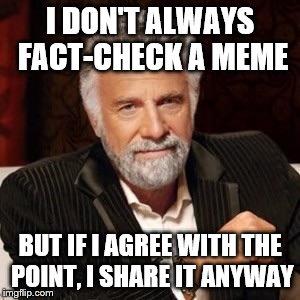
Generally I use those sites as guidelines to check if something is 'fake news' like a popular meme and has been disproven in the past. If the topic was more serious than just satisfying curiosity, I would seek other sources.
560 opinions shared on Technology & Internet topic.
The whole point of a fact checking organization is to be transparent and unbias so they mostly go out of their way to prove this one way or another making fakes really easy to spot.
The problem with fact checked sites is that they base their facts on already done studies that may or may not be true. They half to work with what they have.
Snopes and Politifact are pretty worthwhile, I mean I don't really *need* "fact-checking sites" very often. Major newspapers usually get it right as-is, along with major magazine publications like The Atlantic, The New Yorker, or Esquire (though Esquire isn't really a news magazine). Newsweek is usually decent too, though not as good as it once was; they've sadly had to cut back same as anyone else.
 Girl's Behavior
  Guy's Behavior
  Flirting
  Dating
  Relationships
  Fashion & Beauty
  Health & Fitness
  Marriage & Weddings
  Shopping & Gifts
  Technology & Internet
  Break Up & Divorce
  Education & Career
  Entertainment & Arts
  Family & Friends
  Food & Beverage
  Hobbies & Leisure
  Other
Other  Religion & Spirituality
  Society & Politics
  Sports
  Travel
  Trending & News



































Most Helpful Opinions