Will we find another way to pack much greater computing power into a small space? A type of DNA might be an answer but DNA is a million time slower. Would we be willing to wait an hour for some calculation?

Will we find another way to pack much greater computing power into a small space? A type of DNA might be an answer but DNA is a million time slower. Would we be willing to wait an hour for some calculation?
Moore's Law already is coming to an end. This was predicted even over 30 years ago because the more dense you make your chips, the more the magnetic fields generated by currents inside the chips will adversely affect the other currents within the chip. Stacking chips vertically will help at some point if they aren't doing that already. But the investment is now in quantum computing which is different altogether.
I did a followup and Googled quantum computing. Apparently it is not yet and the description included about a dozen things; none of which I understood. Regardless, if you are a very bright young man about to enter college, majoring in quantum computing could be wise with a high income.
Quantum computing is real and it is in development. I do not understand it well and I have a physics degree (meaning I am required to learn quantum physics), although I have not applied myself to learning it.
Quantum computing, if it can enter the public domain more effectively, will be a revolution in computing technology.
In short, computers now are really just assembly lines. They have steps to do and do them in the order that they are given. However, and this is sort of hard to explain, if I understand this right, quantum computing can do many steps simultaneously.
Think about it like this:
In the back of a fast food restaurant, a guy is flipping hamburgers on the grill. But he has to flip each burger individually. Now, imagine if the guy had a tool to flip dozens of burgers at the same time. Then he can cook a lot more burgers and get them out to the ordering customers faster.
That's sort of the difference between quantum computing and normal computing.
(more)
Now, I will be honest: my analogy with the hamburger flipper may be way off. Part of the reason is that, in quantum mechanics, the state of a particle of matter is probabilistic and not deterministic. Think about that like this: Suppose you see your phone. You think "There it is" and you'd be right. That's deterministic. But, in probabilistic view, there is a huge probability that your phone is "there it is" but also a probability that it is elsewhere. For a "system of particles" as large as a phone made up of like 10^30 atoms or so, there is no difference between deterministic and probabilistic answers. But, when you get down to the atomic level, you can't be deterministic anymore and have to be probabilistic.
In normal computing, we have bits; a bit of information takes on the state of 1 or 0 (as in "it's there" or "it's not there"; as in "true" or "false"). We say a bit is binary (only 2 possible states).
In quantum computing, we have qubits and these are not binary but much much more.
Again, I don't have a good grip on this stuff, but this is where the research is going.
My alma mater, Rensselaer Polytechnic Institute, just got a new quantum computer.
news.rpi.edu/.../rensselaer-polytechnic-institute-begins-installation-first-ever-ibm-quantum
This from the article:
"The IBM Quantum System One to be deployed at RPI will be powered by the 127-qubit IBM Quantum Eagle processor, with which the company has recently demonstrated the capability to perform utility-scale calculations. IBM defines utility-scale as the point at which quantum computers could serve as scientific tools to explore a new scale of problems that remain intractable for classical methods."
That's important stuff because there are a lot of simulations that requires oceans of computing power and time. It's why supercomputers like the CRAY-1 were invented.
Anything involving fluid dynamics or any continuous fields (like an electromagnetic field) can take considerable computation power for simulating. It's why weather prediction has gotten so much better than when I was a kid; various weather organizations run different high-power simulations, which is why we now have "spaghetti tracks" of storms during the weather report.
Another major use of supercomputers that is not so well known is predicting the effects of nuclear weapons explosions.
See this from https://en.wikipedia.org/wiki/TOP500:
"HPE Cray Frontier (Oak Ridge National Laboratory United States, June 2022 – Present)[68]"
According to that Wikipedia article, this Cray computer is currently the fastest in the world.
It's at Oak Ridge National Labs. What do they do? Design nuclear weapons (*) among other things energy-related.
(*) You may not know this - and most people don't - but nuclear weapons are designed, developed, and, I suspect to a degree, under the control of the Department of Energy, NOT the Department of Defense. Think of that as a form of "separation of powers". This helps keep the DoD in check from going nuke-happy.
There’s always with stuff like that, may have to come up with another way altogether to put so much into a small space but even nature did with DNA, look how much information that holds
Opinion
10Opinion
Moore's Law hasn't been true for at least 20 years. But then there's been very little need for more speed for 20 years.
They have been talking about approaching theoretical limits on density for over 30 years. Only part of speed increases are due to density. Most of it is simply due to putting more stuff in the processor. There is plenty of room to make the chips bigger, or to stack layers.
Personally I have always thought they would end up going back to analog - or at least a hybrid that has multiple states instead of just two.
At first glance yes but if instead of the number of transistors doubling, you put it as the computing power doubling every two years then it ain't necessary so.
In any case Moore did not put it as transistor density so if the chips got bigger in area the nbr of transistors would increase with no density change.
I'm sure there will be a lot of effort put into to new materials but it isn't cheap. A lot of companies failed to make the lithography grade and there is only company now making the equipment.
One of the things that hasn't worked well in my book is multiple cores because home software isn't good at using them. It does work well for commercial.
I guess chips will go 3-dimensional. Stacked slices rather than single flat ones.
Not sure what will happen with quantum computers. A whole new ball game.
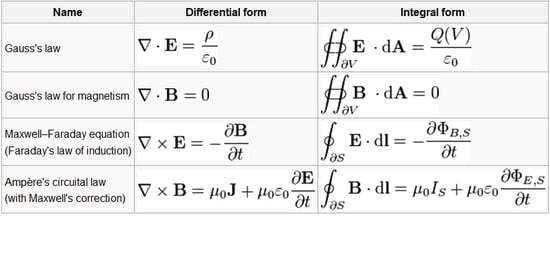
As much as heat is a problem, the real problem is electromagnetic interference from the currents within the chip itself.
You need to understand a basic fact of reality and this is something most people are not aware of:
The flow of charged particles CREATES magnetic fields and magnetic fields AFFECT charged particles. So, the closer two moving charges (like electrons flowing in a wire), the more likely their respective magnetic fields are going to affect the other charged particles.
Heat is a problem, but that's not the real problem. It's the (electromagnetic interference) EMI and metal conducts electricity and thus does not adequately shield against EMI. For current chips, building upward is likely better.
But there is also another limitation: the speed of light. Ironically, the speed of light is rather slow for many things that we want to do...
Think about it like this. The speed of light is easy to visualize by thinking about it like this. Light (and any electromagnetic radiation) will travel about 1 foot in 1 nanosecond. When you are trying to do trillions of operations per second, size becomes an issue. 1 trillionth of a second is a picosecond and light travels about 1/1000th of a foot which is 30.48 microns. The world's smallest CPU is about 0.3 mm which is about 100 times that.
This is another reason why quantum computing is getting a lot of research; it's a different form of massively parallel processing.
Yes, Moores Law has been reaching its expiration date for some time. Another form of microcircuity will. have to be developed. Maybe using different materials. Radioactive decay, biologics or photo voltaic capture may someday take the place of logic gates.
Moore's law is irrelevant, not only because quantum and optical computing are becoming more prevalent, but cloud computing and distributed computing mean less need for bigger and heavier chips anyway.
Moore's Law has already ended. Quantum Computing is the future.
Nope, we'll find other ways to improve chips, mainly with AI
Quantum Computing baby! It already broke moore's law in terms of computing power.
Quantum computing and advancement in material science will improve super conductors
i dont know, mabey if intel actually tried harder they could acheive that goal.
I read your profile and loved what I read.
You can also add your opinion below!
Most Helpful Opinions