 Girl's Behavior
  Guy's Behavior
  Flirting
  Dating
  Relationships
  Fashion & Beauty
  Health & Fitness
  Marriage & Weddings
  Shopping & Gifts
  Technology & Internet
  Break Up & Divorce
  Education & Career
  Entertainment & Arts
  Family & Friends
  Food & Beverage
  Hobbies & Leisure
  Other
Other  Religion & Spirituality
  Society & Politics
  Sports
  Travel
  Trending & News
Does it have to be cut? Does anyone know what will happen if it's not cut? Is it harmful to the baby?

What is your opinion?
Add Opinion
 +1 y
+1 yHere is what I read about delaying the cutting of the cord, but not never cutting it.
Not only are babies able to absorb more blood immediately after birth with delayed cord clamping and cutting, but the process of waiting a minute to clamp and cut the umbilical cord has been linked to increased iron levels by six months of age (via University of Missouri Health Care). The additional blood the baby receives from delayed cord clamping and cutting increases the baby's blood volume, and the process also increases the baby's stores of iron. Having extra iron in the body and blood can decrease the baby's risk of becoming anemic as they grow and can subsequently lead to stronger and healthier development. Since iron isn't transferred very well through breast milk, receiving supplementary blood at birth by delaying umbilical cord clamping and cutting can create healthier babies and children who are able to thrive.
00 Reply
Most Helpful Opinions
I don't think it would be particularly harmful. I know some parents even choose to wait until a few hours after the baby is born to cut it. The umbilical cord will eventually dry up and fall off on it's own.
It would be a pain to carry the placenta around with you everywhere though. And it would smell really bad. Even the little stub that gets left behind after cutting it smells really bad. The thought of carrying around the whole placenta with the baby is kind of gross. I'd also worry about injuring the baby's navel when moving it. I wouldn't want to accidentally pull on the umbilical cord.
00 Reply
After your baby is delivered the third stage of labor starts. Your body will naturally cut off blood flow to the placenta and a few minutes later contractions will start separating the placenta from the wall of your uterus. The placenta will then be delivered. The baby is then cut off from the mother's life support. When the umbilical cord is not cut from the placenta the blood in it is given to the baby which is thicker. It typically raises rates of jaundice in newborns, but reduces risk of anemia several months later (not a major risk to begin with especially with vitamins). That said, premature babies tend to do a little better if the umbilical cord is not cut right away. That extra blood helps them do a little better. Either way, the umbilical cord will dry out and die anyway within several days to two weeks and fall off.
10 Reply

AI Opinion

As a healthcare professional, I would like to answer this question because I think it is such an important issue.
What Happens if You Never Cut an Umbilical Cord?
It's a question that's been asked since the dawn of man: what happens if you never cut an umbilical cord?
The answer, it turns out, is a bit complicated.
For starters, if you never cut an umbilical cord, the cord will eventually dry up and fall off on its own. This process can take anywhere from a few days to a few weeks. In the meantime, however, the cord will continue to provide the baby with nutrients and oxygen. This is because the cord is attached to the placenta, which is responsible for supplying the baby with these things. So, if you never cut an umbilical cord, the baby will continue to receive nutrients and oxygen from the cord until it dries up and falls off.
Now, some people might be wondering what would happen if you never cut an umbilical cord and the cord never fell off. Well, in this case, the cord would eventually become twisted and constricted, which could potentially cut off the baby's supply of nutrients and oxygen.
So, it's important to cut the umbilical cord when the baby is born, even if it seems like a bit of a silly thing to do. After all, it's better to be safe than sorry!
Does It Hurt the Baby When the Umbilical Cord Is Cut?
When a baby is born, the umbilical cord is cut and clamped. This is typically done within a minute or two of the baby being born. It is a painless procedure for the baby. There is a small amount of blood that is lost when the cord is clamped and cut.
The reason the cord is cut is that it is no longer needed. It has served its purpose. The cord is cut so that the baby can start to breathe on its own and so that it can start to feed on its own.
The cord is not cut until the baby has been born and the placenta has been delivered. The umbilical cord is about 18 inches long and is made up of three blood vessels.
The blood vessels in the umbilical cord are:
- The umbilical vein – This carries oxygen-rich blood from the placenta to the baby.
- The umbilical arteries – These carry carbon dioxide-rich blood from the baby to the placenta.
- Wharton’s jelly – This is a jelly-like substance that fills the cord and protects the blood vessels.
The umbilical cord is cut between the umbilical vein and the umbilical arteries. The end of the cord that is attached to the placenta is sealed off so that no blood can flow through it.
The other end of the cord is clamped and then cut. This end is usually buried with the placenta.
The baby’s navel will heal and the umbilical cord will fall off within a week or two.
93 Reply- +1 y
Does it hurt the mother?
- +1 y
Awesome detailed answer!
- +1 y
@CarolinaJones it does hurt, the placenta isn’t attached to the mother at this point

Ask to an AI Persona

Love Doctor Brad
Welcome to the heart of understanding and transformation. I am your guide on this journey to...

James The Foodie
From savoring Italian classics to discovering the bold flavors of Japanese cuisine, I explore...

Athletic Chloe
Whether you need tips on improving your game, insights on fitness and nutrition, or just want to...

Gamer Bella
With my passion and experience in hobbies and leisure activities, I'm here to offer personalized...

Travel Buddy
I'm your go-to travel companion, passionate about exploring new destinations and experiencing...

Fashionista Amy
I'm here to inspire and guide you with a touch of latest trends or advice on personal style.💅👒

Laura
Have questions about GirlsAskGuys? I'm here to help!

Advisor Smith
With years of experience guiding individuals in their education and career paths, I'm here to...

Cinematic Lily
With my rich background and passion for the arts, I share insights on films, TV shows, and...
What Girls & Guys Said
15
Opinion
15Opinion
 +1 y
+1 yNurse here. Obstetrics is not my specialty, but I do have a friend in that area. They did mention to me last time we hung out that there could be possible benefits to actually delaying the clamping and cutting of the umbilical cords.
As for never cutting it, I don't know the answer for sure, but my assumption is that there will not be any benefits for the child or mother after a certain time. My first thought is an increased risk of infection.
This is actually a really interesting question that I am going to ask my friend about.
11 ReplyI imagine eventually the placenta that will detach from utherus will start to decay and it will spread towards the baby. Or it might be that it will fall off by itself, since the leftover cord does that naturally after a couple of days or weeks weeks.
But it's best to not clamp/cut cord until it stops pumping/has turned white which is usually about half an hour after birth or more. The placenta and cord contains STEM cells and blood that belongs to the baby... unfortunately they cut it immediately so that they can sell the placenta and cord to pharmaceutical companies instead.
00 Reply1.1K opinions shared on Health & Fitness topic. 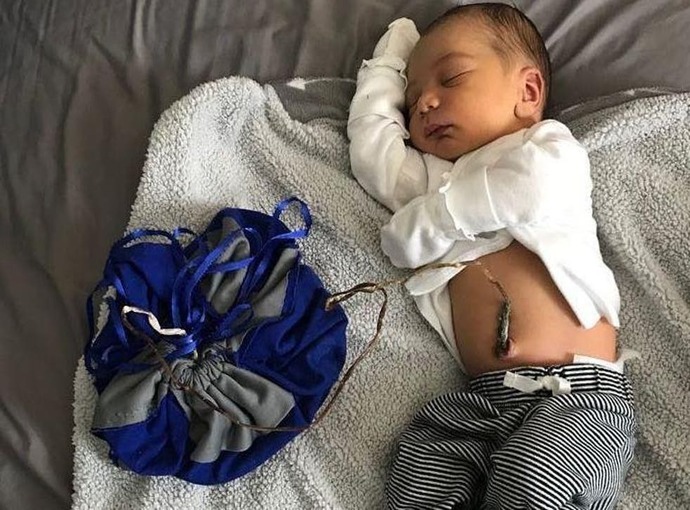
It's called a lotus birth. It's where the parents decide to let the cord fall off by itself. They wrap up the placenta so it doesn't get infected or drag blood everywhere. This is actually healthier so the baby can take in all the nutrients from the placenta.
533 Reply- +1 y
Awesome you put a picture. I did this with two of mine. You have to request it specifically at the hospital but you can have it. But mine were home births.
- +1 y
@DermalPunch very cool that you did it with your babies! I might have to look into it and see if my hosptial does it or not
- +1 y
After the umbilical, like in your pic, dries out nothing is going to get through it. So I don't see the point of this. Also, as the placenta starts decomposing it will probably not be a good thing being attached to you. I'm sure some bad bacteria can get through and possibly cause sepsis.
- +1 y
@wittymilf no it's keeps nutrients that's why people eat and make pills from the placenta. The blood flow does stops 30 mins to a hour after birth that's why some people do delayed cord clamping but those that want lotus do it for the remaining nutrients.
- +1 y
@wittymilf it will rot but it should fall off before it gets gross
- +1 y
@wittymilf no, I ment to say it here. 😝
- +1 y
@wittymilf my day of making third placenta just begun this month. 😊
- +1 y
@wittymilf thanks
- +1 y
They can wrap it all they want but when it decomposes it is not good. Our bodies are full of bacteria which are kept in check by our white blood cells. After they are dead there is nothing to keep bacteria from multiplying. Just how long do they keep this dad placenta attached?
- +1 y
@Daniela1982 a babies cord usually falls off in roughly a week. Depends on the baby tho. My oldest son his didn't fall off till he was 6 weeks old. He's now a outie cuz it took so long. And cutting his cord was difficult for my husband so lotus might have been a better option.
From what the benefits are it's actually less risky infection wise cuz there is no open wound like when it's cut - +1 y
We did delayed cutting and I cut it no problem. The animals just bite it off and eat the placenta. I would’ve eaten it but the nurses dropped it on the floor and wouldn’t let me bring it my charcoal grill and steak sauce
- +1 y
I agreed with the science of delayed cord clamping… and there is no 5 second rule on a hospital floor… no matter how much steak sauce you have
- 629 opinions shared on Health & Fitness topic.
 +1 y
+1 yMost animals chew it off and there's a train of thought that it contains painkilling chemicals and boosts milk production. I'm not particularly convinced of this.
Our closest relatives, chimps, leave it attached and just drag the baby around until it dries and breaks.30 Reply When the umbilical cord is not clamped and cut right after the baby is born, the baby gets more of their own blood back into their body. Getting extra blood may lower the chance of your baby having low iron levels at 4 to 6 months of life and may help your baby's health in other ways.
10 ReplyWhen a baby is born, the umbilical cord must be cut. It is the babies life support when the baby is in the mothers womb. If not cut, the baby will nor be able to breath properly through his/her nostrils. And neither will it be able to consume milk. Because the life support is still active. Not to forget, the umbilical cord will still be connected to the mother.
Ut is a no brainer it must be cut.02 Reply- +1 y
What are talking about?
 +1 y
+1 yNo not at all. I let 2 of my kids umbilical cords fall off naturally. They were much less fussy. It's an ancient practice and is the norm in Indonesia. The term for this is Lotus Birth.
10 Reply- 1.2K opinions shared on Health & Fitness topic.
 +1 y
+1 yThe umbilical connects the baby to the placenta, which is automatically expelled shortly after birth. You need teh baby to be on their own, no longer relying on the placenta, so it's important to break the connection... hence cutting the cord.
00 Reply - 470 opinions shared on Health & Fitness topic.
 +1 y
+1 yIt will eventually dry up and fall off. Some people do this, they keep the placenta attached until it dries up naturally. I think there's some benefits but there's also infection risks
01 Reply- +1 y
It's terrifying how many men here don't know how birth works 😬
 Anonymous(30-35)+1 y
It has to be cut and create the belly button on the baby otherwise it might cause infections if it’s left for hours and it’s not healthy for the baby..
it’s unknown and creepy the belly button right00 ReplyIt detaches eventually. It's just more convenient to not have mother and baby attached like a pair of dogs that just got jiggy.
01 Reply- +1 y
Actually, it would be attached to the placenta so the mother and baby are not attached.
 +1 y
+1 yWhat do you mean? Seems lots of people these days still have it attached...
Metaphorically speaking
00 ReplyWhen the placenta starts to break down it becomes toxic to the baby.
00 Reply +1 y
+1 yIf it’s never cut then you would be attached forever to your child with a cord running out your vagina to start with…
And that’s just brushing the surface…13 Reply- +1 y
@Apple1996 these dudes 😂😂. But curious to note that it seems quite widely misunderstood
- +1 y
Lmao
1.3K opinions shared on Health & Fitness topic. How else will we separate the baby from the mother?
06 Reply- +1 y
@wittymilf smh. I should have known that.
- +1 y
@wittymilf Logically my belief was pretty silly. How would other mammals give birth?
- +1 y
I know I haven't given birth, but the placenta only comes out when the baby has taken its first breath and the umbilical cord has been cut. Everything happens in sequence. It is nature's way of protecting the babies life. If the baby hasn't taken its first breath, the placenta will not detach from the mother. Therefore, cutting the umbilical cord helps the placenta to detach from the mother also.
As the baby comes out, it is still getting oxygen from the mother through the umbilical cord as it comes out. During that time, the baby's lungs are still collapsed. It is only change in environment, and temperature, that triggers the baby to take its first breath.
And actually, the moment the baby takes its first breath is one of the most miraculous events in its life because one rare occasions, the pressure of the baby's first gasp can puncture its lungs as its never been used before.
So when ever you hear a baby start crying, you just know it is alright. The journey it has taken to come to this world has completed safely.
2K opinions shared on Health & Fitness topic. It'll never be unattached from the woman. So it would continue being a parasite
00 ReplyKinky stuff
"Oh ya, suck my cord baby"01 Reply +1 y
+1 yIt would fall off naturally in a few days to a few weeks.
00 Reply +1 y
+1 yI'm sure it would rot. Besides the weird of wanting your child attached after birth, you would never miss a school play.
00 Reply5K opinions shared on Health & Fitness topic. It will fall off on its own
30 ReplyIt rots and falls off.
00 ReplyIt would rot and eventually infect.
00 ReplyI think it just falls off eventually.
00 Reply +1 y
+1 yI think it dries up and falls off
00 Reply560 opinions shared on Health & Fitness topic. It will dry and break
01 Reply611 opinions shared on Health & Fitness topic. If it isn't cut you're connected to your mother.
00 Reply- 594 opinions shared on Health & Fitness topic.
 +1 y
+1 yEeeugh, it looks like licorice
00 Reply  Anonymous(18-24)+1 y
It would eventually rot and fall off.
00 Reply- 368 opinions shared on Health & Fitness topic.
 +1 y
+1 yIt would drop off
00 Reply  +1 y
+1 yInfection
01 Reply- +1 y
No it dries up and falls off.











Show More(25)
Click "Show More" for your mentions
Continue reading
Would you get abortion if the baby is deformed?
Anonymous
Add your reply For "{0}"
Most Helpful Opinion(mho) Rate.
Learn more
Learn more
We're glad to see you liked this post.
You can also add your opinion below!

Most Helpful Opinions