 Girl's Behavior
  Guy's Behavior
  Flirting
  Dating
  Relationships
  Fashion & Beauty
  Health & Fitness
  Marriage & Weddings
  Shopping & Gifts
  Technology & Internet
  Break Up & Divorce
  Education & Career
  Entertainment & Arts
  Family & Friends
  Food & Beverage
  Hobbies & Leisure
  Other
Other  Religion & Spirituality
  Society & Politics
  Sports
  Travel
  Trending & News

Surprising Facts About Christmas

Christian Adaptation
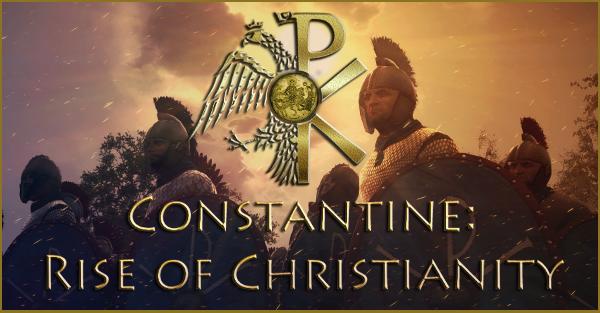
Christmas traditions reflect seasonal attributes that have nothing to do with Jesus. Certain elements have origins in pre-Christian festivals that were celebrated around the winter solstice by Roman pagans ,who were later converted to Christianity.The early Christians and church did not celebrate Christmas . The first recorded date of Christmas being celebrated on December , 25 was in 336 AD, during the time of the Roman Emperor, Constantine The Great -the first Christian Roman Emperor.During the reign of Constantine The Great (306–337 AD), Christianity began to transition to the dominant religion of the Roman Empire. Constantine was a pagan who converted to Christianity in the year 312 .He steered Roman culture toward Christ and away from paganism. In order to covert other pagans ,Constantine adopted many pagan belief's ,rituals and traditions into the Christian church(which still exist within Christianity today ) This lessened the temptation for Christians to deviate
Christmas Day - December 25
Saturnalia (in December) was a pagan festival held by the Romans .This marked the winter Solstice to honor Saturn - God of Agriculture. It started on December 17, it fell within what we now call the Christmas season.It was a time for feasting, gift-giving ,debauchery ,dancing and drinking.Rituals were designed to appease the sun and get it to return.After the solstice, the shortest day of the year, the days got longer again. Rituals and celebrations were held in honor of the sun's return. The Saturnalia was followed by the Kalends - the Roman new year festival,which began on January 1 and lasted until January 5 - the Kalends marked the first day of the month of the New Year. During the Kalends ,the Romans had more parties and performed more rituals.Mithra- the God of light and wisdom was said to have been born from a rock on December 25,and the Romans celebrated his birth during the solstice festival.
By the time the Roman Empire legalized Christianity in the 4th century, most of the other religions in the empire were celebrating the birth of their Gods on December 25 . In the century before Constantine's ascension, Emperor Aurelian declared December 25 as "Dies Invicti Solis" - the Day of the Invisible Sun. In 350 AD Pope Julius I officially declared that the birth of Jesus would be celebrated on December 25. By 529 A.D. after Christianity had become the official state religion of the Roman Empire , Emperor Justinian declared Christmas a civic holiday.This effectively transformed the Pagan occasion into a Christian holy day .Hence, holiday
Christmas Day , December 25 , is not the date of Jesus' birth . This is an unscriptural teaching and his date of birth is unknown. There is no evidence in the bible or throughout history that points to the exact date and month that Jesus was born. .The Christian Church re-rooted pagan customs, but this was merely a convenient way to Christianize a Pagan celebration. The Christian Church provided an alternative festival in honor of the birth of Christ. Therefore ,replacing worship of the sun with worship of the Son.
Pagan Gods Born On December 25
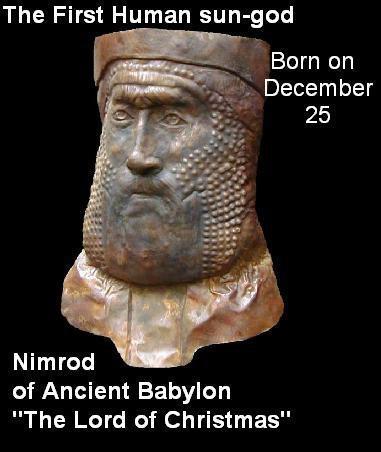
Pagan Gods that had “birthdays” or are associated with December 25
Apollo
Attis
Bacchus
Dionysus the son of Zeus
Helios
Hercules
Horus
Jupiter
Mithras
Nimrod (who eventually came to be worshiped as Baal) Nimrod was the Great-grandson of Noah. He had taken a stand in opposition against God
Perseus
Sol Invictus (The “Unconquered Sun”)
Tammuz
Gift-Giving, Feasting, Partying

During Saturnalia, the Romans would feast , drink to excess and give one another gifts, such as festive candles ; figurines ; pottery ;edible treats i.e. nuts & fruit.The ritual of gift- giving was done in honor of Strenu- the Goddess of the New Year, purification and wellbeing. Drinking,feasting,burning of candles and the giving of gifts at Christmas all derived from the pagan festival , Saturnalia.
Christmas Lights

Roman pagans decorated their homes with lights, lit bonfires and candles to celebrate the winter solstice and return of the light. Candles were used as decoration to scare away the darkness, ward off evil spirits and celebrate the rebirth of the sun and light.
Christmas Tree

Roman Pagans often worshiped trees in the forest, and used evergreen fir trees to decorate their temples and homes at the festival of Saturnalia. It made them think of the spring to come.Also, Yule trees were placed at an entrance or inside the house. The traditional Christmas colours of red and green, represented male and female, fertility and incubation. Pagan decorations still seen around Christmas include the red berries and green leaves of holly, mistletoe and wreath
The Puritan War On Christmas















Most Helpful Opinions