 Girl's Behavior
  Guy's Behavior
  Flirting
  Dating
  Relationships
  Fashion & Beauty
  Health & Fitness
  Marriage & Weddings
  Shopping & Gifts
  Technology & Internet
  Break Up & Divorce
  Education & Career
  Entertainment & Arts
  Family & Friends
  Food & Beverage
  Hobbies & Leisure
  Other
Other  Religion & Spirituality
  Society & Politics
  Sports
  Travel
  Trending & News


Navigating relationships with narcissistic individuals can be confusing, emotionally draining, and sometimes even damaging.

Their charm and charisma can make them seem engaging and intriguing, but their inconsistency often leaves others feeling uncertain and exhausted.
In this take, we’ll break down:

How to Identify a Narcissist
A narcissist often exhibits a combination of the following traits:
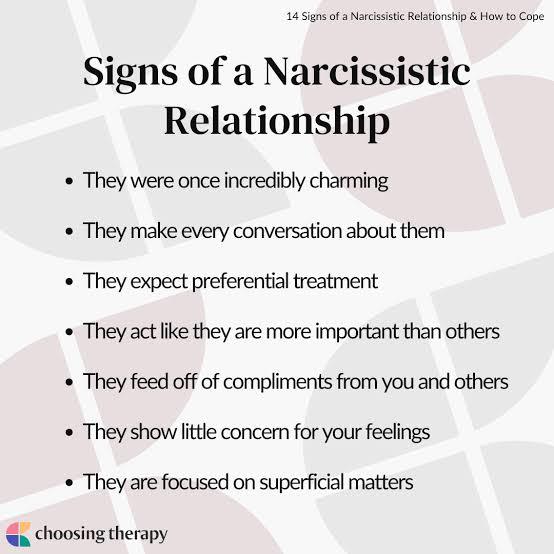
- Lack of empathy - They struggle to understand or care about others’ emotions.
- Emotional dysregulation.- Their moods can shift unpredictably, often leading to anger or silent treatment.
- Manipulation.- They twist situations to their advantage, making you question reality.
- Bragging and grandiosity -They exaggerate their achievements and expect admiration.
- Sense of entitlement - They believe they deserve special treatment.
- Constant need for validation -They crave attention, compliments, and external approval.
- Fear-driven behavior - Deep down, they fear being exposed as inadequate.
- Control and dominance - They need to feel superior and in control.
- Rage and unpredictability - When their ego is threatened, they react with anger or emotional withdrawal.
The Real Challenge: Their Inconsistency

One of the hardest things about identifying a narcissist is their unpredictability. They can be charming, fun, and even affectionate at times, which creates confusion. This keeps people stuck in toxic cycles, hoping for the return of the “good version” of the narcissist.
Instead of focusing on their moments of kindness, pay attention to how they make you feel most of the time.
If you constantly feel drained, anxious, or questioning your worth, that’s a major red flag.

Do Narcissists Seek Therapy & Change?
Yes, narcissists do seek therapy but not for the reasons you might expect. Their approach to therapy is vastly different from a genuine seeker of personal growth. They usually attend therapy when:

- 🚩 They are experiencing their own negativity (such as depression or anxiety).
- 🚩 They need to pretend they are changing to keep someone from leaving.
- 🚩 They want a new audience for bragging, since people in their lives have stopped listening.
- 🚩 Their life has taken a turn they don’t like (e.g., divorce, job loss, social rejection).
However, when therapy starts requiring them to take accountability and change their inner world, they often quit. They are more likely to blame others than do the deep, uncomfortable work of self-reflection.
Narcissists don’t seek therapy for true transformation; they believe it’s others who need to change.
Should You Stay or Leave?
This is the biggest and most difficult question. The answer depends on the impact they have on your well-being.
Signs You Should Consider Leaving
- ✅ You feel emotionally drained, anxious, or confused most of the time.
- ✅ You’re constantly walking on eggshells, fearing their reactions.
- ✅ Your self-esteem has taken a hit, and you doubt yourself more than before.
- ✅ They refuse to take responsibility for their actions, always blaming you or others.
- ✅ They gaslight you, making you question your reality and experiences.
- ✅ Their apologies feel empty they say the right words but repeat the same behaviors.
- ✅ You’re giving more than you’re receiving, and the relationship feels one-sided.
When Can You Consider Staying?
In rare cases, if the narcissist is actively and consistently working on self-awareness, you might choose to stay in the relationship. However, this requires:
- ✔️ A genuine willingness on their part to seek long-term therapy.
- ✔️ Accountability for their actions, without shifting blame.
- ✔️ Respect for your boundaries and emotional needs.
Without these, staying will likely lead to continued emotional harm.
Your mental and emotional health should be the priority. If a narcissist’s presence is causing ongoing distress, walking away may be the best decision.
Final Thoughts
Dealing with a narcissist isn’t easy. Their inconsistencies keep you hopeful, their manipulation makes you doubt yourself, and their lack of accountability can be exhausting. Recognizing the signs early on and prioritizing your own well-being is crucial.
If you’re feeling trapped in such a relationship, seek support from a therapist or a trusted friend.
You deserve a relationship where you feel valued, respected, and emotionally safe.
At the end of the day, the best wayto handle a narcissist is to stop expecting them to change and instead, focus on protecting your peace.

















Most Helpful Opinions