 Girl's Behavior
  Guy's Behavior
  Flirting
  Dating
  Relationships
  Fashion & Beauty
  Health & Fitness
  Marriage & Weddings
  Shopping & Gifts
  Technology & Internet
  Break Up & Divorce
  Education & Career
  Entertainment & Arts
  Family & Friends
  Food & Beverage
  Hobbies & Leisure
  Other
Other  Religion & Spirituality
  Society & Politics
  Sports
  Travel
  Trending & News


Trust
Sections:
1. The Nature of Trust
2. What Trust Is
3. What Trust Isn't
4. The Synopsis
Section 1: "The Nature of Trust"
Trust has been seen as many things throughout history but namely it has been a cherished thing that represents one's willingness to invest in the efforts, wisdom, and endeavors of another person. The greater the amount of trust the greater the willingness. I would like to turn that on it's head and suggest that trust is actually not such a good thing.
First let's suggest that Trust is actually on a scale I would call "Interpersonal Fear"; the Interpersonal Fear Scale works essentially like the pain scale we all know and love in our local physican's office:
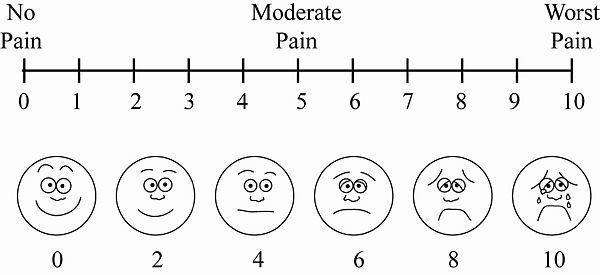
The IFS scale works on the same numeral system as well, where zero is great and ten is terrible; the reason this is happens to be because of the correlation between the percentage format and the inverse relationship to willingness to invest. For instance a "10" would be a 100% chance of betrayal, failure, decadence, or some other negative outcome while a "0" would be a 0% chance.
So the more trust you have the less fear or risk you believe you have when investing in that person or vesting yourself into their person sharing information. Generally speaking a very well trusted friend would be a "3" and a romantic partner a "2" or so normally while obviously strangers can easily hit "7" or above and those who are intimidating can be "10".
When looking at trust as a sliding scale relative to fear of investment or vestment one begins to understand that there are some core difference between how we are raised to understand trust and what it may really be.
Section 2. What Trust Is
I've decided a simple list of 8 items is sufficient:
- Trust is the ability to properly gauge and grant someone a certain amount of power over an aspect of life which you influence or influences you directly.
- Trust is an ability which when honed is used to decipher the successful rate of someone's attempts. It has backing and requires analysis.
- Trust is concrete. It is trend based.
- Trust is difficult to destroy and does not shift easily based on a singular activity basis; an example would be you wouldn't call someone a failure if they got a bad grade one time out of the ten years you've known them as a student. The same is true for basic activities; you don't break up with people because they forgot, one time, something off the grocery list nor do you cease to find them competent at shopping for food.
- Trust is multi-faceted; instead of a single type of trust there are multiple variations depending on the question at hand. For example you may trust someone with $100 but not with $1,000 because temptation may be too great at the higher level for waste.
- Trust is difficult to effect with emotion and does not waiver rapidly.
- Trust is cumulative and very rarely moves away from improvement without a major calamity.
- Trust is highly misunderstood and mistaken for it's retarded cousin, "Faith".
Section 3. What Trust Is Not
Eight items again this time on a concept known as "Faith":
- Faith is the direct opposite of Trust.
- Faith is not an ability to gauge anything; it is based entirely one whim and has no backing whatsoever. Granting a person faith does not require you to be the affected party in any sense.
- Faith is not trend based but instead instance based. A person can indeed lose total faith in another party based entirely on a single instance; using the same example this is the person who overreacts and decides that despite having a perfect track record for months of shopping for groceries their partner is incompetent based on forgetting a single ingredient.
- Faith is one-track due to it's blindness; due to a lack of data trusting someone with $1,000 is equivalent to trusting them with $100, or even $10.
- Faith is completely unstable and also tends to move away from stability; the more faith you have in someone over a longer period of time the greater the odds of fallout due to, unlike trust, waiting for betrayal.
- Faith is astoundingly commonly confused for trust, and often mistated as trust as well; in many cases the misnomer is expressed when things that were unpredictable behaviors occur. Trust produces predictable behavior with little variation and requires time and observation while Faith allows for high variance and requires no data.
- Faith is commonly expressed as "I trust everyone until they give me no reason to trust them." which is, of course, backwards. One has faith in everyone until either they solidify a pattern and are granted trust or simply prove too unstable to maintain faith in.
- "Faith" is for Trial Periods and "Trust" is for The Long-Haul.
Section 4. Synopsis
So what does this mean for you? Well, it helps you, first by resolving quite a number of issues related to the misunderstanding of Faith for Trust and second by setting some solid boundaries for the two. First off until you know someone for at least a year if not two years you have faith, not trust, in them. The speed by which you invest does not effect this because the amount you invest is not directly correlated to "expected returns". When returns are predictable, both positive and negative, you can say that you've established patterned trust.
Second, it also allows you to properly get an idea for how to manage your fear of investment; people who are waiting for things to go wrong do not lack trust but instead run their entire lives by faith holding extended trial periods. These are the people who have "been hurt in the past" and instead of ever getting over it and grieving properly constantly and consistently live as though they are waiting for failure.
Third and finally, it expresses a scale; many people are brought up to think bilaterally and are unable to express the trust process in words. For instance the answer to "Do you trust me?" is rarely concrete if it's not "Yes" or "No" but because it's a scale instead of a "0" or "10" you get answers like "kinda" and "sorta" and "give me time" but these answers are unclear. When given a scale it's a lot easier; for instance "5-6" would be an acquaintance, someone you know decently but not well enough to say trust with personal matters but still well enough to trust with impersonal tasks such as handing you a pen or lending you a few dollars. If communication is key then clarity is at least one of the cuts in that key.
That is all.















Most Helpful Opinions