 Girl's Behavior
  Guy's Behavior
  Flirting
  Dating
  Relationships
  Fashion & Beauty
  Health & Fitness
  Marriage & Weddings
  Shopping & Gifts
  Technology & Internet
  Break Up & Divorce
  Education & Career
  Entertainment & Arts
  Family & Friends
  Food & Beverage
  Hobbies & Leisure
  Other
Other  Religion & Spirituality
  Society & Politics
  Sports
  Travel
  Trending & News

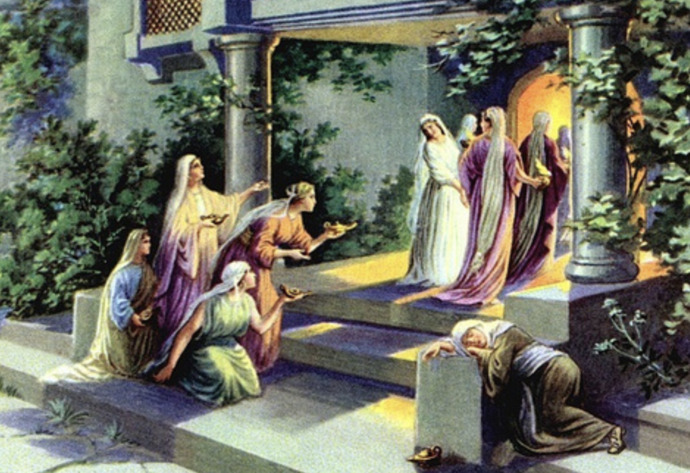
In the bible 10 brides went to wait for the bride groom they were set to marry. Five were wise and five were foolish. The Foolish ones took their lamps but did not take oil with them. The Wise took oil along with their lamps. They became drowsy due to delays and fell asleep. Then the foolish ones began to run out of oil for their lamps. Then the unprepared brides said their lamps were running out because they forgot to buy oil and asked the wise brides who brought oil to share their oil with them but the wise brides said there might not be enough oil for both the ones who bought oil and the ones who did not bring oil, and the ones who did not bring oil should go to the dealers and buy some for themselves. While the foolish brides went away to make the purchase, the bride groom arrived, and the ones who were late asked to be let in the marriage carriage, and the bride groom said, "I do not know you or where you come from." and Jesus said, this means you must keep watch because you do not know the day or the hour that God will come for you.
What I get out of this passage:
In the parable of the ten single brides who were waiting for the groom, the brides trimmed their lamps when they were told by a hired watcher that the bride groom was coming.
What I get out of this scenario, is that there will come a time for the long range and enduring believer, where your charitable deeds will no longer be able to buy you access to God, and you will have to rely entirely on your behaviour, your thoughts, your obedience and your words to get favour from God.
God will either remove your ability to do those charitable religious acts, or God will stop rewarding you for your charitable religious acts and reward you based on your character instead.
Then what is left, is whether or not have oil. If you have oil, your lamp will continue to light, when you stop your religious acts of piety and charity.
If you do not have oil, your lamp will not light, when you stop your religious acts of piety and charity before God.
The oil might symbolize forgiveness and it might symbolize honour, not just personal honour, but also honour towards the welfare, prospects, happiness, security, vantage points, vulnerabilities, needs, feelings, thoughts, concerns, weaknesses, delights, labours, and safety of others.
If you honour others, by considering their interests their social reputation, and their personal needs, then God will grant you oil, which is personal honour from God.
This honour will maintain your religious condition, when you can no longer maintain it through acts of charity, acts of prayer, or acts of fasting before God.
If you do not honour others, because you are too busy scrutinizing, controlling, judging, mocking, or competing with them, you will lose your oil, which is your power, your personal honour, and your forgiveness or ability to forgive others.
Then the bridge groom will say, he does not know you, because nothing in your moral or behavioural life reflects Christian virtues or morals.
So the oil the brides maids fail to bring before God is honour and forgiveness.












What Girls & Guys Said
Opinion
0Opinion
From what I’ve heard the story symbolizes a form of the return of Christ. Those who are ready like the brides who had oil and lived life ready to be married will be taken.
And those who didn’t live their lives ready and had nothing to show for it won’t be taken in Christ return.
Share the first opinion in your gender
and earn 1 more Xper point!