 Girl's Behavior
  Guy's Behavior
  Flirting
  Dating
  Relationships
  Fashion & Beauty
  Health & Fitness
  Marriage & Weddings
  Shopping & Gifts
  Technology & Internet
  Break Up & Divorce
  Education & Career
  Entertainment & Arts
  Family & Friends
  Food & Beverage
  Hobbies & Leisure
  Other
Other  Religion & Spirituality
  Society & Politics
  Sports
  Travel
  Trending & News


1. The Rosary is a Catholic thing.
False. The Rosary is a form of personal meditation, practiced by the Roman Catholics, the Lutherans, and Anglicans. The Catholic rosary pays special attention to Mary, the mother of Jesus, and this attention is avoided in the Lutheran and Anglican rosaries. A better expression is that the Rosary is a Catholic, Anglican, and Lutheran thing.

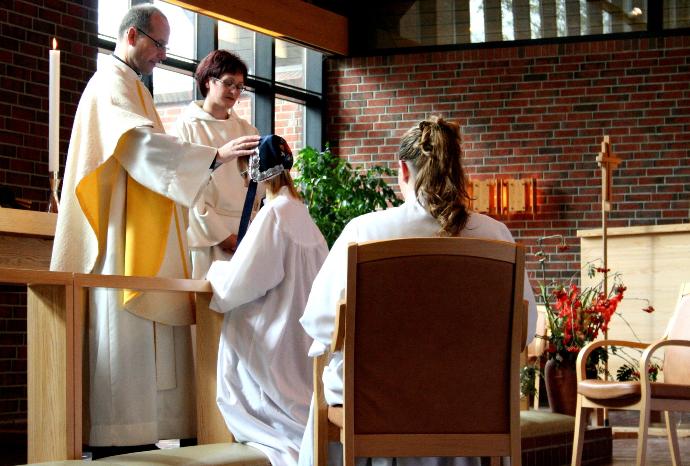
2. Confirmation is a coming-of-age rite of passage.
False. It just appears that way, because many people who go into Confirmation are young teenagers. A real coming-of-age rite of passage is Quinceañera, a celebration practiced in Spanish-speaking countries. Another real coming-of-age rite of passage is the Bar/Bat Mitzvah, which is practiced in Jewish communities. Confirmation in Christianity is a practice based on theology and can be done at any age. Even a new convert who has just turned 35 can be confirmed, if he acknowledges that he is sincere about his conversion.
3. Christening is just a naming ceremony.
False. Like confirmation, it just appears that way, because people would take their very young child (a baby) to the church to be baptized and christened. Baptism can be found in the Bible, but its applications are diverse and have been debated throughout history. Giving someone a Christian name is also biblical. However, the popular image of christening as the exact synonym for naming is the myth, as shown in Charles Dickens' Great Expectations, where Pip tells Joe Gargery that he wants to see Estella, but instead he blurts out "Estavisham".
Which her name ain't Estavisham, Pip, unless she have been rechris'ened.
That quote above completely secularizes the term. There is no possible way that a person can be re-baptized. If there were a "second baptism", then the first baptism must be seen as invalid or doubtful. And it is highly likely that Miss Havisham, the heiress of a wealthy gentleman, is at least raised Anglican, so she would have a normal Anglican upbringing, which includes getting baptized at a very young age.
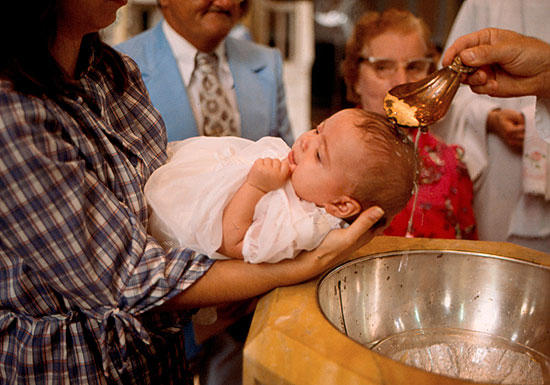
4. Baptism must be solemnized by a Christian minister.
Actually, it can be solemnized by anyone. Literally anyone. It's called "emergency baptism", out of the belief that dead people cannot be saved. Indeed, this is a point of controversy between the Latter-Day Saint/Mormon branch of Christianity and other denominations. Latter-Day Saints believe in baptism for the dead.

5. The Christian day of worship must take place on a Sunday.
The Christian day of worship does not have to take place on a Sunday. It takes place on Sunday morning usually, because that is the day of the Christian Sabbath, aka the Lord's Day. In practice, though, many Christian churches would have worship services on Saturday evenings or Sunday evenings, in addition to Sunday mornings. However, the traditional day would begin at sundown, so "Saturday evening" would mark the beginning of the Lord's day, but Sunday evening is really part of Monday, which is past the Lord's day. The reason for the wide schedule is for practicality. Some people just can't make the journey to the worship service at the traditional Sunday morning hour.













What Girls & Guys Said
Opinion
2Opinion
Which "flavor" of Lutheran uses rosaries? In my 49 years of being Missouri Synod Lutheran I've never touched a rosary; never seen one in my church before; and never heard of a Lutheran using one. Just wondering.
Well, Martin Luther was a Catholic monk who disagreed with the authorities on the Catholic Bible of the time. He made a theological and political separation from the Roman Catholic Church. He won supporters from the princes of the Germanic states, who did not like the pope's political authority over the Germanic states. When he developed the true version of Christianity, Lutheranism, he just modified the Roman Catholic Church beliefs and practices to fit what he thought was biblical. I may describe Luther as a Reformed Roman Catholic instead of Lutheran. Many Catholic practices got borrowed into Lutheranism. Rosary. Going to Confession, even though Lutherans don't need to go to Confession.
Follow what is right and good and leave the myths alone.