I am the author of a previous myTake that defends religion. Inspired by the vitriolic comment against atheists, I write this myTake in defense of atheism.
Atheism means the lack of belief of gods. In defense of atheism, I list arguments that are used against the existence of the gods. These arguments really cover a specific type of atheism that consists of secular ethics, naturalism, empiricism, and rationalism. Religious atheism exists; unlike the nonreligious atheism, religious atheism is the absence of belief in deities within a religious tradition.
I found the arguments against the existence of God on Wikipedia. I know it has a heavy monotheistic bias, but that's because of Wikipedia's internal bias in the editor population. Many editors are from Christian-majority countries. The United States is one of them. Maybe non-English Wikipedias are less biased towards Christianity. As it stands, the Christianity-oriented atheism is atheism within the Christian framework, regardless of whether a person identifies as Christian or not. I know people who claim that they are atheistic Christians exist (I'm not sure how that works out) and that rejecting a tenet in a religion does not require belief that the religion is true.
- Inconsistent Revelations
If there is God, then God should reveal itself in the world. Yet, the religions contradict each other. God's inability to make people understand God consistently is evidence that there is no able god, or that God itself is really inconsistent. How can God be inconsistent while Mother Nature presumptively is? Therefore, the inconsistent revelations are evidence that God does not exist.
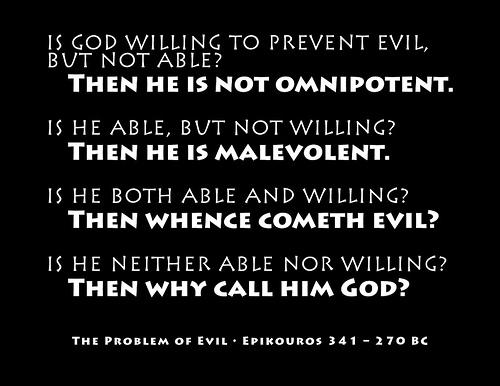
- The Problem of Evil
If an omnipotent, omnibenevolent creator deity exists, then the deity should make a perfect world. Unfortunately, we live in a rotten world. The god either willfully is punishing us or allowing evil to persist. If God is punishing us for no reason, then God is just cruel, plain and simple. If God is allowing evil to persist, then God cannot be omnipotent.
- Destiny of the Unevangelized
"Destiny of the Unevangelized" is not my terminology. I found it on the Wikipedia page. The terminology is an example of how skewed the article is towards Christianity-oriented atheism. The problem is in the word "unevangelized". Although you can use the term "evangelize" figuratively, its literal meaning is to "share the gospel". A more religious-neutral term would be "proselytize" or "convert". For this reason, I prefer "fate of the infidels".
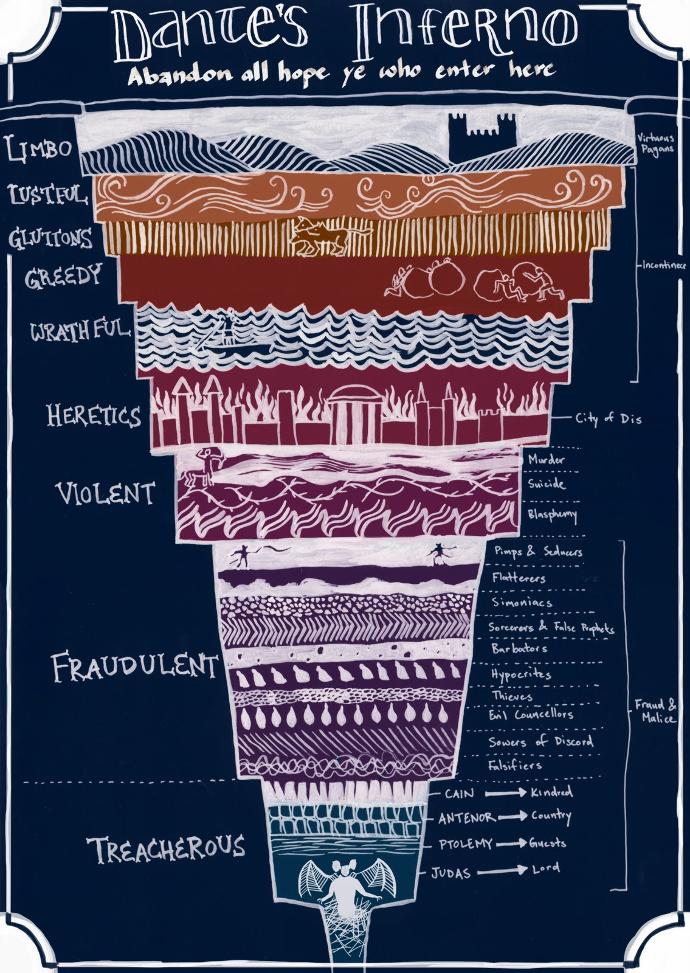
The fate of the infidels usually involves punishment. This belief is problematic, because it contradicts the existence of an omnibenevolent creator deity.
The argument by "destiny of the unevangelized" would be a reasonable argument against a religion that has a belief that infidels would be punished.
- Poor Design
This point criticizes the belief in a perfect creation by an omnipotent creator deity. If God created a perfect world, then all creations are perfect. Yet, the flaws in nature are evidence that God did not create a perfect world, and a perfect god cannot create an imperfect world. This argument is combined with The Problem of Evil. Therefore, belief in the existence of God is untenable.
- Existence of Nonbelievers
The existence of nonbelievers is evidence that God does not want people to believe it. If an omnipotent deity wants to lead people to itself, then it should have the ability to do it, and we will all be followers of one god and one religion. But the very existence of many religious viewpoints is evidence that such a deity does not want it, is not able to convert people, or simply does not exist in the first place.
- Belief in God is Superfluous
This argument criticizes the tendency to use God to explain natural phenomena. Explaining natural phenomena parsimoniously is much better than adding unempirical statements about the universe.
- Russell's Teapot
This is an extension of the former argument. It claims that not only is belief in God superfluous, but also that there is a greater burden of proof on the theist than the atheist.
- Lack of Experiential Evidence
Experiential evidence is a fancy term for human experience. Some people do not experience God and are just as happy and fortunate as people who do experience God. God cannot support atheism and theism at the same time. If such a deity exists, then that deity would be so highly inconsistent and unreliable that it is best to put faith in the power of Mother Nature (personification of nature) than the whims of God.
The Strengths of Atheism
Post Opinion
Like
Share
Follow
2 likes
What is your opinion?
Add Opinion
Most Helpful Opinions
Anonymous
(30-35)
+1 y
Im an atheist for I simply do not believe in god, at least the god spoken of in the bible. Its hypocrisy. Catholics and Christians say what is evil yet their god did more evil than this supposed devil. That makes no sense to me. I think a book was written and some one decided to turn it into a big deal known as religion. If I decided Harry Potter, Green Eggs and Ham or Stephen King's It were so "magical" and mind blowing can I make religions out of those books and run with the idea? Don't think so.
@Deathraider I do agree that it is more logical to be atheistic until proof of a God is shown. All scientific evidence and physics contradicts God, so I do not believe in any, though if proof (by this, I mean SOLID proof) comes to be, I likely will believe.
well in response to the problem of evil i would ask How do we know there are some evils that don't serve a good end? after all, we can at least conceive of some good reason God would have for allowing natural evil to exist. Natural evils may serve to build our character and help us develop virtue, like people who selflessly donate time and money to help with some tornado relief project. acts of compassion are intrinsically good, and when we freely choose to perform such acts, our choices gradually change our character and can lead to the greater good of us becoming virtuous people. Many virtues that make our world a better place is in response to some kind of evil like compassion is suffering alongside someone else and courage is doing what is right even in the face of danger. Anyway just another way of looking at it :)
1.2K opinions shared on Religion & Spirituality topic.
Show me undeniable evidence of a God and I will believe. Otherwise the default answer is "I don't know how everything came to be". Atheism isn't a belief system. It is the lack of a belief in God. If I said I have unicorn named Daisy, you'd expect me to show you this unicorn and provide evidence that it isn't a horse with a plunger on its head. Otherwise you wouldn't believe me and wouldn't simply take my word for it.
Well i think you and i have different views on what 'God" is. You seem to have compared God to a unicorn named daisy however the differences between the two are clear. The unicorn is one cause among many, An item within the world while the traditional thought on God is that he is "ipsum esse subsistens" which means that God is the very act of to be itself. He is not one cause among many or an item within the universe but rather is the condition for the possibility of our world. so when you ask for scientific evidence for God i kinda have to laugh because it shows you don't quite understand the nature of God. To be God is simply to be to be.
@phantom99 So if God is the air we breath, the grass beneath my feet, the birds chirping and everything in the multiverse how do you know he is present in all of these things? Is he some sort of organism that lives inside everything? What you described is the Tao. It is not a being like referenced in the Bible, Torah and Quran.
I think phantom99 is a Christian Panentheist (https://en. wikipedia. org/wiki/Panentheism). Of course, real people don't use technical terms to describe themselves, but panentheism may be close to what phantom99 believes.
I do not think God is the Air we breath or the grass beneath our feet, for these are things within the universe. like i said before God is not some item within nature but rather God is that great ocean of existence from which the world in its entirety comes, not something within it but the condition for the possibility of the world. I think one way of looking at this is by pointing out the difference between God and the gods. Go back to the old Greek gods, they were supreme instances of lets say the human type they are like super humans who have super minds and super powers. but they are in the end beings within the world living up on mount Olympus or out in the sea so they are not strictly speaking "supernatural" This is why we can say the sciences have eliminated the gods because we can explore mountain tops and the depths of the oceans and say we have not found any "supreme beings" This is why science in principle can not eliminate God because he is not an item within the world.
@phantom99 That is just an excuse to make God an abstract term. This God therefore has no power since it is no longer a being but just existence. This God is the Tao. The Tao is not a God it is simply the way things are.
Its not really an abstract term i'm just using what serious theists mean by God instead of using the atheist straw man. now a thing is known in so far as it is in act. For example, we know the essence of a thing when the intellect abstracts the form from the material conditions of the thing. The passive mind becomes actualized by the form, which is knowledge. If God is pure Act, then God is perfectly intelligible to Himself. Also, act is perfection, for a thing is perfect in so far as it is in act. But God is pure Act of Existing. Therefore God is perfect. He cannot lack any perfection; for otherwise He would be in potency to further act. Thus, He would not be pure Act. Now, of all the perfections found in beings, intelligence is considered preeminent; for intellectual beings are more powerful than those without reason. Therefore God is intelligent. I think we might have to explore the distinction between essence and existence
@phantom99 Sounds like a load of bs. You said absolutely nothing. God is some sort of mystical force that's present within the universe. Alright, tell me if god is omnibenevolent why didn't he prevent the Holocaust? By not intervening he acts as a bystander and is guilty for allowing this among other atrocities to occur.
well thanks for answering the argument with profanity. If you think i'm saying that God is a mysterious force within the universe then either you have not read what i have been saying or you do not understand it. We were not talking about the problem of evil in particular but i have already gave my thoughts on that in this thread. by the way the problem of evil has been tackled by some of the greatest minds in the church, so you could try reading them as well i. e Thomas aquines and saint Augustine. i don't think this discussion is very productive anymore
3.7K opinions shared on Religion & Spirituality topic.
Yeah, people don't understand what atheism is. Oftentimes people portray us as saying that god does not exist, or that we believe that god does not exist, when what we actually say is that we don't see sufficient evidence to believe in a deity. The default position when people make supernatural or unlikely claims is disbelief in those claims. It's all Bayesian really.
Precisely! I do not 100% believe that it is impossible that God exists, but I do believe that it is more logical to believe that there is no God until solid evidence can base theism.
390 opinions shared on Religion & Spirituality topic.
The definition you used for atheism is flawed. It's also a belief that god doesn't exist. An atheist is still a theist. That is atheism is just as much based on belief as any other religion. The fact is science cannot and never can disprove God's existence. Trying to understand God from a strictly scientific standpoint is kind of like trying to see how things were before the big bang. You can't.
@mixitUP how's this for a fact religion- something one believes in and follows devotedly; a point or matter of ethics or conscience. That's taken from dictionary. com Atheist believe in and follow devotedly that there is no god. Definition satisfied; atheism is a religion.
@asker as for the problem of evil, if God created a “perfect" world there'd be no freedom, no free will. You see not only did God create a perfect world, but he also created a world where we get to decide who we are going to be. Think of a parent raising a child. Now, if the parent locks the child in his/her room for all her/his life, is that good parenting? They're keeping the child from all evil. And what if instead of letting the child explore, get into trouble, and learn, the parent instead made the child do exactly as he/her is told, is that good parenting?
What's funny about athiesm ia that each athiest has his own definetion of athiesm
And they follow facts and materialistic analysis and evidences only when it serves their cause, if it doesn't serve their cause they behave non-sense exactly the same way they mock others
atheism just means without god in ancient greek, its original meaning never denies the existence of any god. why believe in only one god if you can believe in all six trillion of them?
It's foolish to say God doesn't exist. We only know a small part of our existence, there is still much more to discover. I say God exist and that his existence goes beyond religion.
0
0 Reply
Anonymous
(45 Plus)
+1 y
Awesome myTake, I totally agree, and if I might add..."Can God create a rock so big that He cannot move it?" In any case, omnipotence is impossible ;)
0
0 Reply
Anonymous
(25-29)
+1 y
To be fair, some religions solve the problem of evil by introducing a nemesis for their deity (s) – i. e. Satan.
 Girl's Behavior
  Guy's Behavior
  Flirting
  Dating
  Relationships
  Fashion & Beauty
  Health & Fitness
  Marriage & Weddings
  Shopping & Gifts
  Technology & Internet
  Break Up & Divorce
  Education & Career
  Entertainment & Arts
  Family & Friends
  Food & Beverage
  Hobbies & Leisure
  Other
Other  Religion & Spirituality
  Society & Politics
  Sports
  Travel
  Trending & News

































Most Helpful Opinions