 Girl's Behavior
  Guy's Behavior
  Flirting
  Dating
  Relationships
  Fashion & Beauty
  Health & Fitness
  Marriage & Weddings
  Shopping & Gifts
  Technology & Internet
  Break Up & Divorce
  Education & Career
  Entertainment & Arts
  Family & Friends
  Food & Beverage
  Hobbies & Leisure
  Other
Other  Religion & Spirituality
  Society & Politics
  Sports
  Travel
  Trending & News

Introverts have a longer neural pathway for processing stimuli. Information runs through a pathway that is associated with long term memory and planning. In other words, it’s more difficult for introverts to process interactions and events. As they process information, introverts are carefully attending to their internal thoughts and feelings at the same time.
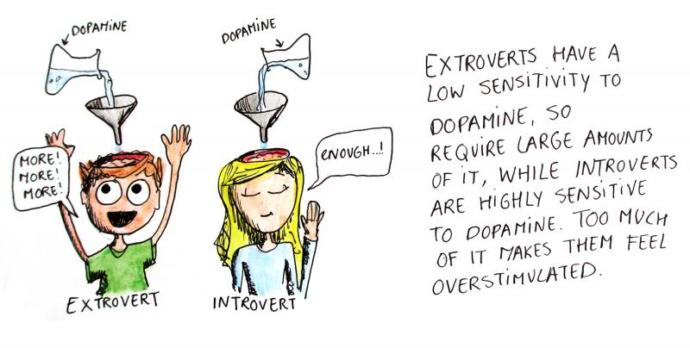
Introverts require less stimulation from the world in order to be awake and alert than extroverts do. This means introverts are more easily over-stimulated.
On the flip side of introverts’ sensitivity to dopamine means that they need less of it to feel happy. Extroverts’ brains run on an energy-spending nervous system, while introverts’ brains run on an energy-conserving nervous system. This is why introverts feel content and energized when reading a book, thinking deeply, or diving into their rich inner world of ideas.
The introvert’s brain almost always treats interactions with people at the same intensity level that it treats encounters with inanimate objects. Introverts process everything in their surroundings and pay attention to all the sensory details in the environment, not just the people.

Introverts reach back into long-term memory to locate information as they think. An introvert will often compare old and new experiences when making decisions, which slows the processing down but leads to carefully thought-out decisions. This means that introverts have an active dialogue with themselves and usually walk around with many thoughts in their head.


































Most Helpful Opinions