 Girl's Behavior
  Guy's Behavior
  Flirting
  Dating
  Relationships
  Fashion & Beauty
  Health & Fitness
  Marriage & Weddings
  Shopping & Gifts
  Technology & Internet
  Break Up & Divorce
  Education & Career
  Entertainment & Arts
  Family & Friends
  Food & Beverage
  Hobbies & Leisure
  Other
Other  Religion & Spirituality
  Society & Politics
  Sports
  Travel
  Trending & News

The Prevalence of Abuse in SNAP
The Supplemental Nutrition Assistance Program experiences significant levels of improper payments, which indicate waste and potential abuse within the system. For fiscal year 2023, the U.S. Department of Agriculture estimated that 11.7 percent of SNAP benefits, amounting to approximately 10.5 billion dollars, were improper based on 90.1 billion dollars in outlays excluding disaster benefits. 65 This improper payment rate increased from 11.5 percent in the prior year, highlighting ongoing issues in program oversight. 65 Retailer trafficking, where SNAP benefits are exchanged for cash instead of food, contributes to this problem, and recommendations to improve detection and penalties for such fraud remain unimplemented. 65 These facts demonstrate that SNAP is vulnerable to misuse, necessitating reforms to ensure benefits reach only those in genuine need without excessive waste.
SNAP Differs Fundamentally from WIC in Targeting and Structure
Unlike the Special Supplemental Nutrition Program for Women, Infants, and Children, which is specifically targeted to pregnant women, infants, and young children with prescribed nutritional items, SNAP provides general food assistance to a broad range of low-income households without subgroup restrictions. 71 WIC focuses on vulnerable populations with tailored benefits to promote health outcomes, while SNAP serves diverse groups, including 42 percent of participants aged 18 to 59 and 19 percent aged 60 or older in fiscal year 2023. 71 This lack of specificity in SNAP leads to less controlled distribution, as evidenced by its average monthly benefit of 187.20 dollars per participant in fiscal year 2024, compared to WIC’s more directed approach that limits items to essential foods. 71 The broader scope of SNAP increases the risk of inefficiencies not seen in WIC’s targeted model.
The Need for Lifetime Time Limits on SNAP Benefits
Current SNAP rules impose time limits only on able-bodied adults without dependents, restricting their benefits to three months in any 36-month period unless they work or participate in a work program for at least 20 hours per week. 67 Exemptions exist for children, seniors, veterans, homeless individuals, and others, but there are no overarching lifetime caps for all recipients, allowing indefinite participation for many. 67 This structure contrasts with the need for stricter limits to encourage self-sufficiency, as 28 percent of SNAP households had earned income in fiscal year 2023, suggesting potential for transition off the program over time. 71 Implementing lifetime time limits would align SNAP with principles of temporary assistance and reduce long-term dependency.

Requiring Reimbursement from Recipients Similar to Medicaid
Medicaid requires states to recover costs from the estates of deceased enrollees aged 55 or older for services like nursing facilities, home and community-based care, and related hospital and prescription drugs. 66 Recovery is prohibited if the enrollee is survived by a spouse, child under 21, or blind or disabled child of any age, and states must waive it in cases of undue hardship. 66 States may also recover from trusts or impose liens on property under specific conditions. 66 Applying a similar reimbursement mechanism to SNAP would ensure that benefits are repaid from estates when possible, promoting fiscal responsibility and mirroring Medicaid’s approach to recouping public investments in long-term support.
Eliminating Debit Cards to Curb Misuse and Theft
SNAP benefits are currently distributed via Electronic Benefit Transfer cards, which function like debit cards for purchasing eligible food at authorized stores. 67 This system has faced rising fraud, including card skimming that steals benefits, prompting modernization efforts such as the introduction of chip cards to enhance security. 68 Despite these updates, the debit-style format enables potential misuse, as seen in retailer trafficking issues. 65 Removing debit cards would prevent such vulnerabilities and ensure tighter control over how assistance is utilized.
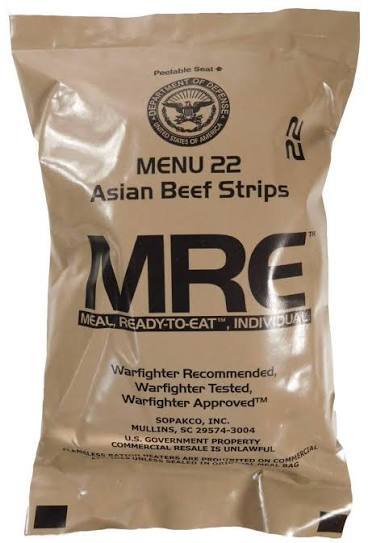
Providing Benefits Exclusively as Government-Issued Meals in the Form of MREs
Government programs like operational rations demonstrate the feasibility of providing direct, pre-packaged meals instead of flexible benefits. Meals Ready-to-Eat are individually packaged for sustenance in military operations or humanitarian missions, with a case priced at 189.30 dollars, supporting controlled distribution in assistance contexts. 69 Limiting SNAP to three such meals per day would mirror the direct food provision in programs like The Emergency Food Assistance Program, which distributes commodities to low-income individuals through food banks, reducing opportunities for fraud compared to cash-equivalent systems. 52 This approach ensures nutritional adequacy while eliminating misuse associated with unrestricted purchasing.
Conclusion: Withhold Funding Until Comprehensive Reforms Are Enacted
Given the documented improper payments, lack of targeting compared to WIC, absence of lifetime limits, and vulnerabilities in the current debit card system, SNAP requires fundamental reforms before continued funding. Adopting reimbursement like Medicaid and shifting to direct meal provision via MREs would enhance accountability and efficiency. Until these changes are implemented, funding should be paused to prioritize taxpayer resources effectively.
References
U.S. Government Accountability Office. (2024). Improper Payments: USDA’s Oversight of the Supplemental Nutrition Assistance Program. https://www.gao.gov/products/gao-24-107461
U.S. Department of Agriculture, Food and Nutrition Service. (2025). SNAP Eligibility. https://www.fns.usda.gov/snap/recipient/eligibility
Centers for Medicare & Medicaid Services. (n.d.). Estate Recovery. https://www.medicaid.gov/medicaid/eligibility/estate-recovery
U.S. Department of Agriculture, Food and Nutrition Service. (2025). SNAP EBT Modernization. https://www.fns.usda.gov/snap/ebt/modernization
Defense Logistics Agency. (n.d.). Operational Rations. https://www.dla.mil/Troop-Support/Subsistence/Operational-rations/
U.S. Department of Agriculture, Economic Research Service. (2025). Supplemental Nutrition Assistance Program (SNAP) - Key Statistics and Research. https://www.ers.usda.gov/topics/food-nutrition-assistance/supplemental-nutrition-assistance-program-snap/key-statistics-and-research
Congressional Research Service. (2025). The Emergency Food Assistance Program (TEFAP). https://www.congress.gov/crs-product/R45408























Most Helpful Opinions