Would run it in a straight line
Inverted V
Inverted L
Or something else
Plus would. you use a counterpoise, use a Earth Ground or use both methods
Bonus question
Would you use an antenna tuner to use the antenna on other bands?

Girl's Behavior
Guy's Behavior
Flirting
Dating
Relationships
Fashion & Beauty
Health & Fitness
Marriage & Weddings
Shopping & Gifts
Technology & Internet
Break Up & Divorce
Education & Career
Entertainment & Arts
Family & Friends
Food & Beverage
Hobbies & Leisure
Other
Religion & Spirituality
Society & Politics
Sports
Travel
Trending & News 
Would run it in a straight line
Inverted V
Inverted L
Or something else
Plus would. you use a counterpoise, use a Earth Ground or use both methods
Bonus question
Would you use an antenna tuner to use the antenna on other bands?
Step-by-Step Installation Guide for a 124-Foot End-Fed 160m Wire Antenna
1. Site Planning
✅ Walk your property and identify:
Tall trees, masts, or structures for anchoring.
Keep away from power lines for safety.
Plan for as much height and straight run as possible—sloping is acceptable.
Ideal Layouts:
Horizontal (best for DX and general use).
Sloper (one end high, feed point lower).
Inverted L (vertical rise then horizontal run—great for lower-angle radiation).
2. Antenna Components
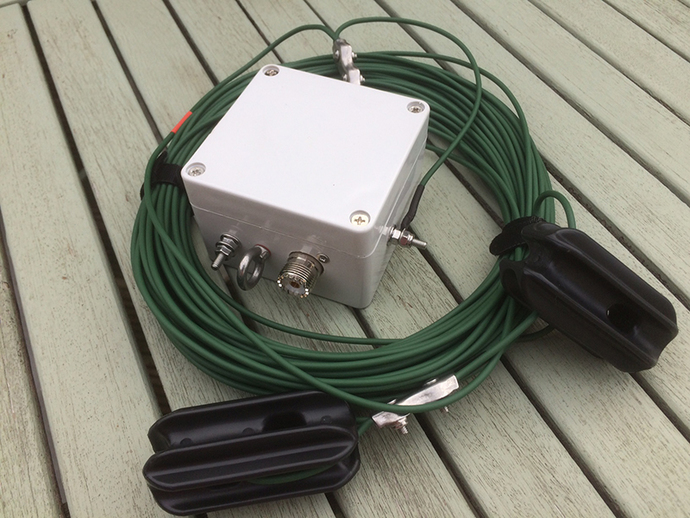
✔ 124-foot Wire: Use 14–18 AWG stranded copper wire with insulation (DX Engineering, MFJ, etc.).
✔ Unun Transformer:
9:1 or 49:1 Unun recommended to match high impedance to 50 ohm coax.
Many hams use 49:1 for end-fed antennas.
✔ Coaxial Feedline: RG-8X or better for low loss.
✔ Choke or Current Balun (Optional): Helps reduce RF on the coax shield.
✔ Grounding/Radials: Optional but enhances performance, especially for vertical sections.
3. Installation Process
A. Anchor Points
Find two anchor points ideally 30-50 feet high.
Trees, telescoping masts, house gables, etc.
B. Feedpoint Placement
Mount feedpoint near your shack, at the lower end.
Weatherproof the Unun and feed connections.
Secure coax feedline to avoid strain.
C. Wire Deployment
Run the wire horizontally, sloping, or inverted-L style.
Keep clear of metal gutters, fences, or power lines.
Use Dacron rope or insulators at both ends for strain relief.
D. Optional Grounding
Install ground rod at the feedpoint.
Radials (counterpoise) enhance efficiency—try 4–8 wires 10–20 feet long if space allows.
4. Tuning and Testing
Use an antenna analyzer or SWR meter.
Expect low SWR on 160 meters with a good 49:1 Unun.
You may need an antenna tuner (especially for multiband use).
Common SWR Issues:
Wire too low → Higher SWR.
Nearby metal objects → Performance drop.
Poor ground → Less efficiency.
5. Safety Tips
⚠ Maintain safe clearance from power lines—minimum 10 feet horizontally and vertically.
⚠ Use UV-resistant wire for longevity.
⚠ Secure all connections with weatherproofing (coax seal or tape).
Popular Ham Configurations
✔ Sloper Style: High feedpoint, wire slopes down to lower anchor.
✔ Inverted L: Vertical rise to 30–50 feet, then horizontal to another anchor.
✔ Horizontal Flat Top: If space allows, good for NVIS and general coverage.
Final Notes
Expect the antenna to work on other bands with a tuner.
Height = performance—get the wire as high as possible.
Simple, low-cost, and effective for 160m operations.
For more details, visit : Antenna" rel="nofollow ugc" target="_blank">https://antennaconnector. com/">Antenna Connector
Straight line, earth ground and I would use an antenna tuner instead of changing the length of the wire for different band width
What type of soil do you have in your area?
Is it rocky, sandy, a acid, alkaline, clay
About a foot of topsoil than clay for a few feet then sand, I’ve used an 8 foot ground for that years ago. Did try an artificial ground from MFJ but didn’t really work that good
I used to run a Antron 99 antenna and used a broken double element beam as a counterpoise (aka ground plane) and 3 different grounding rods (Steel, Copper Clad, Aluminum) each one a different side of the house. To help control the splash that A99 made. When I used to live in the city.
It really cleaned the interference it made. But I'm done with beams and verticals.
I going to run wire antennas for a while
I used to the A99 for CB , was a very good antenna and good for 10 meters if you used an antenna tuner being so close to that bandwidth, it sure did annoy the neighbors TVs and phones though on AM , single sideband was worse but they didn’t understand what I was saying, lol
I made my neighbors VCR start recording, I was running 1000 watts on Channel 6 you should remember the Superbowl Channel for the liner nuts
Man that's was decades ago. Man how time just flies by
Yeah it’s more than 30 years ago when I was doing all that and phones were susceptible to interference and so many other electronics back then and not that many people had cable TV
Were old now, where did the time go
I think life just passes by quicker the older you get
Opinion
0Opinion
Be the first girl to share an opinion
and earn 3 more Xper points!

You can also add your opinion below!
Most Helpful Opinions