 Girl's Behavior
  Guy's Behavior
  Flirting
  Dating
  Relationships
  Fashion & Beauty
  Health & Fitness
  Marriage & Weddings
  Shopping & Gifts
  Technology & Internet
  Break Up & Divorce
  Education & Career
  Entertainment & Arts
  Family & Friends
  Food & Beverage
  Hobbies & Leisure
  Other
Other  Religion & Spirituality
  Society & Politics
  Sports
  Travel
  Trending & News

I have congenital prosopagnosia (or "Face-blindness").
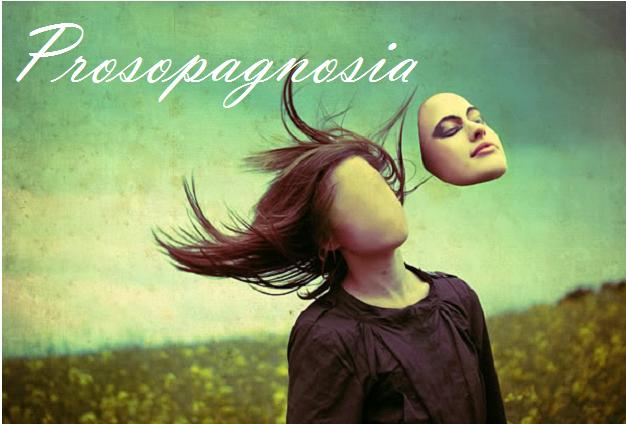
For those of you who don't know what prosopagnosia is I'll give you a break down before I explain what it's like to have it (since a lot of people seem to be interested).
Essentially, the part of the brain (called the Fusiform Gyrus or Fusiform Face Area) is broken. The disorder is in now way correlated to intelligence and coping skills make it easier to manage. Below I'm going to insert some information taking from the Prosopagnosia Research page from the Centre for Face Processing Disorders (https://prosopagnosiaresearch.org/index/information)
What is prosopagnosia?
Prosopagnosia (also known as 'face blindness') refers to a severe deficit in recognizing familiar people from their face. While some people report a very selective impairment that only influences the recognition of faces, others find the deficit extends to the recognition of other stimuli, such as objects, cars, or animals. Many people also report deficits in other aspects of face processing, such as judging age or gender, recognising certain emotional expressions, or following the direction of a person's eye gaze. Finally, a substantial number of people also report navigational difficulties.
What are the causes of prosopagnosia?
Until recently, it was thought that very few people experience prosopagnosia. The condition has traditionally been studied in individuals who acquire the disorder following neurological damage (typically from stroke or head injury), and a handful of case studies were reported in the literature in the 20th century. However, it has recently become clear that many more people have prosopagnosia without experiencing neurological damage. This form of the disorder is commonly referred to as "developmental" or "congenital" prosopagnosia, and these people simply fail to develop normal face processing abilities despite normal intellectual and perceptual functions. People with developmental prosopagnosia seem to have had face recognition difficulties for most of their lives, and perhaps even since birth. Recent evidence suggests there may be a genetic contribution to the condition, and many people report at least one first-degree relative who also experiences face recognition difficulties.
What it feels like to have prosopagnosia?

I'm a "text-book" case of the disorder. My disability extends to problems recognizing cars and places (location issues are the result of problems with the Parahippocampal "Place" Area which lies adjacent to the FFA). I was only diagnosed about a year ago but my symptoms have been apparent for years. (The diagnosis just finally offered an explanation).
A lot of people ask me about whether or not I can recognize what a face is. Well sure, of course. I can tell you what is a face; can perfectly identify what emotions are being expressed; I know an attractive face from an unattractive face; I can point out the nose, mouth, eyes, etc.
Well... what is the problem then?
The issue is that I can't identify which face is Sarah's and which is Anna's. In other words, I can't recognize one face as a familiar or ascribe it to a particular person. When I see a person's face, my brain can see all the individual features, but is unable to piece them together into a whole structure that can be used for identification. If I want to recognize someone, I have to consciously look at the individual features and try to correlate them. It's possible to intentionally map a face into a complete structure and remember who it belongs to.
Well... why don't you just do that?
While that may seem like a beautiful solution.. it isn't. The fusiform gyrus (FFA) connects features normally and stores them as a single item associated with a specific person. When I try to do this manually, it takes up A LOT of space. It can work for faces that look very different or features that are unique, but it isn't really efficient for everyone's face. The easiest thing for me to do is just remember people by means other than their faces.
Seems hard right?
How I Live With It
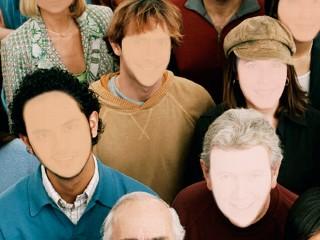
When you think of your friends, you probably think of their faces. I can't do that. However, luckily, I've developed numerous coping skills over the years which allow me to function fairly well.
Faces aren't the only ways you can recognize people, even though that may be how almost everybody recognizes each other. For me, a bit of what I go by are voices, head-shape, hair, gait, posture, skin color, unique features. But in a world full of so many people who are often very similar except for their faces (which isn't an option for me), those are only a small part.
What else do you use, then?
Context. The easiest way for me to recognize someone is by whether or not they are where I'm expecting them. Obviously the people who I sit next to everyday in class must be my friends and the person standing in the front of the room is my professor.
The problem arises when I see them outside of where I normally do. Since a lot of people have similar basic appearances (excluding faces) to others, I avoid just walking up to everyone and assuming they are someone I know. I usually just hope that the person will point themselves out to me.
They'd work great, if they did that.
Some people think me ignoring them must mean I don't like them. The only way for me to circumvent that is to let everyone I know about my disability. If I explain to them that I have prosopagnosia and may not recognize them if I see them somewhere else, I can then warn them that it doesn't mean I don't like them and that they should just point themselves out to me.
Easy, but weird.
What else it affects?
I can't recognize cars.
I also can't recognize places. I get lost very easily and have to go by landmarks since I can't recognize the visual scenery. Along with the context idea, I know that if I turned right on ___street I know that, three minutes later, since I haven't turned elsewhere, I must still be on ___street. The problem arises when I forget whether or not I turned. It is pretty easy to get lost.
I also had trouble with analog clocks when I was younger (and my mother helped me extensively and improved it).
Did God give you something in trade for this shitty problem?
Yeah! While I'm not very good with nonverbal reasoning and memory, I make up for it by extensive skill in verbal reasoning. Instead of visuals, I go by numbers and correlations.
Easy enough.

























Most Helpful Opinions