 Girl's Behavior
  Guy's Behavior
  Flirting
  Dating
  Relationships
  Fashion & Beauty
  Health & Fitness
  Marriage & Weddings
  Shopping & Gifts
  Technology & Internet
  Break Up & Divorce
  Education & Career
  Entertainment & Arts
  Family & Friends
  Food & Beverage
  Hobbies & Leisure
  Other
Other  Religion & Spirituality
  Society & Politics
  Sports
  Travel
  Trending & News

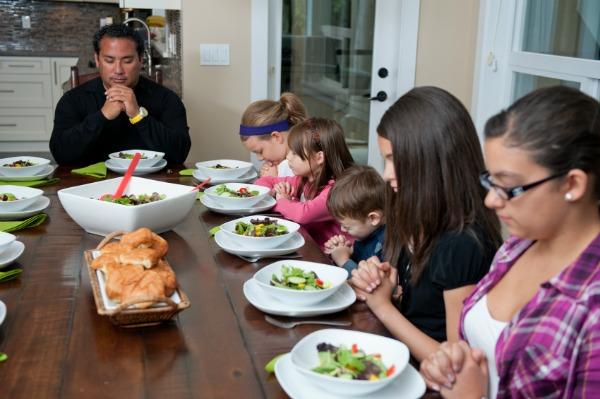
Most people think of "saying grace" as a religious habitual behavior. However, I do not think it has to be thought of as a religious habitual behavior. I believe that, with the great secularization of modernity, saying grace should be made into a secular ritual.
Gratitude
I think one benefit of saying grace is the gratitude that one feels while saying (or thinking) it. One is grateful that one is being fed at the moment. One is grateful of being with people who share the same food on that day. One is grateful of the people who support them and love them to make the food on the table available and accessible.
This peaceful gratitude beats sitting in front of the TV and eating fast food alone anytime. The center of attention is not about you or your palate. It is about the people around you and your relationship to them. Since we humans are social creatures, I believe this collectivist approach to eating will make food less about ourselves and more about our relationships with others, whether that is a relationship with God or a relationship with nature or a relationship with other people. And if one is alone physically at the moment, one can just think of the people around them, think good thoughts about them, and then one does not feel alone anymore.
Mindfulness of Eating Food
In this modern age, too many people are eating mindlessly. They are just gorging on the food and eating food for personal pleasure instead of actual nourishment. I don't blame them. Modern life is busy and fast-paced. It's just easier buying something ready-to-eat than preparing the food in the kitchen, and sometimes, this habit becomes detrimental to health as quick personal choices are not always the best personal choices.
I believe that saying grace before eating will help the mind engage in mindfulness. Why am I eating the food? Is this food for my nourishment or my pleasure? How much nutrition will I get out of this? What work has gone into this food by the people who made it? By eating more mindfully, I believe that people can more easily make thoughtful choices about food.
A Guide to Saying Grace for the Non-Religious
Saying grace often conjures up the image of holding hands together, heads down, and praying to some kind of deity in the clouds. But that behavior is just behavior. The important thing is the thought involved in saying grace. A non-religious person may set down a plate of food and get ready to eat. But just before eating, s/he thinks silently of the people around him/her, hoping that they have the same, and of the people and animals who have made the food possible. I believe that a lifelong habit of saying grace will encourage people to think thoughtfully about the people and animals around them, and their relationship to the world, instead of allowing the food just to be about themselves or to fulfill personal, sensual desires.































Most Helpful Opinions