 Girl's Behavior
  Guy's Behavior
  Flirting
  Dating
  Relationships
  Fashion & Beauty
  Health & Fitness
  Marriage & Weddings
  Shopping & Gifts
  Technology & Internet
  Break Up & Divorce
  Education & Career
  Entertainment & Arts
  Family & Friends
  Food & Beverage
  Hobbies & Leisure
  Other
Other  Religion & Spirituality
  Society & Politics
  Sports
  Travel
  Trending & News

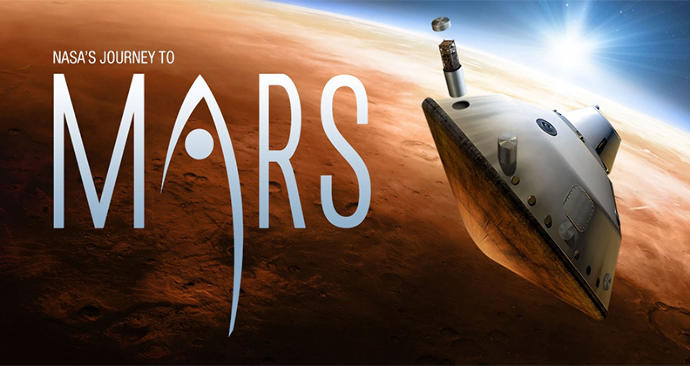
NASA is on a journey to Mars, with a goal of sending humans to the Red Planet in the 2030's. That journey is already well under way.
Mars is the next tangible frontier for human exploration, and it's an achievable goal. There are challenges to pioneering Mars, but we know they are solvable. We are well on our way to getting there, landing there, and living there.
Year 2011: Foundations of Mission Plan Implemented
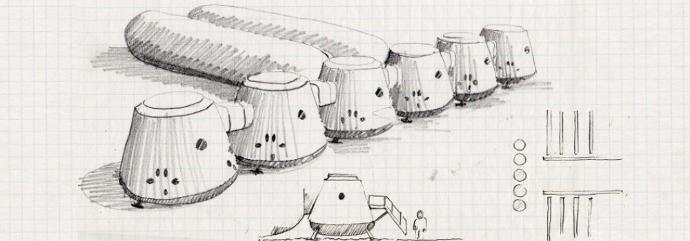
In 2011, Bas Lansdorp and Arno Wielders laid the foundation to begin the Mars One mission plan. The first step included holding discussion meetings with potential aerospace component suppliers in the USA, Canada, Italy, and the UK. The plans, goals and budgets were then solidified resulting in a standard design for an achievable mission of permanent human settlement on Mars with present technology.
Year 2013: Astronaut Selection is Launched Worldwide
In April, the Astronaut Selection Program (ASP) was launched at press conferences in New York and Shanghai. The selection program required an online application and proceeded with video applications and personal interviews. The successive selection rounds consisted of group challenges and simulations. At program's end, six teams of four individuals were chosen for training. New ASPs will begin every year to replenish the training pool regularly.
Year 2017: Selected Candidates Enter Full-Time Training
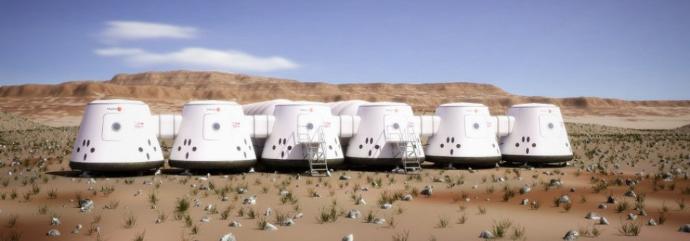
The first teams of candidates are expected to be selected and start training in 2017 and will train together until the launch in 2031. The group's ability to deal with lengthy periods of time while appropriated in a remote location will be the most important part of their training. Therefore, they will learn how to repair components of the habitat and rover, train in medical procedures, and learn to grow food in the habitat. Every group spends several months of each training year in the analogue outpost to prepare for its mission to Mars.
Year 2022: Launch of Mars-bound Demonstration Mission
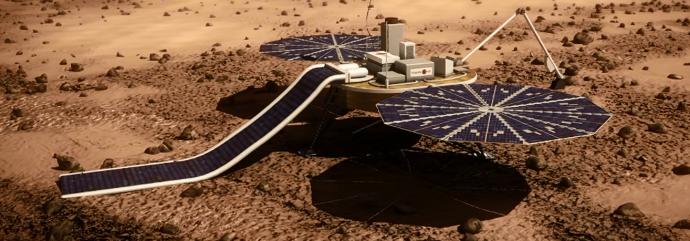
A demonstration mission to Mars will be launched to provide proof of concept for some of the technologies that are vital for Mars One’s human mission. Beyond launch and arrival on Mars, the mission will verify several important technologies for Mars One’s human mission.
Year 2024: Launch of Communications Satellite
A communications satellite will be launched to Mars where it will be placed into stationary Mars orbit. This satellite will allow communications between Earth and Mars and transmit images, videos, and other data from the Mars surface on a 24/7 basis, except when the sun is between the two planets.
Year 2026: Launch of a Rover and a Communications Satellite
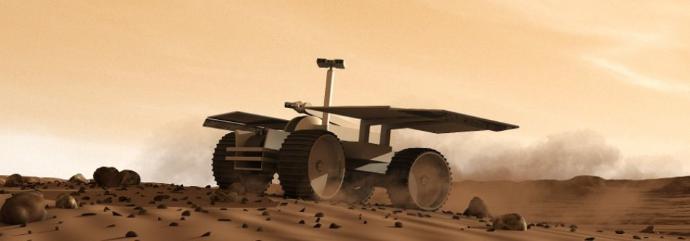
A rover and a trailer will be launched to Mars to transport the landing modules to the outpost location. It will drive around the region to find the best location for the settlement and will prepare that area for arrival of the cargo missions. A second communications satellite will also be launched into orbit around the Sun to ensure a 24/7 communication with Mars even when the Sun is between the two planets.
Year 2029: Launch of Six Cargo Missions

Six cargo missions will be launched to Mars, containing a second rover, two living units, two life support units, and a supply unit.
Year 2030: Rover Prepares the Outpost Before Arrival Off the Settlers
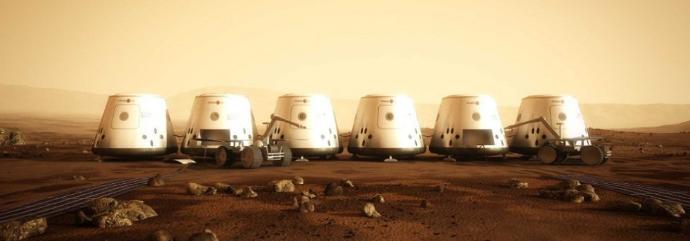
The rover will pick up all cargo units, rearrange them in the correct location, and deploy the thin-film solar panels to power the life support unit. The rover will then be able to connect to the life support unit to recharge its batteries faster than using only its own panels and allowing it to work more effectively.
The life support unit will be connected to the living units by a hose that can transport water, air, and electricity, which will then activate the Environmental Control and Life Support System (ECLSS). The rover will then feed soil into the ECLSS and the water will be extracted from this soil. The evaporated water is condensed back to its liquid state and part of the water is used for producing oxygen. Nitrogen and argon filtered from the atmosphere will make up the other components of the breathable air.
Before the first crew begins its voyage, the ECLSS will have produced a breathable atmosphere of 0.7 barometric pressure, 3,000 litres of water, and 240 kg of oxygen which will be kept for later use.
Year 2031: Ready For Lift Off! The First Crew Will Start Their Journey to Mars
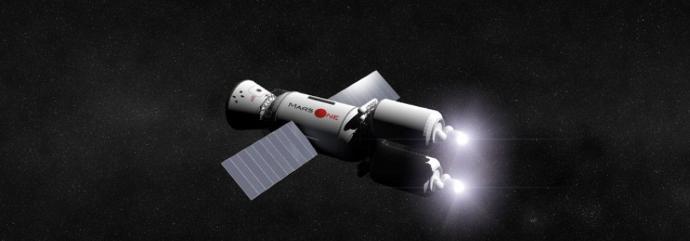
After receiving the go-ahead on all systems on Mars, the Mars Transit Vehicle (MTV) will be prepared for the journey to Mars. First, a transit habitat and a Mars lander with its crew aboard will be launched into Earth orbit. The assembly crew will dock the Mars lander to the transit habitat. Thirty days later, two propellant stages and the boosters that will push the transit vehicle from the Earth’s orbit to Mars transfer orbit, will be launched and connected.
Once that has been completed, the first fully qualified Mars crew will be launched into the same Earth orbit to switch places with the assembly crew, which will return to Earth. After a last check of all systems on Mars and the transit vehicle, the MTV will be launched into a Mars-transit trajectory. This is the point of no return for the Mars crew.
Year 2032: The Next Giant Leap for Mankind
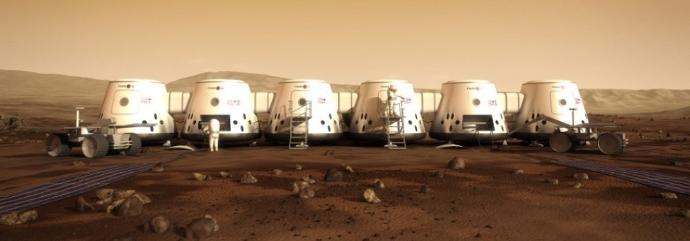
Around 24 hours before landing, the crew will move from the transit habitat into the landing module, bringing some of the supplies from the transit habitat. The landing module will then detach from the transit habitat, which before landing while the transit habitat stays in orbit around the sun.
The crew will take up to forty-eight hours to get used to gravity after spending six to eight months in space. The astronauts will leave the lander in their Mars suits and will be picked up by the rover that will bring them to the outpost. They will enter the settlement through an airlock and spend the next few days in one of the living units, recovering and settling in. The crew will then deploy the rest of the solar panels, install hallways between the landers, and set up food production units.
The cargo for the second crew will land within a few weeks after the first crew has landed. When the hardware for the second crew is incorporated, the crew of four astronauts will have four living units and four life support units, enough to sustain a crew of sixteen astronauts.
Year 2033: Settlement expands with departure of Crew Two
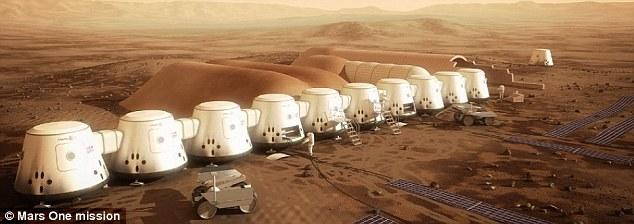
The second crew will leave Earth and the cargo modules for the third crew will be launched. When they arrive on Mars, their living quarters will already be prepared. The hardware for the third crew will land a few weeks later and will be added to the settlement and this process will continue as extra crews and cargo modules land every 26 months.




























Most Helpful Opinions