 Girl's Behavior
  Guy's Behavior
  Flirting
  Dating
  Relationships
  Fashion & Beauty
  Health & Fitness
  Marriage & Weddings
  Shopping & Gifts
  Technology & Internet
  Break Up & Divorce
  Education & Career
  Entertainment & Arts
  Family & Friends
  Food & Beverage
  Hobbies & Leisure
  Other
Other  Religion & Spirituality
  Society & Politics
  Sports
  Travel
  Trending & News
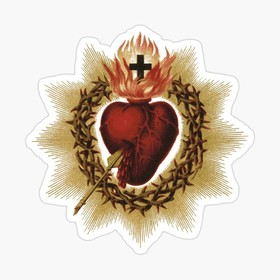
“Peace be with you.”
These first words of Jesus Christ to his Apostles after the Resurrection best summarize the Sacrament of Confession. Today being Ash Wednesday, which begins the penitential season of Lent, I offer this apologetic on Confession and my own insights and experience.
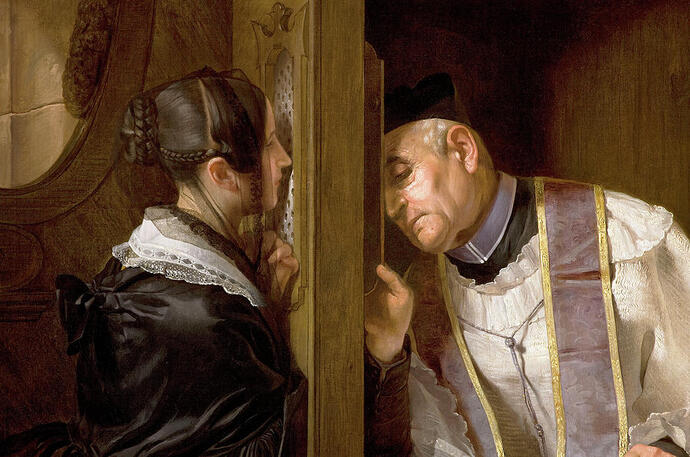
What is a Sacrament?
“A sensible sign, instituted by Jesus Christ, by which invisible grace and inward sanctification are communicated to the soul...a sensibly perceptible rite that actually confers the supernatural grace that it symbolizes.”
Humans are creatures of sense. We need to see, hear, and feel. A sacrament spiritually fulfills these needs of sense.
What Confession is and How it Works
“The voluntary self-accusation of one’s sins to a qualified priest in order to obtain absolution from him.”
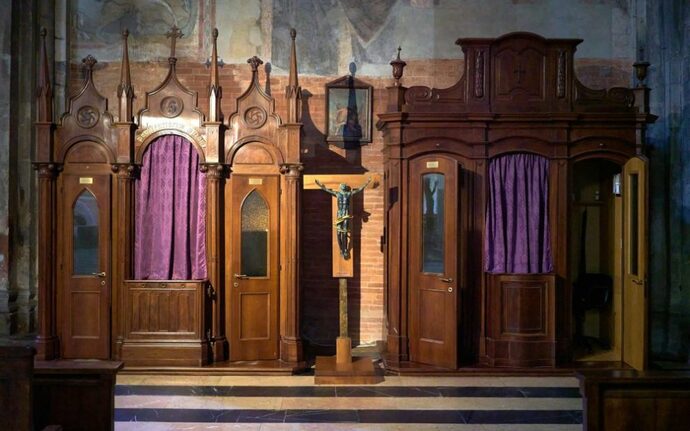
The Catechism of the Catholic Church, paragraph 1423 calls it “the sacrament of conversion because it makes sacramentally present Jesus’ call to conversion, the first step in returning to the Father from whom one has strayed by sin”. It is also called a sacrament of penance, of forgiveness, and of reconciliation. It is also, as it is so named, a disclosure of one’s personal sins and an acknowledgment of God’s holiness and mercy (CCC1424).
The primary effect of Confession is to restore sanctifying grace to the soul. The Catechism of the Council of Trent says that “In pious souls who approach this Sacrament with devotion, profound peace and tranquility of conscience, together with ineffable joy of soul, sometimes accompany this reconciliation. For there is no sin, however great or horrible, which cannot be effaced by the Sacrament of Penance, and that not merely once, but over and over again” (Trent p. 288).
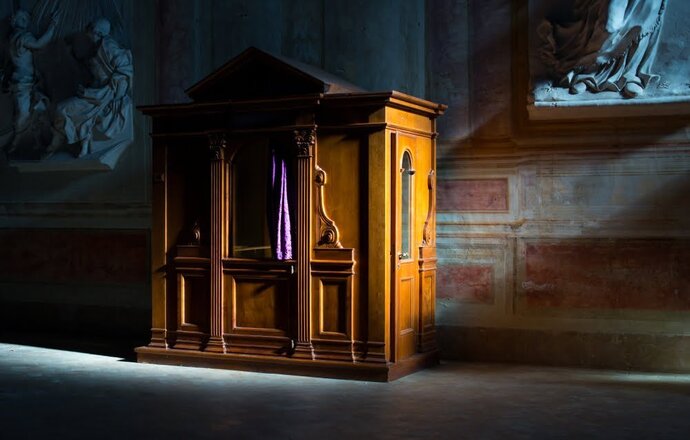
After examining their conscience, the penitent enters the confessional, greets the priest, tells how long it has been since their last confession, and then confesses their sins in both number and kind. The priest may give a consolation or advice, will assign a penance, and then give absolution; he may ask for details or clarification as he deems necessary. It may also be as simple as “Do x, y, and z for your penance” and give absolution; they’re in and out in 30 seconds. It's usually not long before a newly ordained priest has heard everything in Confession; I've been told two years and I've been told one month.
The Rite of Absolution which the priest recites is as follows...
God, the Father of mercies, through the Death and Resurrection of his Son has reconciled the world to himself and sent the Holy Spirit among us for the forgiveness of sins. Through the ministry of the Church, may God grant you pardon and peace, and I absolve you from your sins in the name of the Father and of the Son and of the Holy Spirit.
Contrary to popular belief, it is not a “get out of Hell (or jail) free” card; genuine contrition is necessary for a valid confession. Contrition can be either imperfect or perfect. Imperfect contrition is sorrow out of fear of God’s punishment; most Catholics confess with such. Perfect contrition is sorrow out of love for God and having offended him. Either form assumes repentance. It is one thing to go forth in life knowing, due to human frailty, that one will sin again. It is entirely different to intend to sin again.
The History of Confession
The earliest roots reach back to the Old Testament. In Numbers 5 for instance, the Israelites are instructed to confess their sins and make restitution. In the early church, confessions and penances were public and often corresponded to the sin. Private confession became standard throughout the Church in the 8th Century, when Irish monks took inspiration from Byzantine Christians in Europe.
The Role of the Priest
The priest acts in persona Christi; “In the person of Christ”. There is no sin which God CANNOT forgive through his priests.
- In Luke 10 and Matthew 10, Jesus gives his disciples the authority to expel demons and heal the sick.
- In Mark 16, he tells the Apostles that “in my name, they will expel demons”.
- At the end of St. John’s Gospel, he breathes on them, giving them the Holy Spirit, and tells them that whose since they forgive and retain are forgiven or retained (after the Resurrection, no less).
- Mark 2.7 reports Jesus saying “the Son of Man has authority on earth to forgive sins.”
- St. Paul writes in 2 Corinthians "All this is from God, who through Christ reconciled us to himself and gave us the ministry of reconciliation."
- And in Luke 17, Jesus appeals to the laws prescribed in Leviticus 14 after healing ten lepers and instructing them to show themselves to the priest.
So with that established, it’s only reasonable that Jesus could give his Apostles the same authority which would be passed on throughout the ages. Human collaborators who have been trained and consecrated are therefore necessary for Christianity to have efficacy.
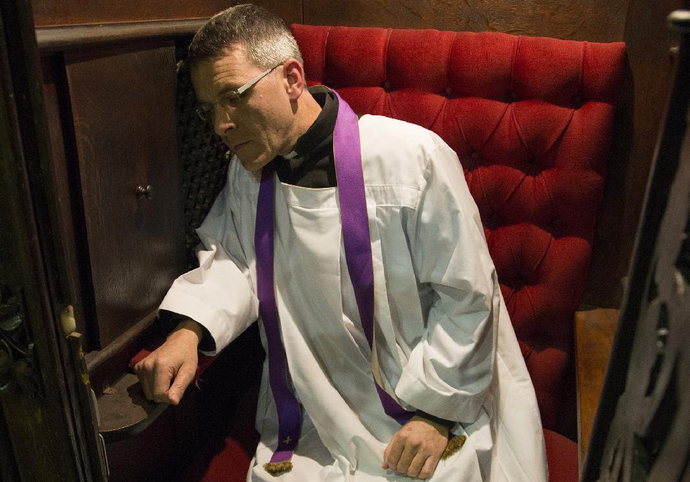
“According to thy faith…”
In addition to genuine contrition, faith, the union of one’s intellect and will to the word of another, is also required. On at least four separate occasions in the Gospels, Jesus tells those who came to him that their faith has healed them; on one of them (Matthew 9), he asks two blind men first if they believe that he can heal them before he does so. I think the best example of the power of faith in healing though comes from Matthew 8, which details the encounter with the Roman centurion. After Jesus offers to come to the centurion’s house to heal his servant, the centurion replies that Jesus only needs to say the word and so it will be done, likely thinking “If this man is who people say he is and he can do what they say he can do, then certainly he can just say it and it will be so.”
The penitent must believe that when the priest recites the Rite of Absolution that their sins are in fact absolved. Otherwise, what has been accomplished? Has the penitent truly entrusted his or her self to God's forgiveness or are they being retained on their own? Do they truly believe that their sins are in fact forgiven?
Also worth noting is that the late Father Gabriele Amorth, the Vatican's chief exorcist, often said that a good Confession is stronger than an exorcism.
The Seal of Confession
“The grave duty of keeping absolutely secret all sins that are told in sacramental confession and anything else that is told by the penitent and is related to the confession”.
This seal “admits of no exceptions” (CCC1467). Even to save his own life or civic freedom, a priest can never reveal or act on anything he hears in Confession. The Trent Catechism offers stronger and more reassuring terms: “Since each one is most anxious that his sins and defilements should be buried in oblivion, the faithful are admonished that there is no reason whatever (emphasis mine) to apprehend that what is made known in Confession will ever be revealed by the priest to anyone, or that by it the penitent can at any time be brought into danger of any sort” (Trent p. 312).
The Code of Canon Law states “The sacramental seal is inviolable; therefore it is absolutely forbidden (emphasis mine) for a confessor to betray in any way a penitent in words or in any manner and for any reason.” If a priest breaks the seal, he is automatically and immediately excommunicated (latae sententiae; “the sentence is already passed”). Only the pope can readmit him into the Church and restore his faculties, and not even he can know what has been confessed.
He can speak in generalities; “I hear x-sin all the time.” He cannot say “BCRanger10 confessed x-sin to me”; it does not matter how great or small the sin is. If a penitent confesses to having committed a more serious sin like murder or theft, the priest can only absolve and counsel the penitent to turn his or herself in to the police; the priest himself cannot report them.
Note – Interpreters for language barriers or the deaf are also bound by the Seal.
Conclusion - A Sacrament of Peace
Confession is ultimately a sacrament of peace, not only between the sinner and God, but also for the sinner. I see so much hatred and anger owing to disordered devotions to ideologies and forgone conclusions about opponents. I see depression and anxiety resulting from guilt from poor choices made or good choices not made, inordinate desires for love, approval, justice, or recognition. I see broken families and damaged relationships. I see unwillingness to forgive (both others and oneself) or to show genuine charity, understanding, and kindness. When I see all this and more, the only solution I can see is divine.
The main object of Confession is the individual soul. It may not heal a rift in a family or between friends or make people agree on things. It may not restore one’s reputation and good name, physical health, or material fortunes. It may not cure a disease, heal the effects of abuse or addiction, or other earthly fruits, but it does give the soul peace on its earthly travels. And it does give the soul the grace to walk in the light of God, as well as a joyful hope of the world to come.
Saint Alphonsus Ligouri, patron saint of confessors, pray for us
Saint John Vianney, patron saint of parish priests, pray for us
February 18, 2026, Ash Wednesday












What Girls & Guys Said
Opinion
1Opinion
An interesting read for sure! Thanks for sharing
Thank you for the feedback.
Good explanations!