 Girl's Behavior
  Guy's Behavior
  Flirting
  Dating
  Relationships
  Fashion & Beauty
  Health & Fitness
  Marriage & Weddings
  Shopping & Gifts
  Technology & Internet
  Break Up & Divorce
  Education & Career
  Entertainment & Arts
  Family & Friends
  Food & Beverage
  Hobbies & Leisure
  Other
Other  Religion & Spirituality
  Society & Politics
  Sports
  Travel
  Trending & News

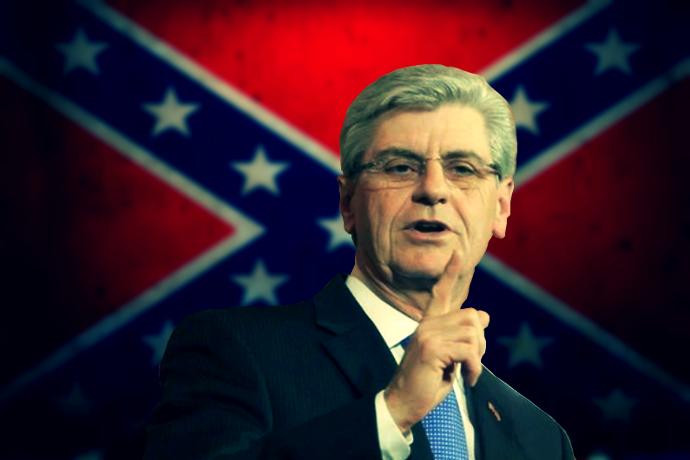
Mississippi governor Phil Bryant (R) signed into law a bill on Tuesday, April 5, 2016, that allows businesses to refuse services to gay couples based on the business owner’s religious objections, or what it refers to as their “sincerely held religious beliefs or moral convictions.”
The Act also says that a person’s gender is “determined by anatomy and genetics at time of birth” and goes on to say that businesses can determine who is allowed to access bathrooms, dressing rooms and locker rooms.
It’s important to note that this act defines the groups of people who are allowed to refuse to help gay people, very broadly. It includes natural persons, any entity including religious organizations, sole proprietorships, closely held companies, partnerships, associations, organizations, firms, corporations, cooperatives, trusts, and societies.
The bill, here, is formally called the "Protecting Freedom of Conscience from Government Discrimination Act" The pronouncement goes on to describe the Act.
The Acts provisions start off relatively innocuously, with those aspects that of the law that deal solely with religious organizations, and denies the government any right to take action against a religious organization that discriminates against gay people in a number of ways, which it then lists. It then, wisely, specifically exempts from the act “emergency medical treatment necessary to cure an illness or injury.”
However, the Act then begins to shift to refusing to prosecute “a person” who the state grants custody of a foster or adoptive child, and allows them to control the child’s placement. It protects this "person” from their decision to decline “treatments, counseling, or surgeries” related to sex reassignment. Similarly, it shields them from prosecution for refusing to provide services, accommodations, facilities, goods, or privileges for a purpose related to the solemnization, formation, celebration, or recognition of any marriage, or for refusing to photograph, videotape, wedding planning, printing, or provide similar marriage-related goods or services including floral arrangements, dress making, cake or pastry, or assembly-hall or other wedding-venue rentals, accommodations, facilities or goods.
Up to this point, the Act seems to be aimed at making it harder for gays to marry, receive gender reassignment surgeries, or to adopt children. The thrust of the bill appears to be to delay or destroy the formation of "undesirable" families.
The next part, although clearly aimed at the LGTB population can affect EVERYONE. The act becomes broader, allowing people to discriminate by creating sex-specific standards in “dress or grooming” for employees and students, and allows them to deny access to restrooms, spas, baths, showers, dressing rooms, locker rooms, or other intimate facilities.
Had this Act been in effect in the 60s, they could have refused to allow any male student to have long hair for example, or thrown out female students who wore slacks. This is clearly an attempt to enforce the minority religious populations' standards on everyone.
Finally the Act begins to note how it protects from prosecution any state employees or “any person employed or acting on behalf of the state government” from having to perform any marriages they don’t want to perform, so long as they recuse themselves formally and seek to prevent undue delay in finding a replacement to perform the ceremony.
It's clear that this Act serves to enforce the Religious Rights views of sexuality, morals, and dress not only upon the LGBT community, but upon students and other disempowered groups. As such, it not only protects this religious minority from the legal consequences of their actions, it actively places barriers in the way of people who seek only to have equal rights to the State's resources.










































Most Helpful Opinions