 Girl's Behavior
  Guy's Behavior
  Flirting
  Dating
  Relationships
  Fashion & Beauty
  Health & Fitness
  Marriage & Weddings
  Shopping & Gifts
  Technology & Internet
  Break Up & Divorce
  Education & Career
  Entertainment & Arts
  Family & Friends
  Food & Beverage
  Hobbies & Leisure
  Other
Other  Religion & Spirituality
  Society & Politics
  Sports
  Travel
  Trending & News

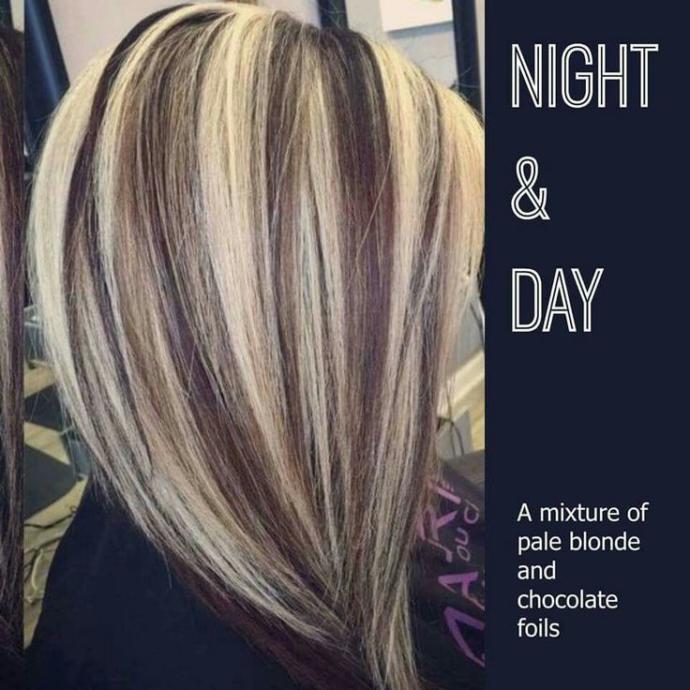
I’ve been noticing this for a while, but it just recently hit me that with all this talk of blondes vs. brunettes, or black hair vs. white, there are actually two types of brunettes in the world. There’s the one that you typically see represented as the epitome of an attractive woman. I call that the Salma Hayek type. Or the Nicole Scherzinger type. Insert whatever more current example you wish. This one is usually considered fiery, bold, sassy, sexy, capable and full of class.Then there’s the second type. These are those who have a hair color bland enough they often go unnoticed. You could make a case that they are the original “next door” types, but that would be too distinct a descriptor. Light browns are simply considered mousy without the added moral grit of other brunettes.
The most distinctive factor about light brunettes, however, is the fact that they are not trusted. Be it because of that wishy washy quality, the fact that they are considered just a step shy of blonde, or the most important fact, that they could go either way. The majority of women with that hair shade try to go for a more noticeable hue. They are probably what we consider the majority of highlighted and color-treated people that we see today, and often what we mean by “fake blonde” or “salon blonde” etc.
The rightful question to ask of course is why these women mostly choose to go blonde instead of staying brown or going a shade darker, especially with all the positive qualities associated with darker brunettes. The main reason is that these people usually grew up toe-headed. For people who are unfamiliar with this term, it means you were blonde as a child and through puberty and other hormones, your color became darker. However, as is the case with many of them, the skin, lashes and eyebrows can often stay light.
Going darker usually does two things: It either washes you out or it creates contrast. If you go lighter, you have a much higher chance of blending your features or creating a look that works, but at the cost of seeming untruthful or fake.
The relative cost of upkeep between dark and light is about the same. However, the social stipulations that people make are very noticeable. There has been a distinct uproar about salon blondes. This doesn’t just go for mousy browns who go lighter, it also goes for dark brunettes or black haired women who go blonde. But because darker brunettes are often seen as having more integrity, going blonde is seen as a statement of empowerment or fashion choice, whereas for light brunettes, it is a moral one. That’s because on them, blonde often looks more characteristic than with darker brunettes, and thus, it comes across as deceit. For one, the roots of light brunettes aren’t as noticeable when they grow out, and because of aforementioned features, the light hair blends.
But the reason this is important is because hair color, aside from being a marker of attractiveness, is seen as a social statement and with that a marker of status. Thus, hair coloring becomes a moral choice. Light brunettes are in an unusual position because they could go either way, but most often look better blonde because of the reasons we discussed.
In the end, it seems we all will be judged for something. The fact that I focused on light brown brunettes is not a normative statement. It’s my own experience and from that, I’m showing some of the considerations that some people make when choosing to alter their appearance. In any case, they are rarely made casually, and either way you choose comes with an opportunity cost.
































Most Helpful Opinions